
Economist argues AI is creating jobs despite layoffs
Here's what it means for you.
The narrative surrounding artificial intelligence (AI) and its impact on employment is shifting. As economist Torsten Sløk highlights, recent data suggests that AI may be a catalyst for job creation rather than destruction. This perspective is crucial for policymakers and business leaders as they navigate the evolving labor market. Understanding the dynamics of job growth in the context of AI advancements can help mitigate fears of widespread unemployment. Stakeholders must remain vigilant in monitoring employment trends to make informed decisions about workforce strategies.
What happened
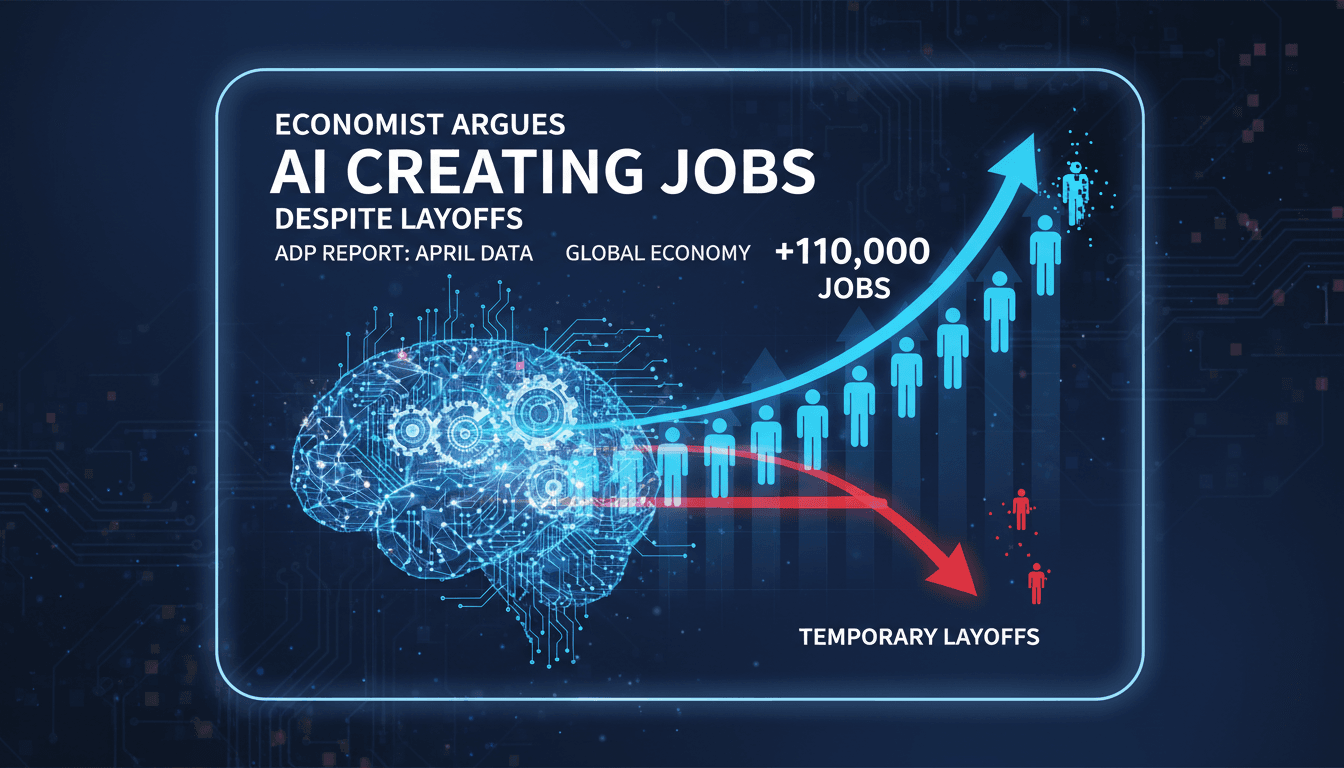
Economist Torsten Sløk, chief economist at Apollo, argues that AI is not leading to job losses, despite ongoing layoffs in various sectors. He emphasizes that AI is actually creating jobs, a claim supported by recent ADP employment data showing an increase of nearly 110,000 jobs in April. This data counters the prevailing narrative that links AI advancements to workforce reductions.
Sløk's insights challenge the notion that technological progress inevitably results in job displacement. Instead, he presents a more optimistic view of AI's role in the labor market, suggesting that it may enhance job opportunities rather than diminish them.
The Context
The discussion around AI's impact on employment comes amid widespread concerns about its effects on the labor market. Many companies have cited AI advancements as a reason for layoffs, leading to fears of a shrinking job market. However, Sløk's analysis provides a counterpoint, indicating that the labor market remains resilient.
The recent ADP report, which revealed a significant increase in private sector jobs, serves as a critical data point in this ongoing discourse. As more information becomes available, it will be essential to differentiate between temporary layoffs and long-term job creation trends.
Takeaway
As AI technology continues to evolve, it may reshape the job market in ways that create new opportunities. Stakeholders should monitor future employment reports for trends related to AI and job creation. Additionally, responses from companies implementing AI technologies regarding their workforce strategies will be crucial in understanding the broader implications.
The ongoing conversation about AI's role in the labor market will likely develop as more data emerges. It is vital to remain informed and adaptable to the changing landscape of employment.
Tech news, hardware, and AI tools coverage.
"PC/tech site increasingly covering AI hardware and apps."
— A47 Editor
A top economist says there's "zero evidence" AI is killing jobs, despite thousands of actual layoffs
In a recent post titled "Zero Evidence of AI-Related Job Losses," economist Sløk argues that there is no evidence to support claims that artificial intelligence is leading to job losses, despite reports of significant layoffs. He references ADP emplo...
Corporate leadership, finance, technology, and market trends.
"Fortune covers financial trends, leadership, and innovation with a pragmatic editorial approach."
— A47 Editor
Apollo chief economist says there’s ‘zero evidence’ AI is killing jobs—in fact, he says it’s creating them
Torsten Sløk, chief economist at Apollo, asserts that there is 'zero evidence' that artificial intelligence (AI) is leading to job losses; instead, he claims it is generating new employment opportunities, even as some companies cite AI as a reason fo...
Technology business and AI-related headlines.
"Data-driven tech newsroom with global scope."
— A47 Editor
Economist Slok Doesn’t Expect an AI Impact on May Jobs Report
Torsten Slok, chief economist at Apollo, has stated that he does not anticipate a significant impact from artificial intelligence (AI) on the upcoming May jobs report, countering some prevailing concerns about AI's effect on the labor market.
Technology business news, market impacts, and innovation trends.
"Bloomberg is a premier financial and tech news provider, respected for its in-depth reporting and analytical rigor."
— A47 Editor
Economist Slok Doesn’t Expect an AI Impact on May Jobs Report
Torsten Slok, chief economist at Apollo, has stated that he does not anticipate a significant impact from artificial intelligence (AI) on the upcoming May jobs report, countering some prevailing concerns about AI's effect on the labor market.