
U.S. and Iran reach interim peace deal to extend ceasefire and reopen Strait of Hormuz
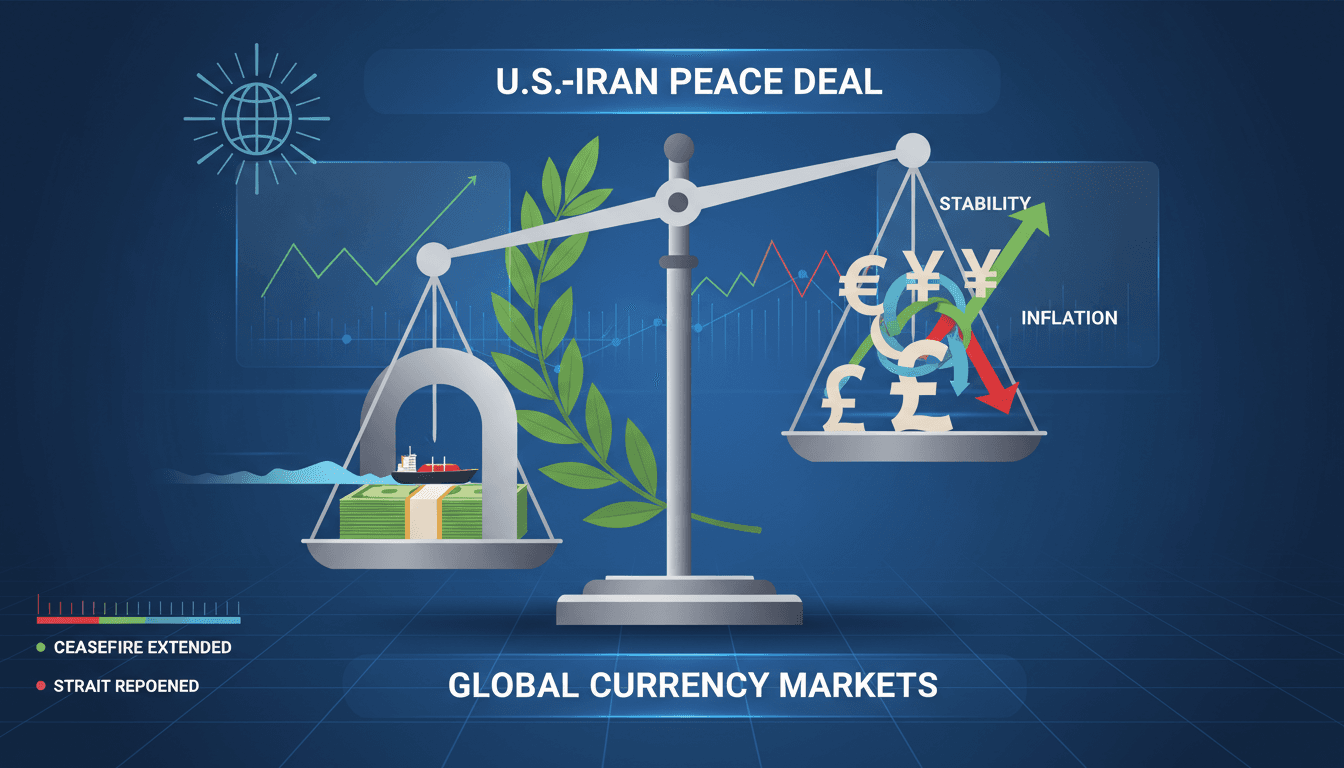
Here's what it means for you.
The recent interim peace deal between the U.S. and Iran is poised to influence global markets, particularly in the currency sector. As the dollar strengthens, investors are cautiously optimistic about the potential for reduced geopolitical tensions. However, ongoing inflation concerns and central bank policy adjustments will continue to shape economic stability in the near term. This agreement may provide temporary relief, but the broader implications for inflation and market dynamics remain uncertain. Stakeholders will be closely monitoring the situation as it unfolds.
What happened
The U.S. and Iran have signed a preliminary agreement aimed at extending a ceasefire and reopening the strategically vital Strait of Hormuz, which has been blocked since February. This development marks a significant step in easing tensions that have escalated over recent months. The announcement has already begun to influence global markets, particularly the currency market, with the dollar showing signs of strength.
The ceasefire extension is expected to have immediate effects on investor sentiment, as the ongoing conflict has created volatility in various sectors. The deal comes at a time when the Bank of Japan has raised interest rates to a 31-year high, further complicating the economic landscape.
The Context
The geopolitical backdrop of this agreement is critical, as the Bank of Japan's recent interest rate hike reflects significant monetary policy shifts in response to inflationary pressures. Since the onset of the conflict in February, the dollar index has increased by 2%, indicating a stronger dollar amidst rising tensions. Investor sentiment remains cautious as central banks prepare for upcoming meetings that could further influence market dynamics.
The reopening of the Strait of Hormuz is particularly significant, given its role as a major oil transit route. The implications of this deal extend beyond immediate market reactions, as it may stabilize regional dynamics in the long term. However, persistent inflation concerns and central bank policies will continue to be scrutinized.
Takeaway
Looking ahead, the peace deal may provide temporary relief to markets, but ongoing inflation concerns and geopolitical risks will remain influential. Central bank meetings in the coming days will be pivotal in shaping future monetary policy and market reactions. Investors will be closely monitoring how the implementation of the U.S.-Iran deal unfolds and its potential impact on economic stability.
As the situation develops, the focus will be on the effectiveness of the peace deal in stabilizing the region and its broader implications for global economic conditions. The interplay between inflation and currency markets will be a key area of observation.
Markets desk coverage, trading insights, and investor updates.
"WSJ’s markets reporting provides in-depth analysis and context for investors."
— A47 Editor
Dollar Rises as Investors Consider Details of U.S.-Iran Deal
The U.S. dollar experienced a slight increase following a period of modest declines, driven by the announcement of an interim peace deal between the U.S. and Iran. This development has sparked interest among investors as they assess the implications ...
Business, markets, economy, and corporate news with strong UAE and regional relevance.
"Emirates 24|7 business coverage tends to center UAE markets, property, regulation, and regional economic developments."
— A47 Editor
Dollar near 10-day lows, no respite for yen after BOJ hikes as expected Dollar near 10-day lows, no respite for yen after BOJ hikes as expected
The dollar remained near 10-day lows as a preliminary agreement to end the Iran war was signed, boosting risk appetite, while the yen hovered around the critical 160 level following the Bank of Japan's anticipated interest rate hike.
Currency market headlines, FX rates, central-bank chatter, and macro drivers moving major pairs.
"Investing.com’s forex stream is useful for fast updates across USD, EUR, JPY, GBP and emerging-market FX."
— A47 Editor
Dollar firms as Iran truce cheer fades; BOJ hikes rates to 31-yr high, RBA holds
The U.S. dollar has strengthened as optimism surrounding a recent peace deal between the United States and Iran diminishes, coinciding with the Bank of Japan's (BOJ) decision to raise interest rates to a 31-year high. This shift in sentiment has led ...