
Israeli ministers call for military escalation against Hezbollah following drone attacks
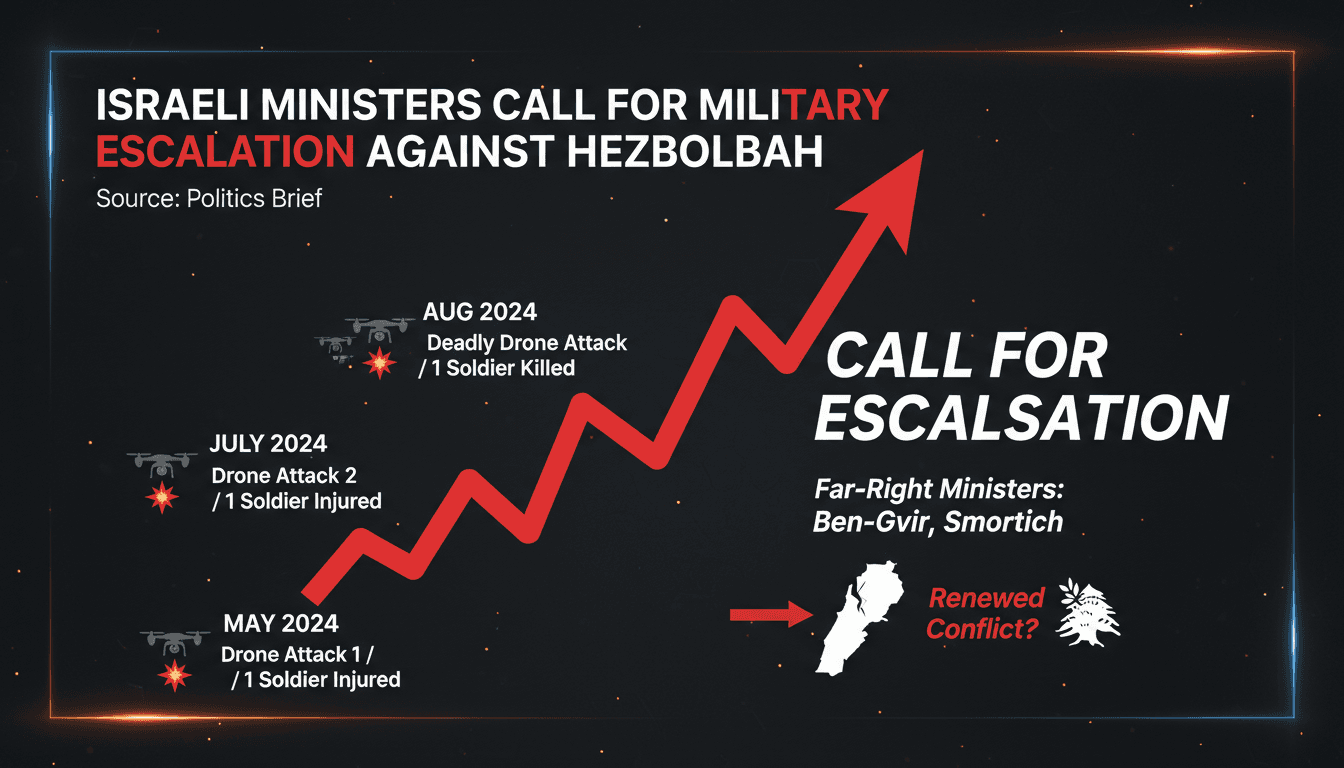
Here's what it means for you.
The recent calls from Israeli ministers for military escalation against Hezbollah signal a significant shift in the region's security dynamics. As internal pressures mount, the potential for renewed conflict could disrupt ongoing diplomatic efforts and exacerbate instability in Lebanon. Stakeholders in the region, including international mediators, will need to closely monitor these developments to assess their implications for peace and security. The situation underscores the fragility of ceasefire negotiations, as aggressive rhetoric from Israeli officials may provoke further hostilities. This escalation could have broader ramifications for regional alliances and security policies.
What happened
Israeli officials are urging Prime Minister Benjamin Netanyahu to escalate military actions against Hezbollah following drone attacks that resulted in the death of an Israeli soldier. The calls for renewed strikes include targeting buildings in Beirut and a return to intensive warfare, despite ongoing ceasefire efforts. This escalation is fueled by internal pressure from far-right ministers who demand a strong response to Hezbollah's threats.
The recent drone attacks have intensified hostilities, with 24 Israelis reported killed since the conflict's escalation began. The Israeli government is grappling with how to respond effectively while managing internal divisions over military strategy.
The Context
The Israeli government faces significant internal pressure from far-right ministers advocating for aggressive military responses to Hezbollah's drone threats. This internal dynamic complicates the ongoing U.S.-brokered talks between Lebanon and Israel, as Hezbollah continues to refuse disarmament and engages in further attacks. The backdrop of rising tensions and casualties has created a volatile environment that could lead to renewed conflict.
The situation is further complicated by the fact that Israeli military operations are currently limited to a designated 'yellow line' along the Lebanese border. As the conflict escalates, the implications for regional stability and diplomatic efforts become increasingly concerning.
Takeaway
As calls for military escalation grow within the Israeli government, the potential for renewed conflict in Lebanon increases. This situation complicates ongoing diplomatic efforts and raises concerns about regional stability. Stakeholders should closely monitor developments in U.S.-brokered talks between Lebanon and Israel, as well as any military escalations following the recent calls from Israeli ministers.
The next steps taken by Israeli leadership will be crucial in determining the trajectory of the conflict and its broader implications for the region.
Pan-Arab news coverage spanning politics, business, sports, and regional affairs.
"Asharq Al-Awsat reflects a broad Arab editorial perspective with strong attention to regional geopolitics."
— A47 Editor
سموتريتش وزامير يدعوان نتنياهو للتمرد على ترمب وقصف بيروت
Israeli Chief of Staff Eyal Zamir and Minister Bezalel Smotrich have urged Prime Minister Benjamin Netanyahu to escalate military actions by targeting buildings in Beirut in response to drone activities by Hezbollah. This call for increased aggressio...
English-language reporting on Saudi politics, policy, and society.
"Saudi Gazette reflects mainstream Saudi institutional perspectives."
— A47 Editor
Israeli far-right ministers call for return to war in Lebanon
Two Israeli ministers, Itamar Ben Gvir and Bezalel Smotrich, have urged Prime Minister Benjamin Netanyahu to resume military operations in Lebanon following drone attacks by Hezbollah, despite an existing ceasefire. Ben Gvir specifically called for i...
Arabic-language coverage of political affairs and current events.
"Okaz political coverage typically follows mainstream Saudi framing on national and regional affairs."
— A47 Editor
المُسيّرات تفجّر خلافات في حكومة نتنياهو.. وبن غفير: لا تسامح مع «حزب الله»
Israeli National Security Minister Itamar Ben Gvir called for a hardline stance against Hezbollah's drones, emphasizing the need to return to war. During a security meeting, Chief of Staff Eyal Zamir suggested attacking buildings in Beirut in respons...
Regional coverage and analysis focused on politics, diplomacy, and business across the Middle East.
"Al-Monitor is known for analytical reporting on Middle East politics and policy developments."
— A47 Editor
Israeli right-wing ministers urge Netanyahu to resume Beirut strikes to counter Hezbollah drone attacks
Israeli Finance Minister Bezalel Smotrich has urged Prime Minister Benjamin Netanyahu to resume airstrikes on Beirut following a deadly drone attack by Hezbollah that resulted in the death of an Israeli soldier. This call for military action reflects...