
Debate Intensifies Over Bitcoin BIP 110 Proposal Amid Zero Miner Support
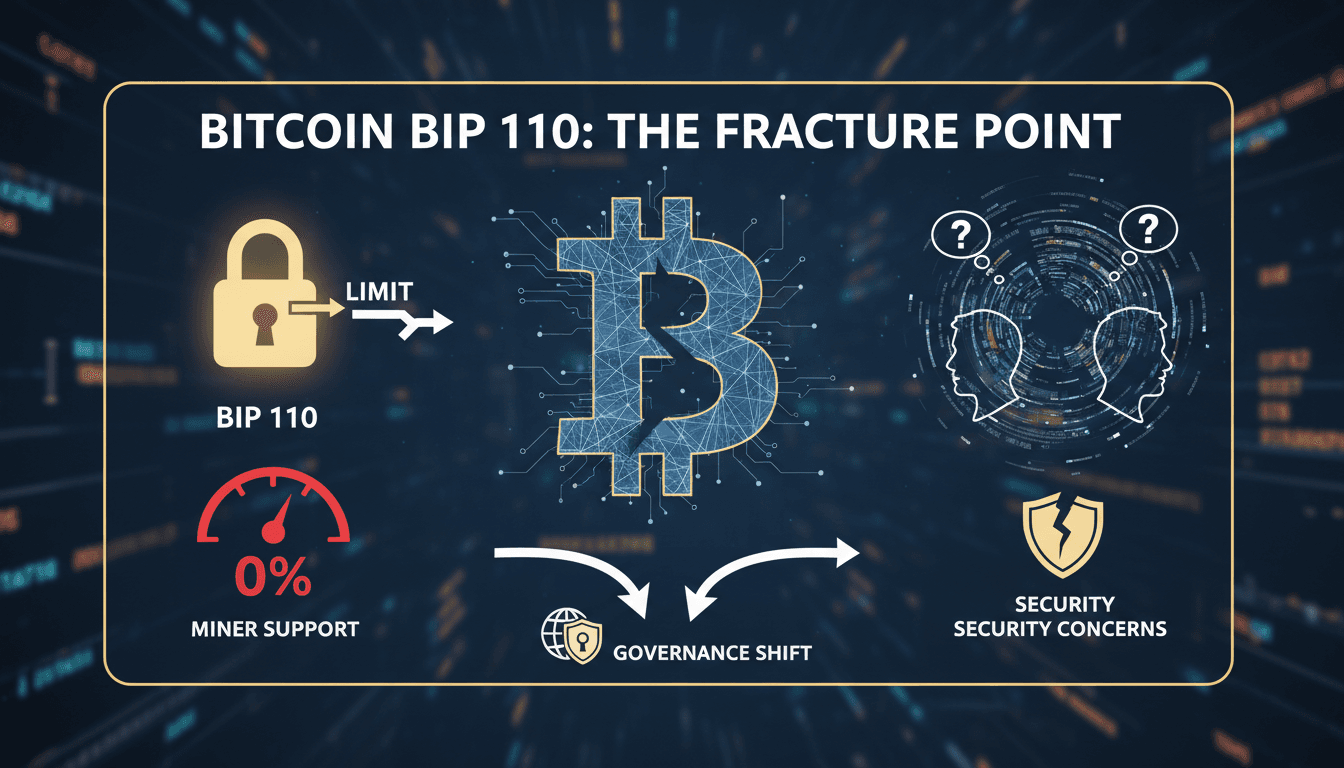
Here's what it means for you.
The ongoing debate surrounding the BIP 110 proposal is critical for Bitcoin's governance and network security. With zero miner support, influential figures are raising alarms about potential consensus conflicts that could arise. The outcome of this debate may shape the future landscape of Bitcoin, impacting both its operational integrity and community trust. As the deadline approaches, stakeholders are urged to closely monitor developments. The implications of this proposal extend beyond technical adjustments, potentially affecting market confidence and regulatory perspectives.
What happened
The Bitcoin community is currently embroiled in a debate over the BIP 110 proposal, which aims to limit arbitrary data on the blockchain for one year. As the deadline nears, miner support for the proposal remains at zero, raising concerns among key advocates. Prominent figures like Michael Saylor and Adam Back have publicly criticized the proposal, arguing that it could lead to greater risks than the spam it seeks to address.
This lack of miner backing highlights a significant divide within the community. The ongoing discussions are taking place against a backdrop of declining Ordinals transaction activity, further complicating the situation.
The Context
BIP 110 is designed to cap arbitrary data on the Bitcoin network, a move that some believe is necessary to address spam issues. However, the proposal has faced opposition from influential voices in the Bitcoin ecosystem, including Saylor and Back, who emphasize the delicate balance of capital, node commerce, and miner hashrate. Their concerns reflect a broader apprehension about the potential for a consensus conflict that could jeopardize network security.
As the deadline approaches, the stakes are high for Bitcoin's governance. The outcome of this debate could have lasting implications for how decisions are made within the community and how the network operates in the future.
Takeaway
The future of Bitcoin governance may hinge on the resolution of the BIP 110 debate. Stakeholders should closely monitor miner responses as the deadline approaches, as any shift in consensus could significantly impact the network's security and operational integrity. The ongoing discussions will likely shape community consensus regarding Bitcoin governance in the long term.
As the situation evolves, the Bitcoin community must navigate these challenges carefully to maintain trust and stability within the ecosystem.
Real-time updates, analysis, and reports on the blockchain and cryptocurrency sectors.
"Crypto News delivers real-time updates, analysis, and reports on the blockchain and cryptocurrency sectors."
— A47 Editor
Saylor maps Bitcoin’s power as BIP 110 fork fight grows
Michael Saylor has highlighted the significance of Bitcoin's balance of capital, node commerce, and miner hashrate as the ongoing BIP 110 dispute challenges network consensus and security. The BIP 110 proposal aims to impose limits on arbitrary data,...
Covers blockchain, cryptocurrency news, project analysis, and market insights.
"CoinDesk is a well-established cryptocurrency and blockchain news provider, offering comprehensive insights, market data, and industry research."
— A47 Editor
Bitcoin’s BIP 110 fork deadline nears with miner support at zero
The deadline for Bitcoin's BIP 110 proposal approaches, which seeks to impose limits on arbitrary data for one year, yet miner support remains nonexistent. Key figures like Michael Saylor and Adam Back have raised concerns that framing a spam issue a...
Covers blockchain, cryptocurrency news, project analysis, and market insights.
"Cointelegraph is a leading crypto-focused media outlet known for timely news, analysis, and educational content related to blockchain and digital assets."
— A47 Editor
Bitcoin bulls Michael Saylor, Adam Back slam BIP-110 Ordinals proposal
Bitcoin advocates Michael Saylor and Adam Back have publicly criticized the BIP-110 proposal, which aims to impose limits on arbitrary data within the Bitcoin network, particularly concerning Ordinals. This criticism comes as the proposal approaches ...