
China imposes export curbs on rare earth elements impacting global industries
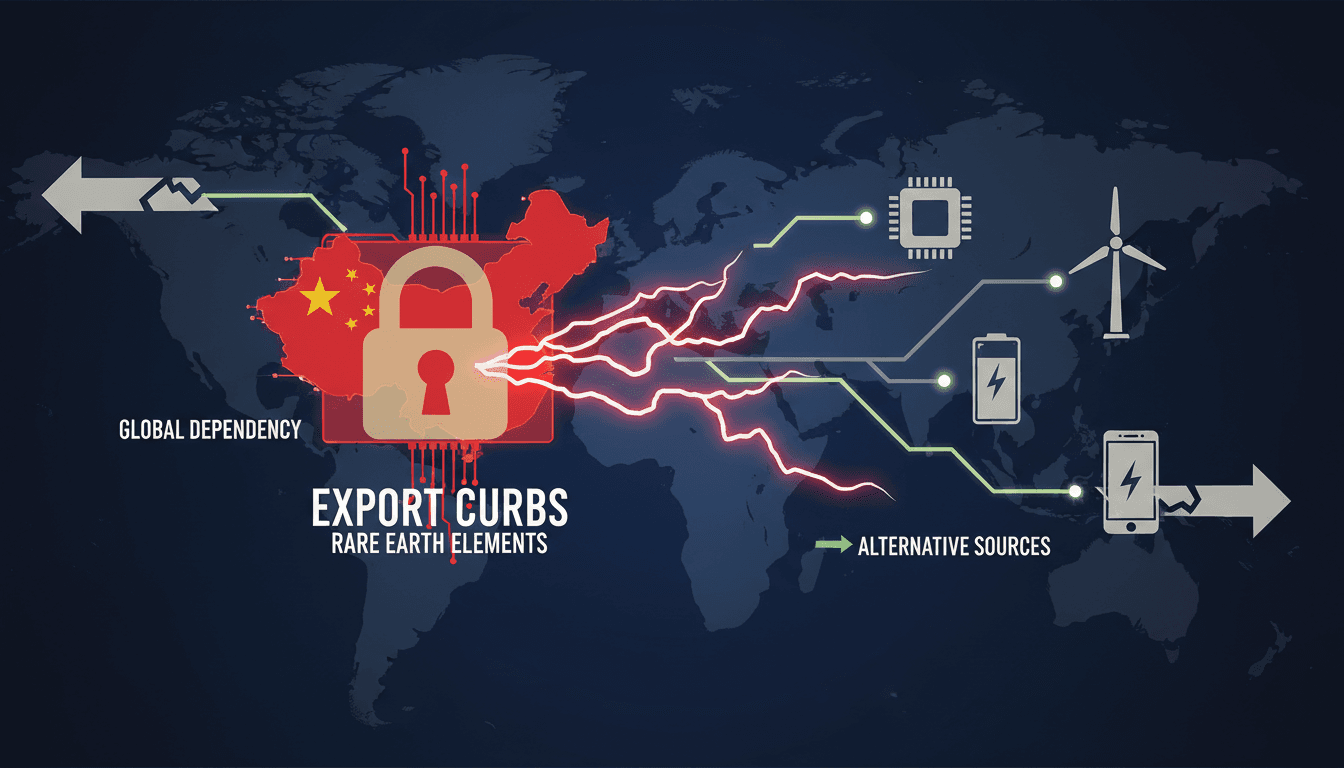
Here's what it means for you.
China's recent export controls on rare earth elements are poised to disrupt global supply chains, potentially threatening $6.5 trillion in production across various industries. This move reflects a growing trend of resource nationalism, as China seeks to assert its dominance over critical materials. As a result, Western nations may accelerate their efforts to develop alternative sources of rare earth materials to reduce dependency on China. The implications of these restrictions extend beyond immediate market reactions, influencing long-term strategies in technology, renewable energy, and manufacturing sectors. Companies reliant on these materials must now navigate a more complex landscape, prompting a reevaluation of supply chain strategies.
What happened
China has enacted export controls on rare earth elements and niche metals, significantly impacting global supply chains. These measures are part of a broader strategy to assert resource nationalism, which is increasingly distorting international markets. The restrictions are expected to have a profound effect on industries that depend heavily on these critical materials.
As the world's largest supplier of rare earths, China's actions are likely to create ripple effects across various sectors, including technology and renewable energy. The potential economic impact is estimated at $6.5 trillion, highlighting the stakes involved in this geopolitical maneuver.
The Context
China dominates the rare earth market, supplying a substantial portion of global demand. The recent export restrictions are indicative of a larger trend of resource nationalism, where countries prioritize control over their natural resources. This shift is prompting Western industries to seek alternatives to mitigate reliance on Chinese materials.
The timing of these measures coincides with rising tensions in international trade and geopolitics, making the situation even more critical. As industries grapple with these changes, the need for strategic planning and investment in domestic production becomes increasingly apparent.
Takeaway
The ongoing situation may accelerate efforts in Western nations to secure alternative sources of rare earth materials. As industries adapt to the new landscape, monitoring developments in strategies to reduce dependency on China will be crucial. Additionally, potential retaliatory measures from China in response to international pressures could further complicate the global market.
In the coming months, stakeholders should remain vigilant as the geopolitical significance of rare earth elements continues to evolve. The focus on domestic production and alternative sourcing strategies will likely intensify as companies seek to mitigate risks associated with reliance on Chinese supplies.
UAE-based English-language newspaper covering regional politics, economics, and global affairs.
"The National reflects Emirati policy perspectives while maintaining international editorial standards."
— A47 Editor
China's rare earth export curbs may hit $6.5tn in global production
China has announced export curbs on rare earth elements, a move that could impact global production valued at $6.5 trillion. These restrictions come amid rising tensions with the U.S. and other nations, as China seeks to leverage its dominance in the...
Oil, metals, and agriculture: supply/demand headlines, OPEC chatter, inventories, and price action.
"Solid tape for energy and metals traders tracking macro and micro catalysts."
— A47 Editor
China’s rare earth curbs endanger $6.5 trillion of Western industry, IEA says
China has implemented export curbs on rare earth elements, a move that the International Energy Agency (IEA) warns could jeopardize $6.5 trillion of Western industry, particularly affecting sectors reliant on these critical materials.
Editor-curated FT homepage stories spanning markets, business, world, and opinion.
"The Financial Times is a globally respected business publication with a centrist/center-left tone and strong markets focus."
— A47 Editor
The race to break China’s metals grip
Beijing's recent export controls on rare earths and other niche metals are distorting global markets and intensifying resource nationalism, raising concerns among international stakeholders. These measures are perceived as a strategic move to maintai...