
Protests Erupt in Iran Against Foreign Minister Over US Peace Deal Remarks
Here's what it means for you.
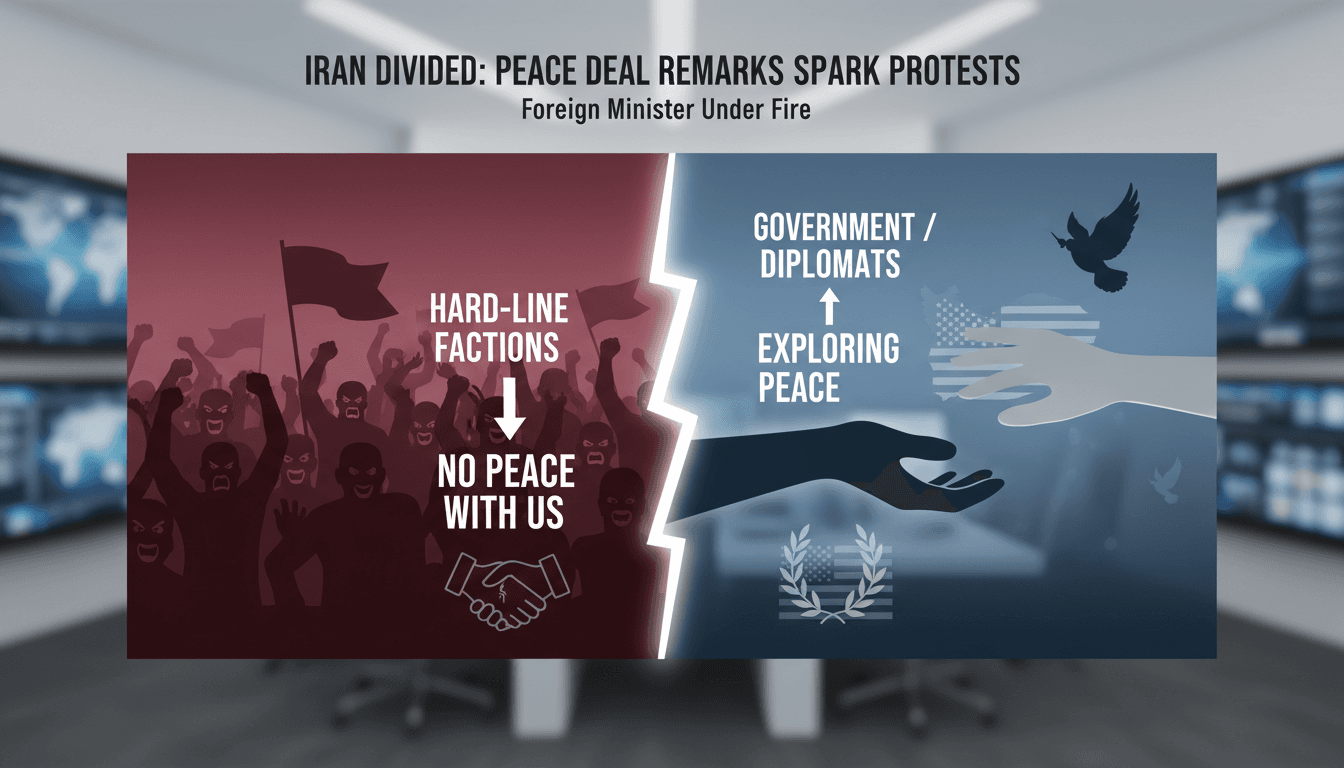
The recent protests in Mashhad signal a significant internal divide within Iran regarding diplomatic relations with the United States. As Foreign Minister Abbas Araghchi faces backlash from hard-line factions, the Iranian government must navigate these tensions carefully to maintain public support. The outcome of these protests could influence future negotiations and regional stability, making it essential for stakeholders to monitor developments closely.
What happened
Protests erupted in Mashhad, Iran, against Foreign Minister Abbas Araghchi following his remarks about a potential peace deal with the US. Demonstrators gathered outside Iran's foreign ministry, expressing strong opposition to the proposed agreement. The protests were marked by chants against Araghchi and included women dressed in black chadors, emphasizing the intensity of the dissent.
The immediate trigger for the demonstrations was the backlash from hard-line factions within Iran, who oppose the ongoing diplomatic negotiations. As tensions rise, the Iranian government faces challenges in managing public sentiment while pursuing international relations.
The Context
The peace deal under discussion is part of ongoing diplomatic efforts between Iran and the US, facilitated by Pakistan. Araghchi recently stated that the proposed Islamabad Memorandum of Understanding is closer than ever to finalization, which has fueled the protests. The internal opposition from hard-line Iranian figures reflects a broader concern about the implications of such negotiations on national sovereignty and ideological principles.
As the Iranian government seeks to balance these competing interests, the protests highlight the contentious atmosphere surrounding the peace deal. The situation is further complicated by the historical animosity between Iran and the US, making any potential agreement a sensitive topic.
Takeaway
The protests in Mashhad indicate a growing divide within Iran regarding diplomatic relations with the US, which could significantly impact future negotiations. As the Iranian government continues to navigate these internal dissenting voices, its ability to manage public sentiment will be crucial for the success of any potential agreement. Observers should watch for further developments in the peace negotiations and potential responses from Iranian hard-liners as the situation evolves.
Regional coverage of Middle East politics, diplomacy, and security issues.
"Arab News Middle East coverage often reflects Saudi and Gulf strategic interests in regional affairs."
— A47 Editor
Dozens protest peace deal outside Iran foreign ministry: media
Dozens protested outside the Iranian foreign ministry in Mashhad, expressing their discontent with top diplomat Abbas Araghchi following his comments about a potential peace deal with the United States. The demonstrators, including women in black cha...
24/7 international news from a French perspective in multiple languages.
"France 24 is viewed as a globally focused outlet with balanced coverage and a European perspective."
— A47 Editor
Middle East Live: Dozens protest peace deal outside Iran foreign ministry
Dozens protested outside Iran's foreign ministry in Mashhad, expressing discontent with top diplomat Abbas Araghchi following his comments about a potential peace deal with the United States. The protest highlights the public's skepticism regarding t...
English-language reporting on Saudi politics, policy, and society.
"Saudi Gazette reflects mainstream Saudi institutional perspectives."
— A47 Editor
Iran FM says US memorandum 'closer than ever' to finalization
Iranian Foreign Minister Abbas Araghchi announced that the Islamabad Memorandum of Understanding between Iran and the United States is closer than ever to being finalized, highlighting significant progress in negotiations. He urged media to avoid spe...