
Netanyahu Orders Military to Increase Control Over Gaza to 70%
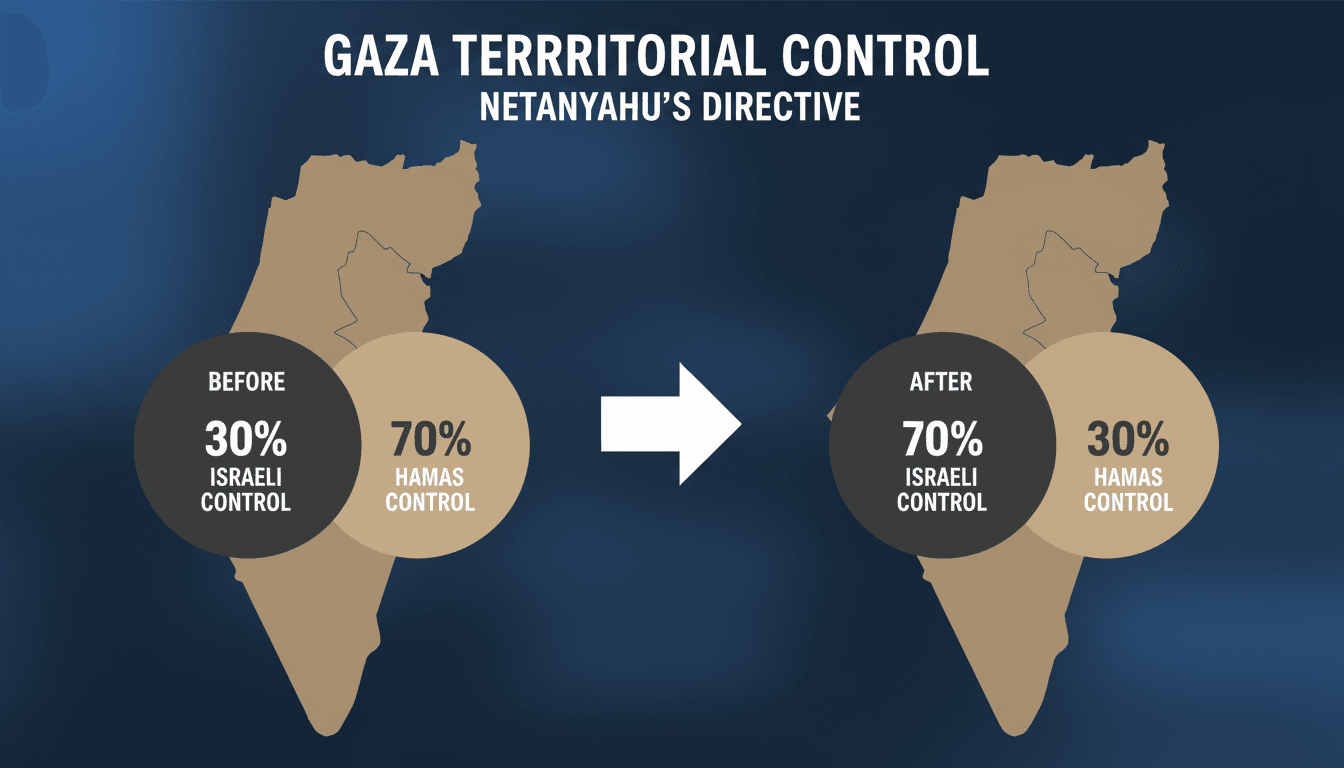
Here's what it means for you.
Increased military control in Gaza could impact regional stability and security for international investors.
What happened
Israeli Prime Minister Benjamin Netanyahu has ordered the military to expand its control over the Gaza Strip to approximately 70% of its territory.
The Context
- Escalating conflict: This directive follows a significant escalation in military operations after the October 2023 Hamas-led attack on southern Israel.
- Territorial changes: Israeli forces have already increased their control from 50% to about 64% of Gaza, indicating a systematic approach to territorial expansion.
- Humanitarian concerns: The expansion raises alarms about worsening humanitarian conditions for the densely populated Palestinian population.
The Number
— This is the current percentage of Gaza under Israeli military control, highlighting the rapid territorial changes that could affect regional dynamics.
Takeaway
As military operations continue, the situation in Gaza may evolve, influencing both humanitarian conditions and geopolitical stability.
Arabic-language coverage of Saudi, regional, and international affairs.
"Al Bilad offers mainstream Saudi newspaper coverage across domestic and broader Arab topics."
— A47 Editor
نتنياهو يوجه بالسيطرة على 70 % من القطاع.. تغول إسرائيلي على أراضي غزة
Israeli Prime Minister Benjamin Netanyahu has directed the Israeli military to take control of 70% of the Gaza Strip, indicating a shift towards escalating military operations despite a ceasefire agreement in place since October. This announcement wa...
Global news coverage with extensive reporting on Middle Eastern conflicts and geopolitics.
"Al Jazeera is a Qatar-based broadcaster known for wide regional coverage and alternative perspectives."
— A47 Editor
Netanyahu orders Israeli army to seize 70 percent of Gaza
Israeli Prime Minister Benjamin Netanyahu has ordered the Israeli army to seize control of 70 percent of the Gaza Strip, a directive that escalates military operations in the region and undermines existing ceasefire agreements. This move follows a re...
Comprehensive coverage of Middle Eastern and global issues.
"Al Jazeera is a prominent voice from the Global South, especially the Middle East, with an emphasis on underreported stories."
— A47 Editor
Netanyahu orders Israeli army to seize 70 percent of Gaza
Israeli Prime Minister Benjamin Netanyahu has ordered the Israeli army to seize control of 70 percent of the Gaza Strip, a directive that escalates military operations in the region and undermines existing ceasefire agreements. This move follows a re...
Latest Bahasa Malaysia headlines across national affairs, politics, business, and public developments.
"Astro Awani offers a broad latest-news feed useful for detecting fast-moving Malaysian institutional stories."
— A47 Editor
Netanyahu arah tentera Israel kuasai 70 peratus Gaza
Israeli Prime Minister Benjamin Netanyahu announced that Israeli forces have gained control over approximately 60 percent of Gaza, with plans to gradually increase this hold. This military strategy is part of Israel's ongoing operations in the region...
Editor-curated FT homepage stories spanning markets, business, world, and opinion.
"The Financial Times is a globally respected business publication with a centrist/center-left tone and strong markets focus."
— A47 Editor
Netanyahu orders Israeli forces to take control of 70% of Gaza
Israeli Prime Minister Benjamin Netanyahu has ordered Israeli forces to take control of 70% of Gaza, intensifying military operations against Hamas while simultaneously escalating attacks in southern Lebanon. This directive reflects a strategic appro...
International coverage from The Guardian's global desks.
"The Guardian is known for its progressive editorial stance and in-depth analysis."
— A47 Editor
Netanyahu orders Israeli army to seize ‘70% of Gaza Strip’, violating ceasefire deal
Israeli Prime Minister Benjamin Netanyahu has ordered the Israeli army to seize control of 70% of the Gaza Strip, a move that jeopardizes an existing ceasefire and threatens to exacerbate the humanitarian crisis in the region. This directive comes as...
Regional coverage and analysis focused on politics, diplomacy, and business across the Middle East.
"Al-Monitor is known for analytical reporting on Middle East politics and policy developments."
— A47 Editor
Netanyahu directs Israeli forces to expand Gaza control to 70 percent
Israeli Prime Minister Benjamin Netanyahu has ordered the military to expand control over the Gaza Strip to 70%, intensifying an ongoing conflict that has already devastated the region following a two-year military campaign. This directive comes as I...
Regional and international reporting focused on Middle Eastern politics, diplomacy, and economics.
"Asharq Al-Awsat is a Saudi-owned international newspaper reflecting mainstream Gulf political perspectives."
— A47 Editor
Israel PM Says Orders Army to Take Control of 70 Percent of Gaza Strip
Israeli Prime Minister Benjamin Netanyahu has ordered the military to take control of 70% of the Gaza Strip, marking a significant escalation in the ongoing conflict that has already caused extensive devastation in the region. This directive follows ...
Pan-Arab news coverage spanning politics, business, sports, and regional affairs.
"Asharq Al-Awsat reflects a broad Arab editorial perspective with strong attention to regional geopolitics."
— A47 Editor
نتنياهو: أمرت الجيش بالسيطرة على 70 % من قطاع غزة
Israeli Prime Minister Benjamin Netanyahu announced on Thursday that he has ordered the Israeli military to take control of 70 percent of the Gaza Strip. This directive marks a significant escalation in military operations in the region.