
Israeli Opposition Leader Criticizes U.S.-Iran Deal as Detrimental to Israel
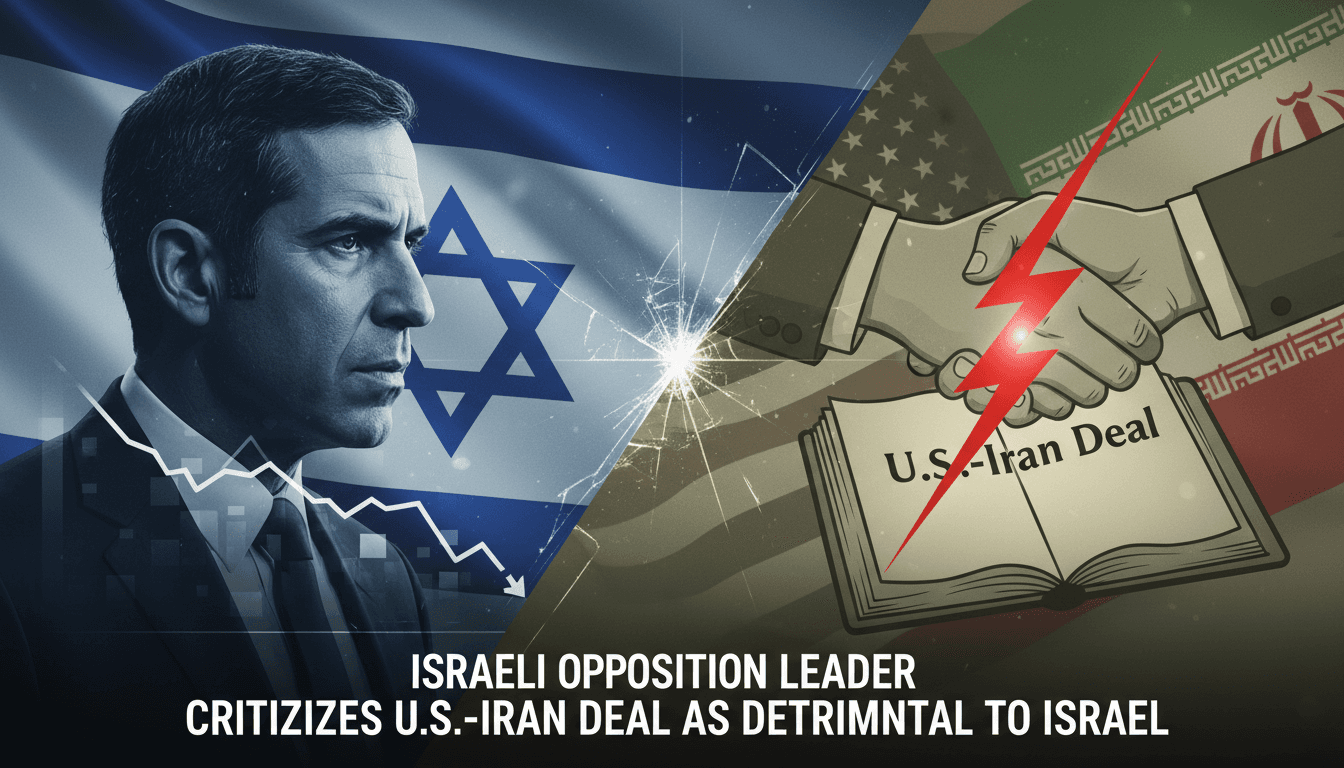
Here's what it means for you.
Yair Lapid's condemnation of the U.S.-Iran deal signals a growing rift in Israeli politics regarding foreign policy. His remarks highlight concerns over the perceived lack of Israeli influence in negotiations that could significantly impact national security. As opposition voices gain traction, the political landscape in Israel may shift, affecting future relations with the United States.
What happened
Israeli opposition leader Yair Lapid has publicly criticized the emerging U.S.-Iran deal, labeling it a disaster for Israel and the region. He argues that the agreement does not align with Israel's strategic goals and accuses Prime Minister Netanyahu of failing to secure better terms for the country. Lapid's condemnation reflects a broader sentiment within Israel regarding the current government's approach to Iran.
Lapid's comments come amid ongoing negotiations, which he believes lack sufficient Israeli input. He emphasized that the deal fails to meet any of Israel's strategic objectives, indicating a complete failure from his perspective. This criticism may lead to increased tensions within Israel's political landscape.
The Context
Yair Lapid has been a vocal opponent of the current government's strategy concerning Iran, expressing concerns that the U.S.-Iran negotiations undermine Israel's security interests. The deal is perceived as lacking adequate Israeli influence, raising alarms among opposition leaders about the implications for regional stability. Lapid's remarks underscore a significant concern that U.S. foreign policy may not align with Israel's national interests.
The timing of Lapid's statements is crucial, as they coincide with heightened scrutiny of Netanyahu's government and its diplomatic strategies. As negotiations progress, the Israeli opposition is likely to intensify its criticism, potentially reshaping the political discourse surrounding foreign policy in Israel. This situation may also affect the dynamics of U.S.-Israel relations moving forward.
Takeaway
As the U.S.-Iran negotiations continue, the Israeli opposition may amplify its dissent, which could have political ramifications for Netanyahu's government. The growing criticism from Lapid and others may lead to a reevaluation of Israel's approach to foreign policy and its relationship with the United States. Observers should watch for potential Israeli responses to the deal and further developments in the negotiations that could impact regional stability.
The ongoing discourse surrounding the U.S.-Iran deal highlights the complexities of Israeli politics and the challenges faced by the current administration. As opposition voices grow louder, the implications for both domestic and international relations will be significant.
Global coverage of politics, crises, and international affairs.
"HuffPost provides progressive-oriented reporting on international developments, often focusing on humanitarian and social justice issues."
— A47 Editor
Israeli Opposition Leader Lapid Says Trump’s Emerging Deal With Iran Is 'Bad For The Region'
Israeli Opposition Leader Yair Lapid has criticized the emerging U.S.-Iran deal, stating it does not align with Israel's security objectives and accusing Prime Minister Netanyahu of insufficiently involving Israel in the negotiations. Lapid's remarks...
Capitol Hill news, legislation, and policy insight.
"The Hill specializes in U.S. politics and policy, with a focus on Capitol Hill developments and a reputation for insider reporting."
— A47 Editor
Israeli opposition leader pushes back on reported US-Iran peace framework
Israeli opposition leader Yair Lapid has publicly criticized the reported terms of a peace framework being negotiated between the U.S. and Iran, labeling the emerging agreement as a disaster and expressing his long-standing support for military actio...
Conservative-leaning political and national coverage.
"The Washington Times is a conservative-leaning newspaper known for its political coverage and advocacy of right-of-center viewpoints."
— A47 Editor
Israeli opposition leader Lapid says Trump's emerging deal with Iran is 'bad for the region'
Israeli opposition leader Yair Lapid criticized the emerging deal between the U.S. and Iran, stating it does not meet Israel's objectives regarding the ongoing conflict. He accused Prime Minister Benjamin Netanyahu of failing to secure a more favorab...
Regional and international reporting focused on Middle Eastern politics, diplomacy, and economics.
"Asharq Al-Awsat is a Saudi-owned international newspaper reflecting mainstream Gulf political perspectives."
— A47 Editor
Israeli Opposition Leader Lapid Says Trump’s Emerging Deal with Iran Is ‘Bad for the Region’
Israeli Opposition Leader Yair Lapid has criticized President Donald Trump's emerging deal with Iran, labeling it as detrimental to the region. Lapid's comments come amid ongoing tensions and military operations involving Israel, particularly in Leba...