
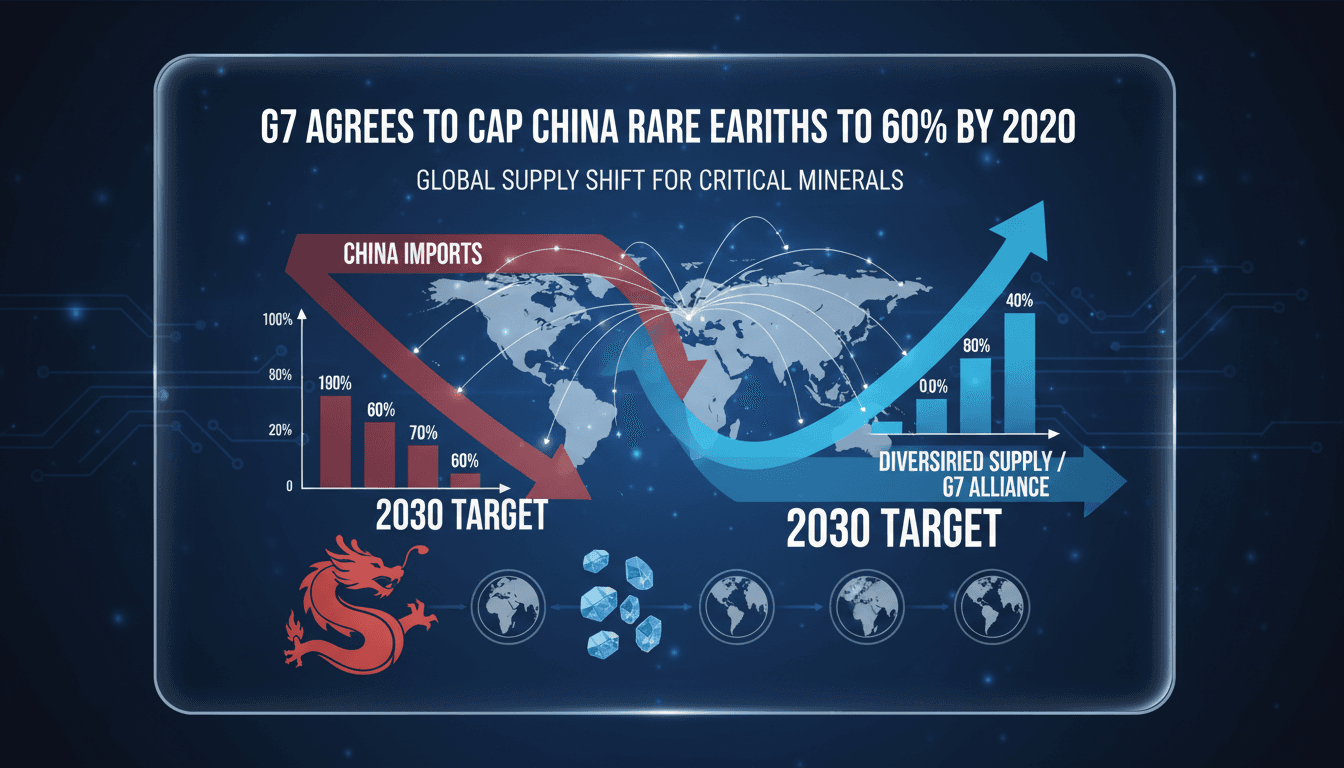
G7 Nations Agree to Limit Rare Earth Imports from China to 60% by 2030
Here's what it means for you.
The G7's decision to cap rare earth imports from China at 60% by 2030 signals a significant shift in global supply chain dynamics. This move aims to enhance self-sufficiency among member nations and reduce vulnerabilities associated with over-reliance on a single supplier. Industries dependent on these critical minerals may need to adapt to new sourcing strategies and potential shifts in pricing. As the G7 establishes a critical minerals alliance, stakeholders across various sectors should prepare for increased investments in alternative sources. This initiative could reshape market landscapes and foster international collaborations in the rare earth sector.
What happened
On June 17, 2026, the G7 nations reached an agreement to limit imports of rare earth minerals from China to 60% by 2030. This decision is part of a broader strategy to reduce dependency on a single country for these essential resources. The agreement reflects a growing recognition of the geopolitical tensions and supply chain vulnerabilities associated with China's dominance in the rare earth market.
The G7's commitment to this target is seen as a bold and ambitious goal, aiming to secure alternative sources of critical minerals. By establishing a cap on imports, the G7 is taking significant steps toward diversifying its supply chains and enhancing global resilience.
The Context
China currently dominates the rare earth market, supplying a substantial portion of global demand. The G7's decision comes amid rising concerns over supply chain vulnerabilities and the geopolitical implications of relying heavily on a single country for critical minerals. The establishment of a critical minerals alliance is viewed as a necessary step to ensure that member nations can secure alternative sources.
The G7 includes Canada, France, Germany, Italy, Japan, the United Kingdom, and the United States, all of which are keenly aware of the strategic importance of rare earth minerals for various technologies and industries. The timing of this agreement underscores the urgency of addressing these vulnerabilities in light of ongoing geopolitical tensions.
Takeaway
The G7's initiative to limit China's share of rare earth imports could lead to increased investments in alternative sources and foster international collaborations. Achieving the 60% target will require substantial efforts and coordination among member countries. Stakeholders should monitor developments in the establishment of the critical minerals alliance and anticipate potential responses from China regarding these new policies.
As the global landscape shifts, industries reliant on rare earth minerals may need to adapt to changing supply dynamics. The G7's commitment signals a proactive approach to enhancing self-sufficiency and resilience in critical mineral supply chains.
Corporate leadership, finance, technology, and market trends.
"Fortune covers financial trends, leadership, and innovation with a pragmatic editorial approach."
— A47 Editor
The G7 just pledged to break China’s rare earth grip — there’s a lot of work to do
The G7 nations have pledged to limit China's dominance in the rare earth market to 60% by 2030, a significant move aimed at reducing dependency on Chinese resources. This commitment reflects ongoing discussions among the world's largest economies abo...
Macro commentary, policy analysis, growth/inflation themes, and global outlooks.
"Contextual macro coverage that complements day-to-day market headlines."
— A47 Editor
G7 sets up critical minerals alliance, platform to cut reliance on China
The G7 has established a critical minerals alliance aimed at reducing reliance on China for essential resources. This initiative is part of a broader strategy to enhance supply chain resilience and address vulnerabilities in the sourcing of critical ...
Global markets, investing, and macroeconomics from a premier financial newsroom.
"Bloomberg is respected for in-depth financial reporting and data-driven analysis."
— A47 Editor
G7 Aims to Ensure China Supplies No More Than 60% of Rare Earths
The Group of Seven (G7) nations have reached an agreement to limit imports of critical minerals from any single country, specifically targeting a maximum of 60% from China by 2030. This decision reflects ongoing discussions aimed at reducing dependen...