
Saudi Arabia and UAE Condemn Iranian Attacks on Kuwait
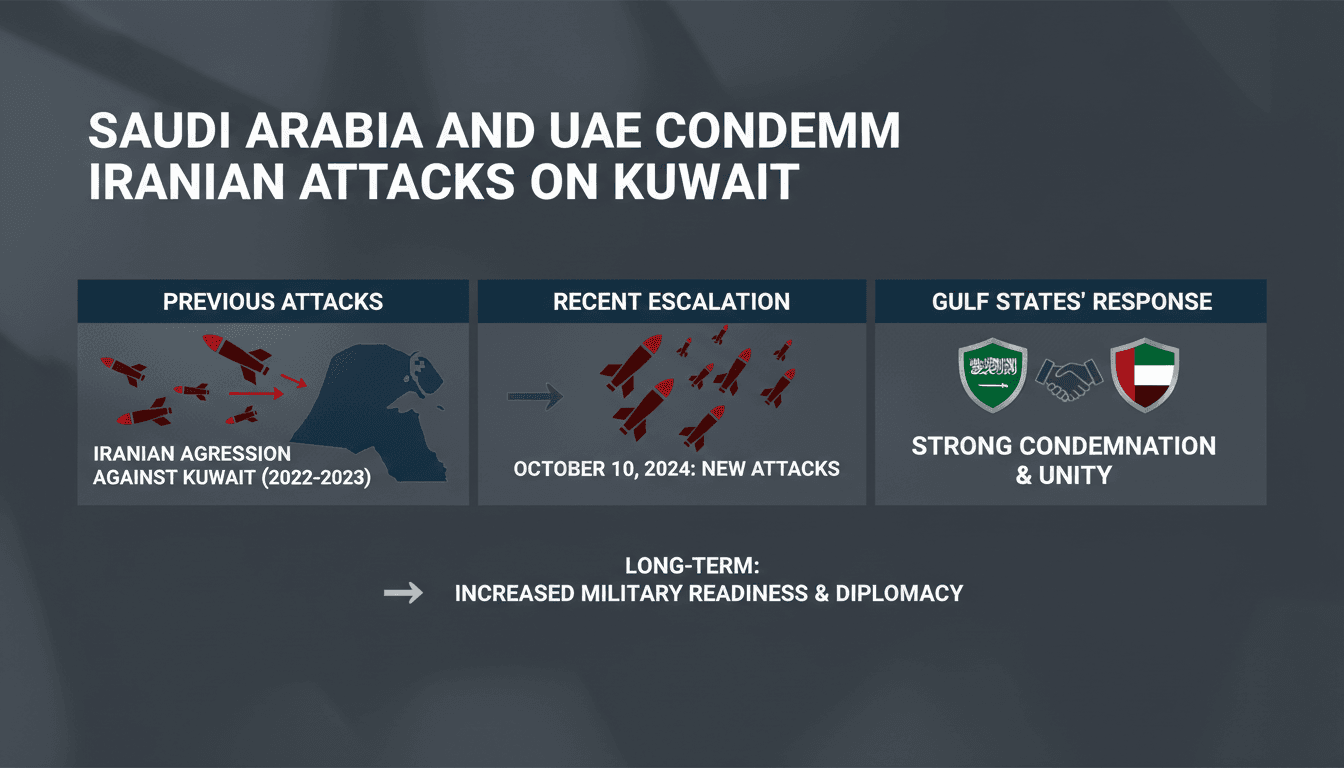
Here's what it means for you.
The recent missile and drone attacks by Iran on Kuwait have escalated tensions in the Gulf region, prompting strong responses from Saudi Arabia and the UAE. This situation underscores the fragility of regional security and the potential for increased military readiness among Gulf states. Stakeholders should closely monitor developments, as diplomatic efforts may emerge to de-escalate the conflict. The solidarity shown by Saudi Arabia and the UAE highlights a unified stance against Iranian aggression, which could influence future diplomatic relations in the region. The implications for international policy and market stability are significant, as ongoing tensions may affect energy markets and geopolitical alliances.
What happened
Iran launched missile and drone attacks against Kuwait, which were met with strong condemnations from Saudi Arabia and the UAE. Both nations expressed their solidarity with Kuwait, emphasizing the importance of upholding its sovereignty and security. Kuwait's defense systems successfully intercepted the attacks, preventing further damage and casualties.
This incident marks a continuation of hostilities, as it follows similar attacks on Kuwait by Iran just weeks earlier. The actions are viewed as a violation of international law and Kuwait's sovereignty, raising alarms among neighboring countries.
The Context
The backdrop of these attacks is a long-standing tension between Iran and its Gulf neighbors, particularly Kuwait, Saudi Arabia, and the UAE. The recent escalation is indicative of a broader pattern of Iranian aggression in the region, which has prompted calls for increased military readiness among Gulf states. The timing of these attacks, occurring shortly after previous incidents, suggests a deliberate strategy by Iran to assert its influence.
Saudi Arabia and the UAE's condemnation reflects a commitment to regional stability and security, as both nations seek to protect their interests against perceived threats. The situation is further complicated by the geopolitical dynamics at play, including international responses and potential alliances.
Takeaway
The Iranian attacks on Kuwait highlight the rising tensions in the Gulf region and the potential for further conflict if diplomatic resolutions are not pursued. Stakeholders should watch for possible military responses from Kuwait or its allies, as well as any diplomatic efforts aimed at de-escalating the situation. The involvement of regional powers will be critical in shaping the future stability of the Gulf.
As the situation develops, the implications for international relations and regional security will be significant. The need for a coordinated response among Gulf states may become increasingly urgent as tensions persist.
Regional and international reporting focused on Middle Eastern politics, diplomacy, and economics.
"Asharq Al-Awsat is a Saudi-owned international newspaper reflecting mainstream Gulf political perspectives."
— A47 Editor
Saudi Arabia Strongly Condemns 'Heinous' Iranian Attacks against Kuwait
Saudi Arabia has strongly condemned the recent Iranian missile and drone attacks on Kuwait, labeling them as 'heinous' acts that threaten regional security. The Saudi Ministry of Foreign Affairs emphasized the need for stability and cooperation among...
Arabic-language local coverage focused on UAE domestic issues, civic affairs, and community reporting.
"Emarat Al Youm local coverage emphasizes UAE institutions, public services, and community-level developments."
— A47 Editor
الإمارات تُدين بشدة الاعتداءات الإرهابية الإيرانية على دولة الكويت بالصواريخ والطائرات المسيّرة الإمارات تُدين بشدة الاعتداءات الإرهابية الإيرانية على دولة الكويت بالصواريخ والطائرات المسيّرة
The United Arab Emirates has strongly condemned the Iranian terrorist attacks targeting Kuwait with missiles and drones. This statement reflects the UAE's commitment to regional stability and security amidst escalating tensions.
Arabic-language coverage of international news and geopolitics.
"RT Arabic is a Russian state-funded outlet often criticized for promoting Kremlin-aligned narratives."
— A47 Editor
السعودية تدين الهجمات الإيرانية على الكويت وتؤكد تضامنها الكامل معها
The Saudi Ministry of Foreign Affairs condemned the repeated Iranian attacks targeting Kuwait, describing them as unlawful actions that undermine international efforts to restore security in the region. This statement reflects Saudi Arabia's strong s...
Arabic-language coverage of political affairs and current events.
"Okaz political coverage typically follows mainstream Saudi framing on national and regional affairs."
— A47 Editor
السعودية: نرفض بشكل قاطع اعتداءات إيران على الكويت
The Saudi Ministry of Foreign Affairs condemned Iran's repeated attacks on Kuwait, emphasizing a firm rejection of these aggressions that violate Kuwait's sovereignty and international law. The statement highlighted Saudi Arabia's solidarity with Kuw...
Arabic-language coverage of Saudi, regional, and international affairs.
"Al Bilad offers mainstream Saudi newspaper coverage across domestic and broader Arab topics."
— A47 Editor
المملكة تدين الهجمات الإيرانية الآثمة والمتكررة على دولة الكويت
The Ministry of Foreign Affairs of Saudi Arabia has strongly condemned the repeated and unjust Iranian attacks on the sisterly State of Kuwait, emphasizing a firm rejection of these aggressions that violate Kuwait's sovereignty and breach internation...
Arabic-language coverage of international news and geopolitics.
"RT Arabic is a Russian state-funded outlet often criticized for promoting Kremlin-aligned narratives."
— A47 Editor
الكويت تدين الهجمات الإيرانية المتكررة وتؤكد حقها في الدفاع عن أراضيها
The Kuwaiti Ministry of Foreign Affairs condemned the repeated Iranian attacks, describing them as a serious escalation and a direct assault on Kuwait's security and stability. This statement highlights the ongoing tensions between Kuwait and Iran, e...