
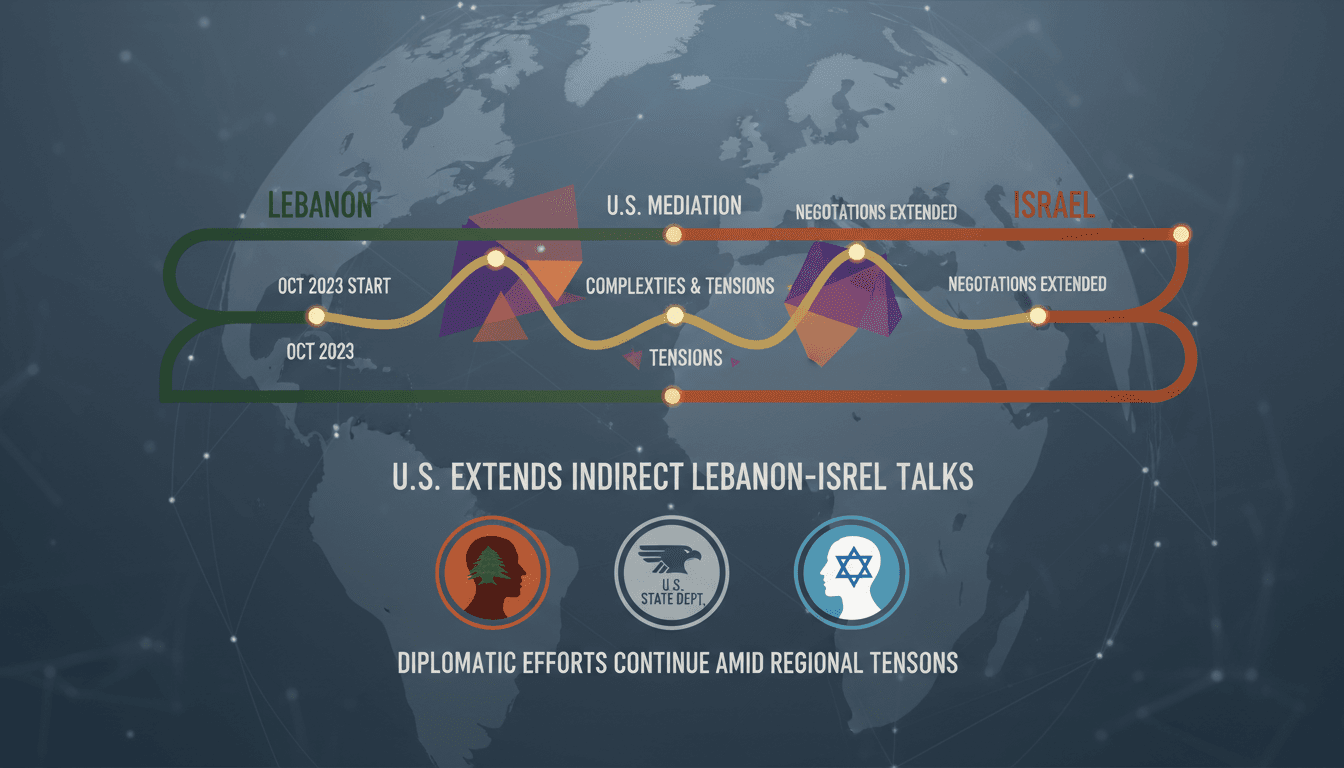
U.S. Extends Indirect Negotiations Between Lebanon and Israel
Here's what it means for you.
The U.S. State Department's decision to extend the indirect negotiations between Lebanon and Israel underscores the complexities of regional diplomacy. This extension may indicate a commitment to addressing long-standing disputes that have implications for stability in the Middle East. Stakeholders should remain attentive to the outcomes of these discussions, as they could influence broader geopolitical dynamics. The additional day of talks reflects the ongoing challenges both nations face in reaching a resolution. As the U.S. continues to act as a mediator, the focus will be on whether this extension leads to meaningful progress or necessitates further negotiations.
What happened
The U.S. has announced an extension of the indirect negotiations between Lebanon and Israel, originally set to conclude on June 25. The discussions will now continue for an additional day on June 26, highlighting the importance of these talks. This marks the fifth round of negotiations taking place this week, emphasizing the ongoing efforts to address regional tensions.
The U.S. is facilitating these discussions to promote stability in the region. The extension reflects the complexities involved in achieving a resolution to the disputes between the two nations.
The Context
These negotiations are part of a broader effort to mitigate regional tensions that have persisted for years. The involvement of the U.S. as a mediator is crucial, as both Lebanon and Israel have significant historical grievances that complicate dialogue. The timing of this extension is particularly relevant, given the current geopolitical climate in the Middle East.
The discussions are being held in Washington, D.C., a strategic location that underscores the U.S. commitment to fostering peace in the region. The extension of talks for an additional day indicates the importance of diplomatic efforts in addressing the underlying issues between Lebanon and Israel.
Takeaway
As the negotiations continue, the focus will be on whether the additional time will yield significant progress. Observers should monitor the outcomes of these extended discussions closely, as they may have implications for regional stability. Any statements from U.S. officials regarding the progress of the talks will also be critical in understanding the trajectory of these negotiations.
The commitment to finding a resolution remains, but challenges persist. The situation warrants ongoing attention as the complexities of the discussions unfold.
Arabic-language coverage of international news and geopolitics.
"RT Arabic is a Russian state-funded outlet often criticized for promoting Kremlin-aligned narratives."
— A47 Editor
الخارجية الأمريكية تمدد المفاوضات بين لبنان وإسرائيل يوما إضافيا
The U.S. State Department has announced an extension of the indirect negotiations between Lebanon and Israel for an additional day, now scheduled for Friday, June 26, after the fifth round of talks was initially set to conclude on Thursday.
Pan-Arab political news and analysis.
"Al-Quds Al-Arabi is a London-based Arabic newspaper known for political coverage."
— A47 Editor
الخارجية الأمريكية: المحادثات بين لبنان وإسرائيل في واشنطن ستتواصل الجمعة
The U.S. State Department announced that negotiations mediated by the United States between Israel and Lebanon, initially scheduled to conclude on Thursday, will continue for an additional day. The fifth round of talks, which began this week, is set ...
Pan-Arab news coverage spanning politics, business, sports, and regional affairs.
"Asharq Al-Awsat reflects a broad Arab editorial perspective with strong attention to regional geopolitics."
— A47 Editor
المحادثات بين لبنان وإسرائيل في واشنطن ستتواصل الجمعة
The U.S. State Department announced that the talks mediated by the United States between Israel and Lebanon, originally scheduled to conclude on Thursday, will continue for an additional day.