
NewLimit's Valuation Triples to $3.1 Billion as RNA Therapy Trials Approach
Here's what it means for you.
NewLimit's significant valuation increase signals a robust investor confidence in the biotechnology sector, particularly in innovative health solutions. As the company gears up for clinical trials, its focus on RNA therapy could reshape treatment paradigms for chronic diseases, especially alcohol-related liver disease. This development highlights the growing intersection of technology and healthcare, emphasizing the potential for longevity research to attract substantial funding and interest.
What happened
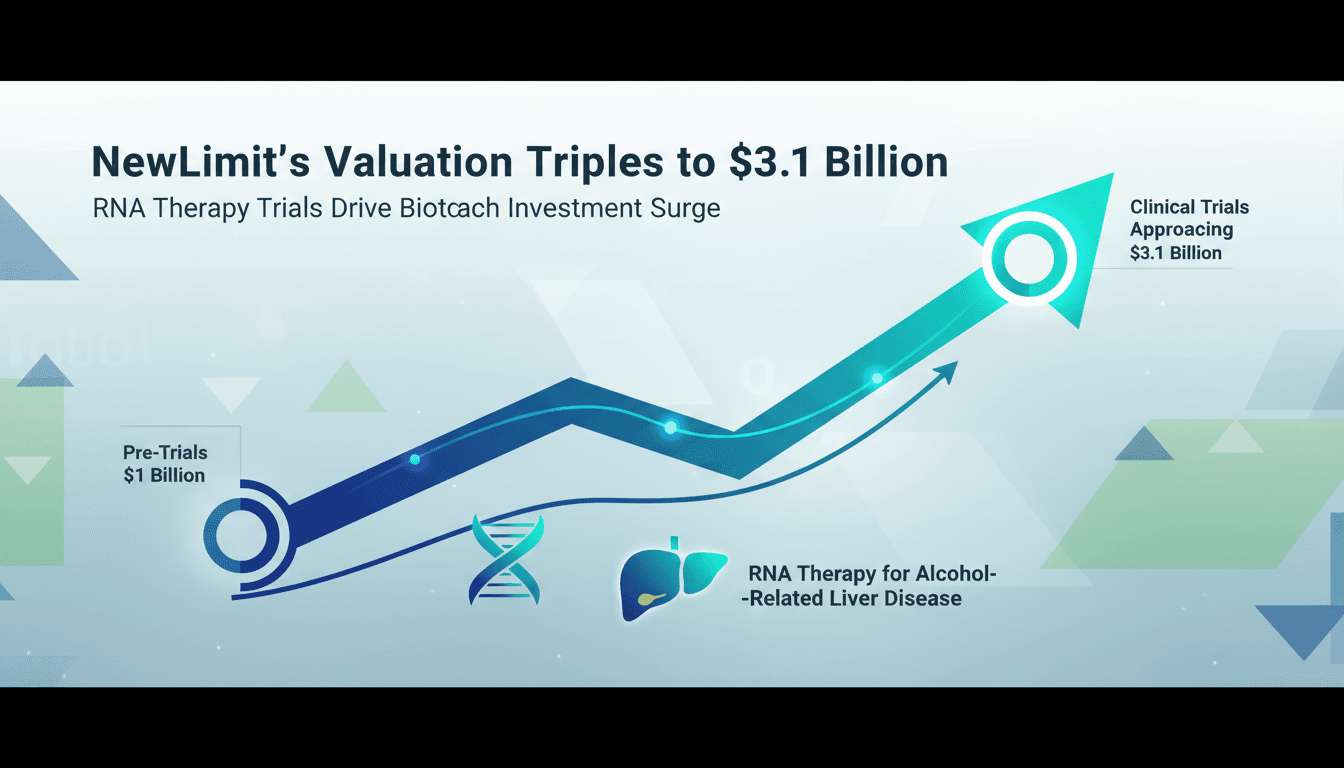
NewLimit, a longevity startup founded by Coinbase's CEO, has seen its valuation triple to $3.1 billion as it prepares to begin clinical trials for its RNA therapy targeting alcohol-related liver disease. This surge in valuation reflects a broader trend of increasing investor interest in biotechnology and health innovation. The company is set to initiate testing of its RNA therapy in 2027, marking a significant milestone in its development.
The upcoming clinical trials are expected to attract attention from both investors and the medical community, as they could pave the way for groundbreaking treatments. NewLimit's advancements in RNA therapy may not only impact the treatment of liver disease but also contribute to the broader field of longevity research.
The Context
NewLimit's focus on RNA therapy positions it at the forefront of a rapidly evolving biotechnology landscape. The startup's valuation increase underscores a growing investor appetite for innovative health solutions, particularly those that address chronic diseases. As the company prepares for clinical trials, it stands to benefit from the heightened interest in longevity and health improvements.
The timing of NewLimit's advancements coincides with a broader trend of increased funding and research in biotechnology. Stakeholders in the health sector are keenly observing developments in RNA therapies, as they hold the potential to revolutionize treatment options for various conditions. The success of NewLimit's trials could significantly influence future investments and innovations in this space.
Takeaway
As NewLimit advances its clinical trials, the outcomes will be closely monitored by investors and healthcare professionals alike. The results could not only validate the company's approach but also set a precedent for future RNA therapies targeting chronic diseases. The biotechnology investment landscape is likely to evolve further, driven by the outcomes of these trials and the ongoing interest in longevity research.
Looking ahead, stakeholders will be keen to see how NewLimit's innovations unfold and what implications they may have for the treatment of alcohol-related liver disease and beyond. The company's trajectory could serve as a bellwether for the future of biotechnology investments and health innovations.
U.S. business news, corporate developments, and economy.
"The Wall Street Journal is respected for deep financial and economic reporting with a center-right editorial perspective."
— A47 Editor
Coinbase Founder’s Longevity Startup Triples in Value
NewLimit, a longevity startup founded by the creator of Coinbase, has seen its valuation surge to $3.1 billion. The company is set to begin testing its RNA therapy on patients suffering from alcohol-related liver disease next year.
Tech business coverage, major deals, product launches, and Silicon Valley trends.
"WSJ’s tech section offers authoritative reporting on the intersection of technology and business, including exclusive industry analysis."
— A47 Editor
Coinbase Founder’s Longevity Startup Triples in Value
NewLimit, a longevity startup founded by the creator of Coinbase, has seen its valuation triple to $3.1 billion. The company plans to conduct trials of its RNA therapy targeting patients with alcohol-related liver disease in the upcoming year.
Tech business coverage, major deals, product launches, and Silicon Valley trends.
"WSJ’s tech section offers authoritative reporting on the intersection of technology and business, including exclusive industry analysis."
— A47 Editor
Coinbase Founder’s Longevity Startup Triples in Value
NewLimit, a longevity startup founded by the creator of Coinbase, has seen its valuation triple to $3.1 billion, with plans to test its RNA therapy in patients suffering from alcohol-related liver disease next year.