
Pakistani Airstrikes in Afghanistan Lead to Civilian Deaths
Here's what it means for you.
Increased regional instability could impact trade and investment opportunities across the Middle East.
What happened
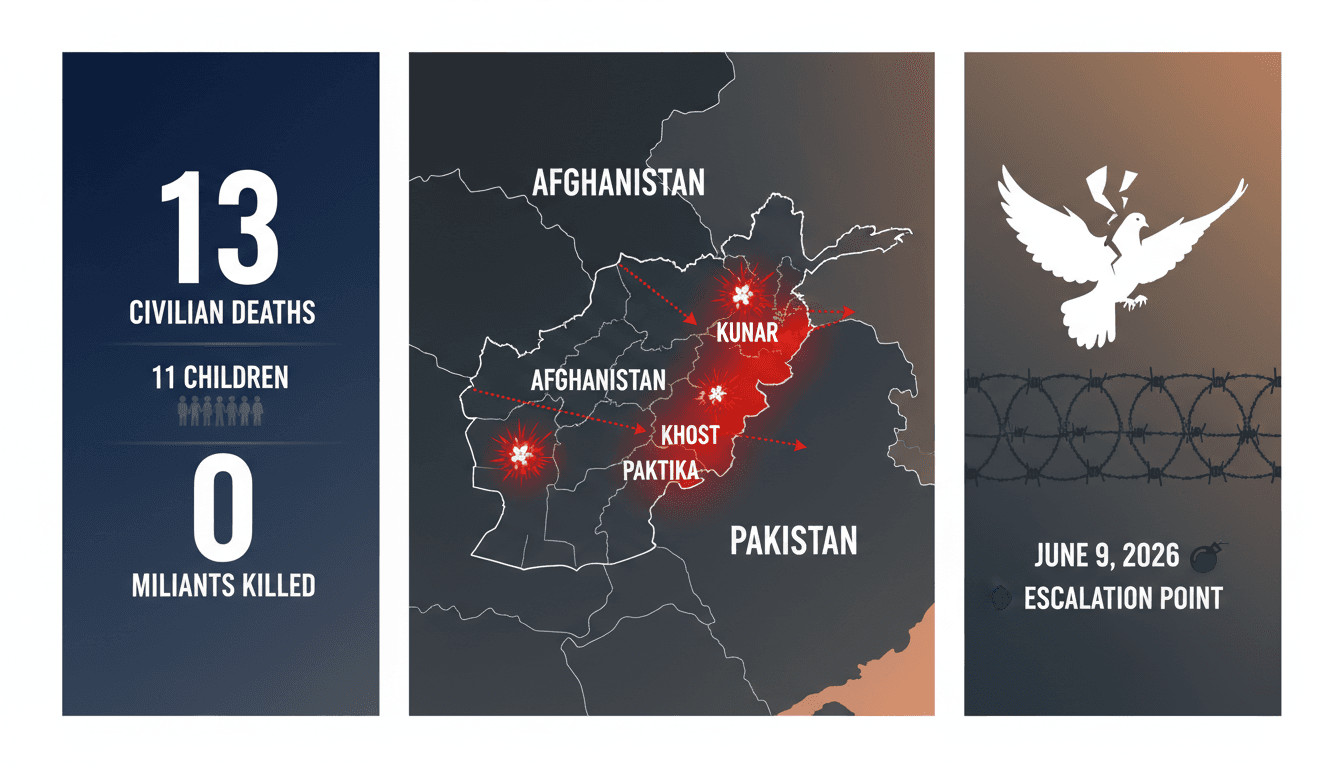
On June 9, 2026, Pakistani airstrikes in Afghanistan resulted in the deaths of at least 13 civilians, including 11 children.
The Context
- Escalating tensions: The airstrikes occurred amid rising conflict between Pakistan and Afghanistan, particularly following cross-border militant attacks.
- Civilian impact: The Afghan Taliban condemned the strikes as a violation of sovereignty, highlighting the risks to non-combatants in military operations.
- Regional implications: The situation may affect perceptions of security and stability in trade routes and investment in the UAE and broader Middle East.
The Number
— This is the number of militants Pakistan claims to have killed in the airstrikes, underscoring the ongoing conflict's intensity and its potential ripple effects on regional security.
Takeaway
Expect continued volatility in the region as both nations navigate their complex relationship and the implications for international stakeholders.
RT is a Russian state-funded network covering global events from a Russian perspective.
"RT is widely criticized for promoting pro-Kremlin narratives and is considered by many to be a state propaganda outlet."
— A47 Editor
Pakistani strikes kill 13 civilians in Afghanistan
Recent airstrikes conducted by Pakistan in Afghanistan have resulted in the deaths of 13 civilians, including 11 children, across the provinces of Kunar, Khost, and Paktika, according to Afghan officials. The Taliban has condemned these attacks, rais...
Regional coverage and analysis focused on politics, diplomacy, and business across the Middle East.
"Al-Monitor is known for analytical reporting on Middle East politics and policy developments."
— A47 Editor
Pakistani air strikes kill at least 13 in Afghanistan, Taliban says
Pakistani air strikes in Afghanistan have resulted in the deaths of at least 13 individuals, including 11 children, according to the Taliban government. The strikes occurred in the provinces of Kunar, Khost, and Paktika, raising significant concerns ...
International news, politics, and culture.
"Sky News is a UK-based 24-hour channel known for fast-breaking news and political coverage."
— A47 Editor
Pakistani airstrikes on Afghanistan kill at least 13
Pakistan has conducted airstrikes in Afghanistan, resulting in the deaths of at least 13 individuals, including children, amidst ongoing tensions between the two nations. The Taliban has condemned these attacks, which follow months of violent clashes...
International coverage of politics, culture, and current affairs.
"BBC News is widely regarded as a reputable international news organization, known for its impartial tone and public service mandate."
— A47 Editor
Pakistan launches deadly air strikes in Afghanistan, reigniting tensions
Pakistan has resumed air strikes in Afghanistan, resulting in significant casualties, including reports of at least 26 deaths, with Afghan authorities confirming 12 fatalities, among them children. This escalation follows a period of relative calm al...
24/7 international news from a French perspective in multiple languages.
"France 24 is viewed as a globally focused outlet with balanced coverage and a European perspective."
— A47 Editor
Pakistan renews air strikes on Afghanistan, killing dozens
Pakistan has resumed air strikes on Afghanistan, resulting in the deaths of at least 26 individuals, according to Pakistani officials, while Afghan authorities report at least 12 fatalities, including children, in border provinces. This escalation fo...
Regional and international reporting focused on Middle Eastern politics, diplomacy, and economics.
"Asharq Al-Awsat is a Saudi-owned international newspaper reflecting mainstream Gulf political perspectives."
— A47 Editor
Pakistani Airstrikes in Afghanistan Kill at Least 13 People, Taliban Official Says
Recent Pakistani airstrikes in Afghanistan have reportedly killed at least 13 individuals, including 11 children, according to Taliban officials. The strikes occurred in the provinces of Kunar, Khost, and Paktika, raising significant concerns regardi...
English-language reporting on Saudi politics, policy, and society.
"Saudi Gazette reflects mainstream Saudi institutional perspectives."
— A47 Editor
Afghanistan claims 13 people, including chilren, killed in Pakistan air raids
Afghanistan reported that recent airstrikes by Pakistan's military resulted in the deaths of at least 13 individuals, predominantly children, and left 14 others injured in the provinces of Kunar, Khost, and Paktika. The attacks, described by Zabihull...
Comprehensive coverage of Middle Eastern and global issues.
"Al Jazeera is a prominent voice from the Global South, especially the Middle East, with an emphasis on underreported stories."
— A47 Editor
Afghanistan says Pakistan air raids killed 13 people, including children
Afghanistan has reported that recent air raids conducted by Pakistan resulted in the deaths of 13 individuals, including 11 children, in border provinces. The Taliban has condemned these strikes, which have raised significant concerns regarding civil...
Global news coverage with extensive reporting on Middle Eastern conflicts and geopolitics.
"Al Jazeera is a Qatar-based broadcaster known for wide regional coverage and alternative perspectives."
— A47 Editor
Afghanistan says Pakistan air raids killed 13 people, including children
Afghanistan has reported that recent air raids conducted by Pakistan resulted in the deaths of 13 individuals, including 11 children, in border provinces. The Taliban has condemned these strikes, which have raised significant concerns regarding civil...