
Kuwait's non-oil sector contracts for fourth month amid geopolitical tensions
Here's what it means for you.
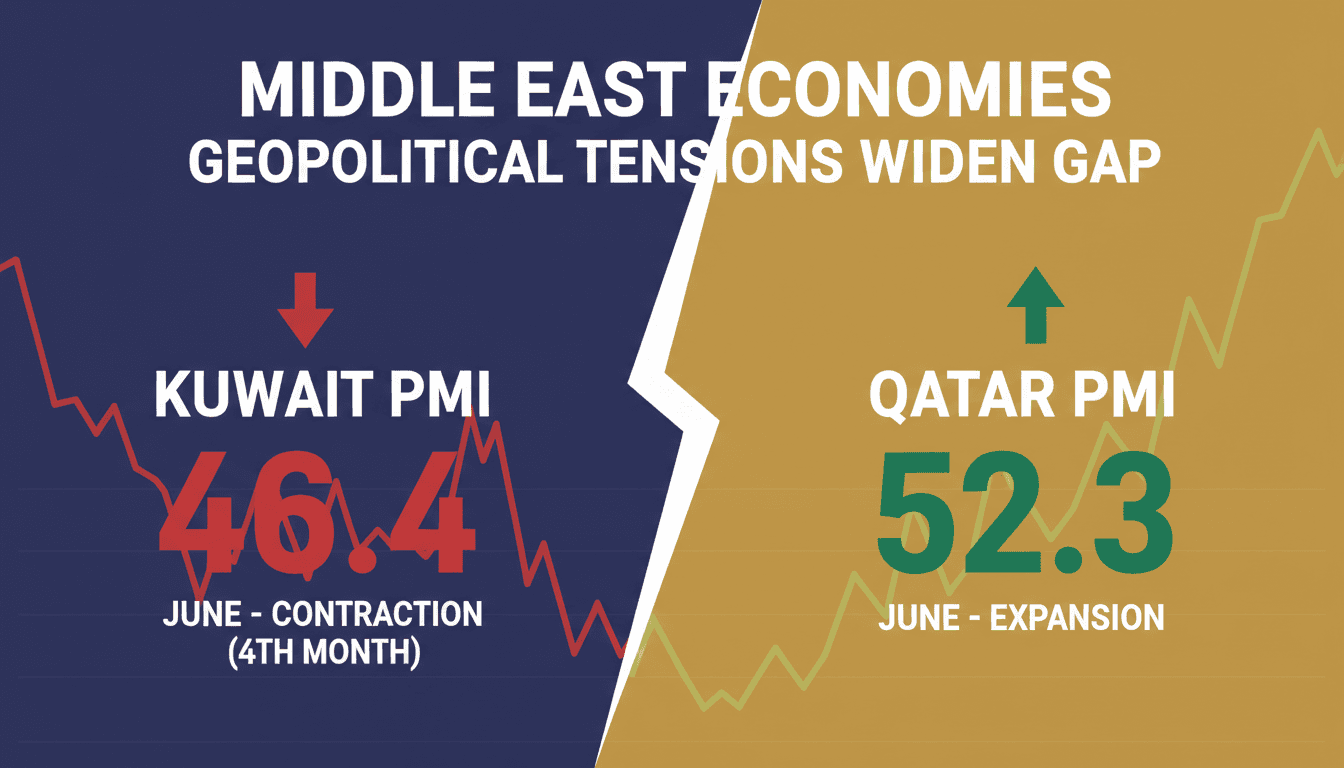
The decline in Kuwait's non-oil sector, as indicated by the Purchasing Managers' Index (PMI) dropping to 46.4, signals ongoing challenges for businesses in the region. This contraction may lead to increased scrutiny from policymakers, who might need to implement measures to stimulate economic activity. The situation underscores the vulnerabilities of Kuwait's economy amid external pressures, particularly geopolitical tensions and supply chain disruptions. As the non-oil sector continues to struggle, stakeholders should prepare for potential shifts in government policy aimed at revitalizing business conditions. The contrasting performance of Qatar's PMI suggests that regional dynamics could further influence Kuwait's economic landscape.
What happened
Kuwait's non-oil business activity has contracted for the fourth consecutive month, with the PMI falling to 46.4 in June. This decline reflects ongoing challenges in the sector, driven by regional geopolitical tensions and supply chain disruptions. The PMI reading below the critical 50-point threshold indicates a persistent contraction in business activity.
In contrast, Qatar's PMI showed signs of improvement, rising to 47.6, which suggests a slower pace of deterioration compared to Kuwait. The stark difference in performance between the two nations highlights the unique challenges facing Kuwait's economy.
The Context
Kuwait's PMI has remained below the 50-point threshold for four months, indicating a sustained contraction in non-oil business activity. The ongoing geopolitical tensions in the region, coupled with supply chain issues, are significantly impacting business conditions in Kuwait. These factors contribute to rising cost pressures that further complicate the economic landscape.
As Kuwait navigates these challenges, the performance of its non-oil sector becomes increasingly critical for overall economic health. The contrasting trends in Qatar, where the PMI has improved, may serve as a benchmark for Kuwait's policymakers as they consider potential interventions.
Takeaway
The ongoing contraction in Kuwait's non-oil sector may prompt policymakers to explore measures to stimulate economic activity. Stakeholders should monitor potential government interventions aimed at supporting the sector, as well as developments in regional geopolitical tensions that could further impact business conditions.
The outlook remains cautious, with the possibility of continued contraction unless effective strategies are implemented to address the underlying challenges. Observing how Kuwait responds to these pressures will be crucial for understanding the future trajectory of its economy.
Regional and international reporting focused on Middle Eastern politics, diplomacy, and economics.
"Asharq Al-Awsat is a Saudi-owned international newspaper reflecting mainstream Gulf political perspectives."
— A47 Editor
Kuwait’s Non-Oil Business Activity Contracts amid Regional Tensions
Kuwait's non-oil business activity has contracted significantly amid escalating regional tensions, particularly due to recent drone and missile attacks attributed to Iran, which have raised security concerns and disrupted economic stability.
Business, markets, finance, energy, and economic policy coverage.
"Arab News business coverage tends to emphasize Gulf economies, investment, and regional transformation stories."
— A47 Editor
Kuwait PMI slips to 46.4 while Qatar rebounds to four-month high
Kuwait's Purchasing Managers' Index (PMI) fell to 46.4 in June, indicating a continued contraction in non-oil business activity for the fourth consecutive month, influenced by supply disruptions and regional geopolitical tensions. In contrast, Qatar'...
UAE-based English-language newspaper covering regional politics, economics, and global affairs.
"The National reflects Emirati policy perspectives while maintaining international editorial standards."
— A47 Editor
UAE's non-oil business activity grows at slowest pace in five years in June amid fallout of Iran war
The United Arab Emirates (UAE) experienced its slowest growth in non-oil business activity in five years during June, attributed to the ongoing fallout from the Iran conflict. This decline reflects the challenges faced by various sectors amid geopoli...