
Starbucks Korea faces backlash over controversial marketing campaign referencing historical tragedy
Here's what it means for you.
Starbucks Korea's recent marketing misstep highlights the critical importance of cultural sensitivity in advertising. The backlash from the 'Tank Day' campaign not only reflects public sentiment but also poses a significant risk to the brand's reputation in a market with a complex historical backdrop. Companies must be vigilant in understanding local contexts to avoid similar pitfalls that can lead to consumer outrage and financial repercussions. The incident serves as a reminder for businesses operating in sensitive regions to engage with local communities and history. As Starbucks navigates this crisis, it will need to implement strategies that rebuild trust and demonstrate accountability.
What happened
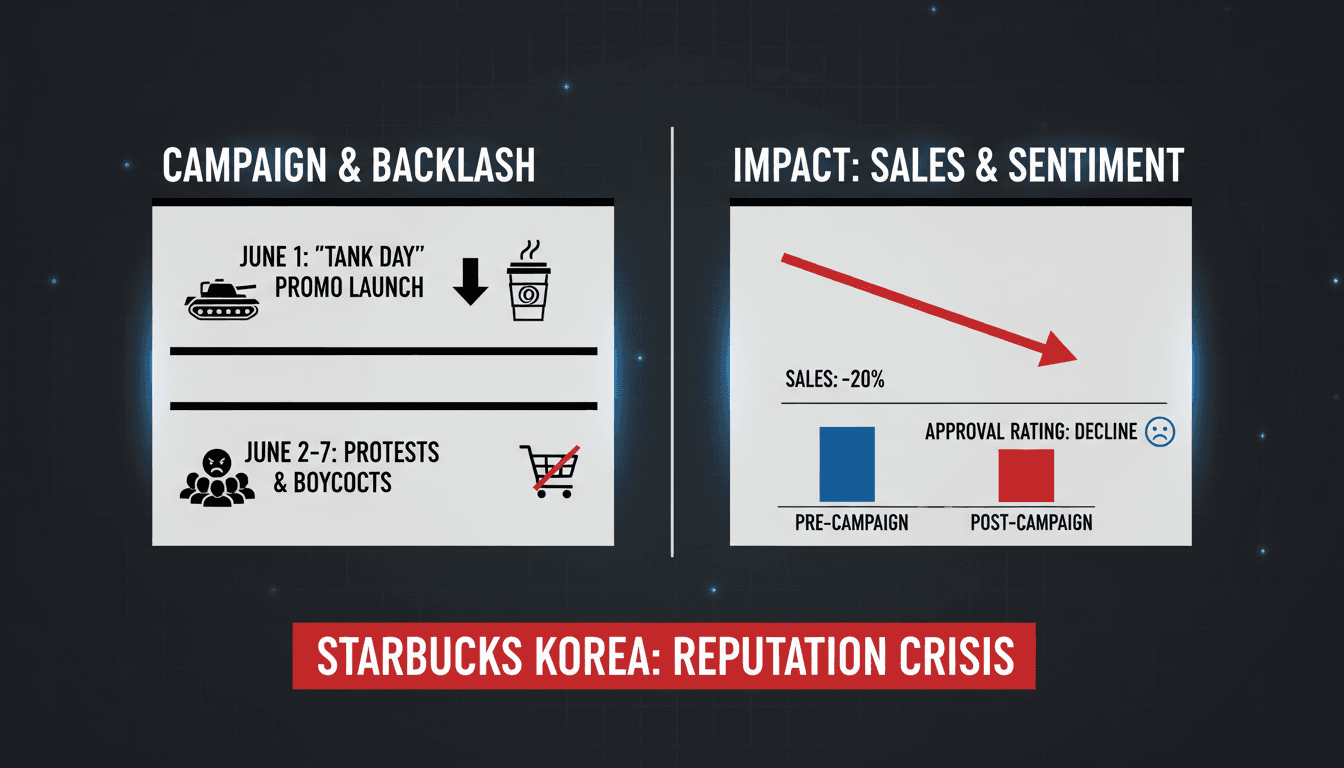
Starbucks Korea launched a marketing campaign titled 'Tank Day,' which quickly drew public ire due to its association with a tragic military crackdown on pro-democracy protesters in 1980. The campaign was perceived as insensitive, leading to widespread criticism and a notable decline in sales. In response to the backlash, Starbucks' local chairman issued multiple apologies, acknowledging the hurt caused by the campaign.
Public protests erupted, with demonstrators actively destroying Starbucks products as a form of protest against the campaign. The swift and severe reaction from consumers forced the company to retract the campaign almost immediately, highlighting the sensitivity required in marketing strategies.
The Context
The 'Tank Day' campaign's name references a historical event where hundreds of protesters lost their lives, making it a particularly charged topic in South Korea. This incident underscores the importance of understanding local history and sentiment when crafting marketing messages. The backlash not only affected Starbucks' sales but also raised questions about the company's awareness of cultural sensitivities.
As the company faces this challenge, it must navigate the complexities of local sentiment and historical memory. The incident serves as a critical lesson for brands operating in regions with intricate pasts, emphasizing the need for thoughtful engagement with local communities.
Takeaway
Moving forward, Starbucks Korea will need to carefully manage the fallout from this incident to restore its brand image. Monitoring sales performance in the coming months will be crucial to understanding the long-term impact of the backlash. Additionally, the company should be prepared for further public statements or actions that may arise as it seeks to address consumer concerns.
The path to rebuilding trust will require Starbucks to demonstrate a commitment to cultural sensitivity and community engagement. This incident serves as a pivotal moment for the brand, highlighting the necessity of aligning marketing strategies with local values and historical contexts.
International coverage of politics, security, and social issues.
"Global News is a mainstream Canadian outlet with a centrist editorial stance, focusing on factual reporting."
— A47 Editor
Starbucks Korea criticized over ‘Tank Day’ ad evoking deadly 1980s uprising
Starbucks Korea has faced significant backlash over its promotional campaign titled 'Tank Day,' which many interpreted as a reference to the Gwangju massacre, a critical event in South Korea's pro-democracy movement during the 1980s. In response to t...
Political, social, and economic news across Asia and the Pacific.
"France 24 is viewed as a globally focused outlet with balanced coverage and a European perspective."
— A47 Editor
Starbucks faces South Korean backlash following campaign echoing 1987 massacre
Starbucks is facing significant backlash in South Korea following its controversial 'Tank Day' promotion, which many locals interpreted as a reference to the Gwangju massacre of 1980, where pro-democracy protesters were killed by the military. The ca...
Comprehensive coverage of global events, politics, and international issues.
"NBC News is a mainstream outlet known for comprehensive national and international coverage with a centrist to slightly left-leaning editorial tone."
— A47 Editor
Starbucks faces backlash in South Korea over ‘Tank Day’ campaign
Starbucks is facing significant backlash in South Korea over its 'Tank Day' marketing campaign, which many locals interpret as a reference to the Gwangju massacre of 1980, where military forces suppressed pro-democracy protesters. The campaign has sp...
Global news coverage with extensive reporting on Middle Eastern conflicts and geopolitics.
"Al Jazeera is a Qatar-based broadcaster known for wide regional coverage and alternative perspectives."
— A47 Editor
Starbucks’ Korean sales fall after backlash to ‘Tank Day’ ad campaign
Starbucks has experienced a significant decline in sales in South Korea following backlash against its 'Tank Day' ad campaign, which many locals interpreted as a reference to the Gwangju massacre, a pivotal event in the country's pro-democracy histor...
Comprehensive coverage of Middle Eastern and global issues.
"Al Jazeera is a prominent voice from the Global South, especially the Middle East, with an emphasis on underreported stories."
— A47 Editor
Starbucks’ Korean sales fall after backlash to ‘Tank Day’ ad campaign
Starbucks has experienced a significant decline in sales in South Korea following backlash against its 'Tank Day' ad campaign, which many locals interpreted as a reference to the Gwangju massacre, a pivotal event in the country's pro-democracy histor...
UK and global business, economy, and markets coverage.
"Sky News is often seen as a center-right outlet in the UK, known for rolling news and breaking business stories."
— A47 Editor
Starbucks Korea boss apologises after advert sparks big backlash
The CEO of Starbucks Korea has publicly apologized following a significant backlash against a controversial marketing campaign titled 'Tank Day,' which many interpreted as a reference to the Gwangju massacre, a pivotal event in South Korea's pro-demo...
International news, politics, and culture.
"Sky News is a UK-based 24-hour channel known for fast-breaking news and political coverage."
— A47 Editor
Starbucks Korea boss apologises after advert sparks big backlash
The CEO of Starbucks Korea has publicly apologized following a significant backlash against a controversial marketing campaign titled 'Tank Day,' which many interpreted as a reference to the Gwangju massacre, a pivotal event in South Korea's pro-demo...