
Nabil Fahmy assumes role as Secretary-General of the Arab League
Here's what it means for you.
Nabil Fahmy's appointment as Secretary-General of the Arab League signals a pivotal moment for regional diplomacy. His leadership is anticipated to enhance collaboration among member states, addressing pressing challenges in the Arab world. This transition comes at a time when unity and strategic repositioning are crucial for the League's effectiveness. Fahmy's emphasis on collective responsibility may reshape the dynamics within the organization, fostering a renewed commitment to joint initiatives. The implications of his leadership could extend beyond politics, influencing economic and social cooperation across the region.
What happened
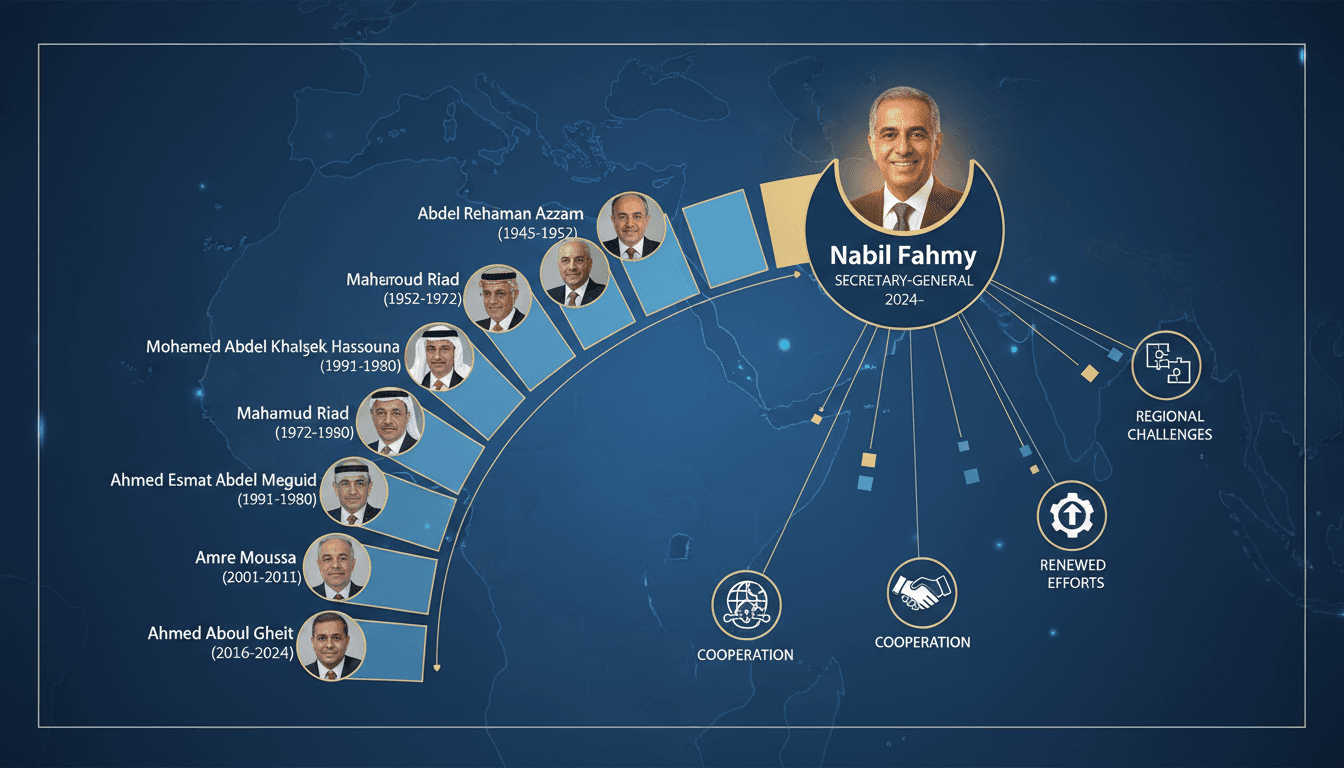
Nabil Fahmy has officially begun his duties as the new Secretary-General of the Arab League. This transition took place on July 5, 2026, marking a significant change in leadership for the organization. Fahmy succeeds Ahmed Aboul Gheit, stepping into the role during a time of heightened regional challenges.
As the eighth Egyptian to hold this position since the League's establishment in 1945, Fahmy's appointment is noteworthy. He has expressed a strong commitment to enhancing cooperation between the Secretariat and member states, emphasizing the need for collective action to advance the League's objectives.
The Context
Fahmy's leadership comes after a series of challenges faced by the Arab League, which has struggled to maintain unity among its member states. The timing of his appointment is critical, as the region grapples with various political and social issues that require coordinated responses. His focus on strategic repositioning aims to address these challenges head-on.
The Arab League, founded in 1945, has historically served as a platform for collaboration among Arab nations. Fahmy's vision for the organization seeks to revitalize its role and effectiveness in fostering regional cooperation, which is essential for addressing the complex landscape of contemporary Arab affairs.
Takeaway
With Nabil Fahmy at the helm, the Arab League is poised for renewed efforts in promoting collaboration among its member states. Observers will be keen to see how member nations respond to his call for increased cooperation. The effectiveness of his leadership will likely influence the future of joint Arab policies and initiatives.
As Fahmy navigates the challenges ahead, the focus will be on the League's ability to adapt and respond to evolving regional dynamics. The coming months will reveal the extent to which his leadership can foster a unified approach to the pressing issues facing the Arab world.
Algerian and regional news coverage.
"Echorouk is a major Algerian outlet with broad national reporting."
— A47 Editor
أمين عام جديد… وجامعة العرب على حالها!!
Diplomat Nabil Fahmy has recently commenced his duties as the new Secretary-General of the Arab League, succeeding his compatriot Ahmed Aboul Gheit. This marks Fahmy as the eighth Egyptian to hold this position since the League's establishment in 194...
Arabic-language political and world news coverage for UAE readers.
"Emarat Al Youm world coverage usually presents international developments through a UAE and Arab audience lens."
— A47 Editor
نبيل فهمي: النهوض بالجامعة العربية وإعادة تموضعها الاستراتيجي مسؤولية جماعية نبيل فهمي: النهوض بالجامعة العربية وإعادة تموضعها الاستراتيجي مسؤولية جماعية
Nabil Fahmy, the Secretary-General of the Arab League, emphasized that the revitalization of the Arab League and its strategic repositioning is a collective responsibility. He highlighted the need for collaborative efforts among member states to enha...
Pan-Arab news coverage spanning politics, business, sports, and regional affairs.
"Asharq Al-Awsat reflects a broad Arab editorial perspective with strong attention to regional geopolitics."
— A47 Editor
نبيل فهمي: النهوض بالجامعة العربية مسؤولية جماعية مع الدول الأعضاء
The Secretary-General of the Arab League, Nabil Fahmy, emphasized that the advancement and strategic repositioning of the Arab League is a collective responsibility shared between the Secretariat and member states. This statement highlights the impor...