
UN report warns of escalating resource demands from AI by 2030
Here's what it means for you.
The UN's recent report highlights a critical challenge for industries and policymakers alike: the escalating resource demands of artificial intelligence. As AI technology becomes more pervasive, its consumption of water and electricity could strain global resources, necessitating urgent policy interventions. Stakeholders must prioritize sustainability to mitigate the environmental impact of AI's growth. This report serves as a wake-up call for businesses and governments to reassess their strategies regarding AI deployment and resource management. The implications for energy consumption and water usage could reshape how industries approach technological advancements.
What happened
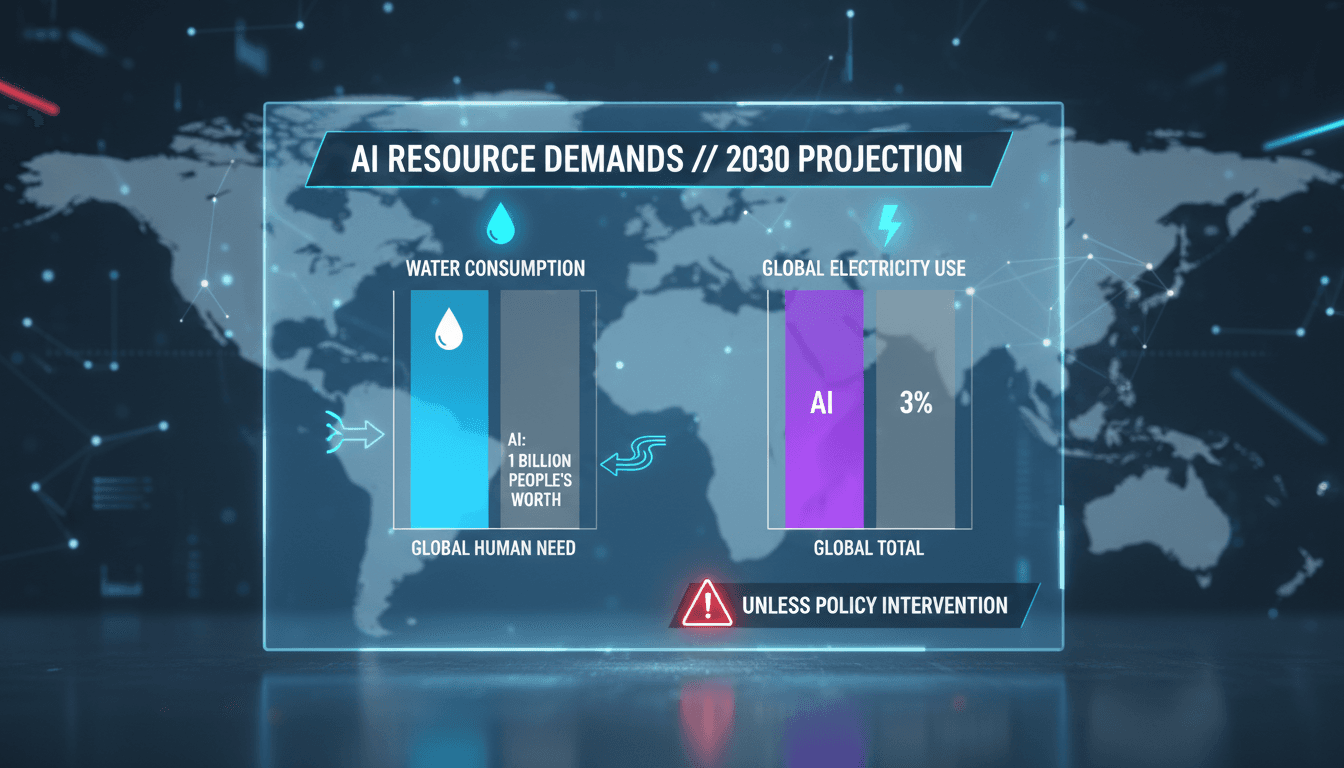
The UN has issued a report warning that the resource consumption of artificial intelligence is set to escalate dramatically by 2030. It predicts that AI could consume as much water as a billion people and account for 3% of the world's electricity. Despite expectations of improved efficiency in AI models, the report suggests that increased usage will likely negate these gains.
This alarming projection underscores the urgent need for a comprehensive understanding of AI's environmental implications. As AI becomes more integrated into various sectors, its demand for essential resources is expected to rise significantly.
The Context
The report highlights the potential for AI models to consume more water than the global drinking water needs by 2030, raising concerns about sustainability. With AI projected to account for a substantial share of global electricity usage, the implications for energy resources are profound. Increased efficiency in AI may not lead to reduced resource consumption due to higher demand, complicating the landscape for resource management.
As AI technology evolves, it is crucial for stakeholders, including governments and industry leaders, to address these challenges proactively. The timing of this report coincides with a growing reliance on AI across various sectors, making its findings particularly relevant.
Takeaway
Looking ahead, the future of AI will necessitate a balance between technological advancement and environmental stewardship. The projected resource demands could pose significant challenges to global sustainability efforts, prompting the need for policies that address AI's environmental impact.
Developments in AI efficiency technologies will be critical to watch, as they may offer solutions to mitigate resource consumption. Policymakers must also focus on creating frameworks that ensure sustainable practices in AI deployment.
Future-focused tech headlines including AI breakthroughs.
"Consumer-friendly future-tech site with frequent AI coverage."
— A47 Editor
AI Will Consume as Much Water as a Billion People By 2030, UN Report Estimates
A recent UN report estimates that by 2030, artificial intelligence (AI) will consume as much water as a billion people, raising significant environmental concerns. This projection highlights the increasing resource demands of AI technologies, which a...
AI/ML research and technology news.
"Sister site to Phys.org focusing on tech research."
— A47 Editor
UN report warns AI could soon use 3% of world's electricity and more water than we need to drink
A recent UN report has raised alarms about the potential environmental impact of artificial intelligence (AI), projecting that AI could soon consume 3% of the world's electricity and more water than is necessary for human consumption. This highlights...
Academic-led explainers and analysis on AI topics.
"Scholarly perspectives written for general audiences."
— A47 Editor
UN report warns AI could soon use 3% of world’s electricity and more water than we need to drink
A recent UN report warns that artificial intelligence (AI) could soon consume 3% of the world's electricity and more water than is necessary for human consumption. This alarming projection highlights the potential environmental impact of AI as its us...