
AI agents increasingly utilize USDC stablecoin for micropayments
Here's what it means for you.
The growing adoption of USDC stablecoin by AI agents for micropayments signals a significant shift in the payment landscape. As traditional payment systems struggle to accommodate small transactions, this trend highlights the potential for stablecoins to redefine how digital payments are processed. Businesses and regulators alike must pay attention to this evolution, as it may lead to innovations in payment technologies and new regulatory frameworks. The implications extend beyond mere convenience; they touch on the efficiency and security of financial transactions in an increasingly digital economy. As reliance on stablecoins grows, stakeholders must consider the risks associated with concentrating transactions in a single cryptocurrency.
What happened
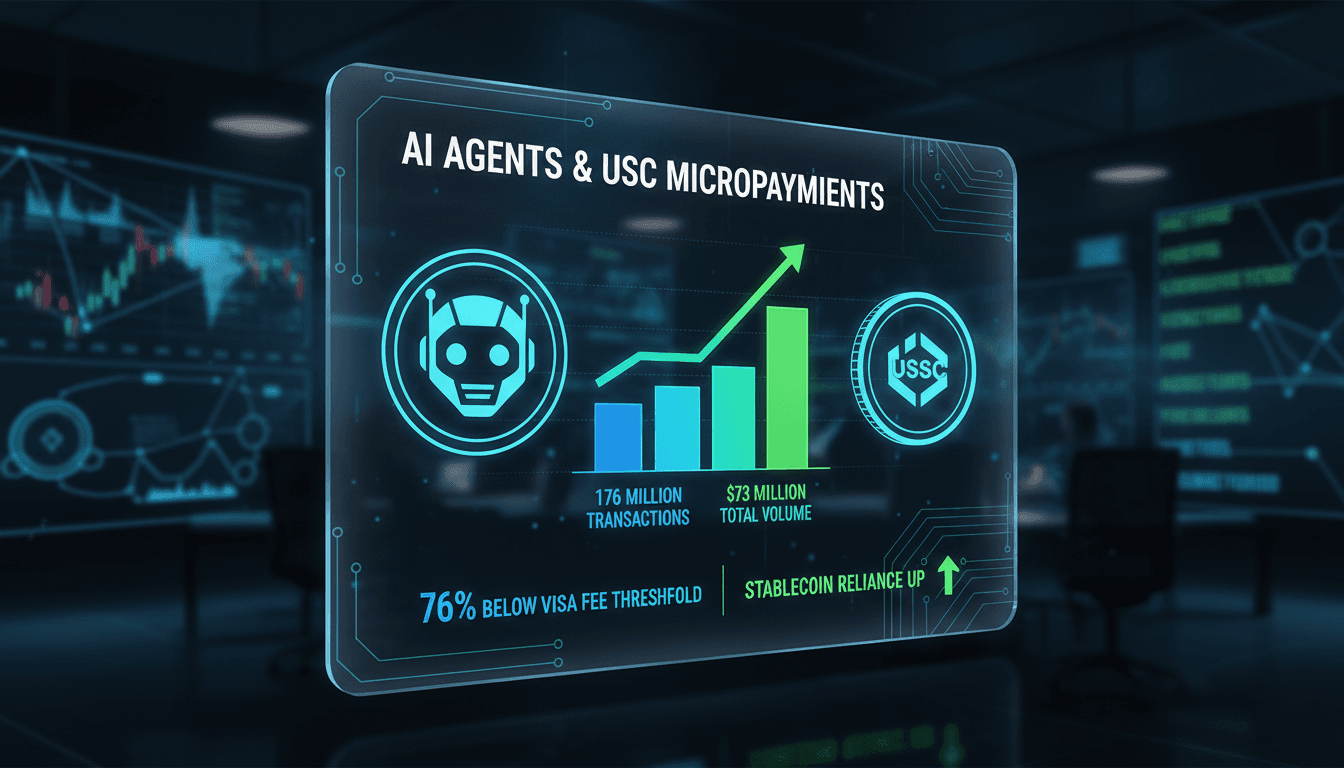
AI agents have executed a staggering 176 million transactions, totaling $73 million, primarily using USDC as their payment method. This shift underscores the increasing reliance on cryptocurrency for micropayments, as traditional payment systems are often ill-equipped to handle such small transactions. Notably, 76% of these transactions fall below Visa's fee threshold, making conventional payment methods less viable for AI agents.
The data reveals that over 98% of AI agent settlements in the past year were processed in USDC, indicating a strong preference for this stablecoin. This trend not only highlights the efficiency of stablecoins for sub-dollar transactions but also raises questions about the potential risks associated with a concentrated reliance on a single cryptocurrency.
The Context
The rise of AI agents in the cryptocurrency space has catalyzed a significant transformation in payment methods. Traditional payment systems, such as credit cards, are increasingly challenged by the inefficiencies of processing micropayments, particularly when fees exceed the transaction value. As a result, stablecoins like USDC have emerged as the default settlement layer for these agents.
The timeline of this shift began in May 2025 when AI agents started settling transactions using stablecoins. By May 2026, reports indicated that these agents had settled $73 million across 176 million transactions, emphasizing the rapid adoption of this payment method. This evolution not only reflects changing consumer preferences but also highlights the need for regulatory scrutiny in the cryptocurrency ecosystem.
Takeaway
The trend towards using stablecoins for AI transactions is likely to continue, potentially reshaping the future of payment systems. As the ecosystem for AI-driven payments evolves, stakeholders should monitor developments in regulatory frameworks for cryptocurrency payments. Innovations in payment technologies that enhance micropayment capabilities are also expected to emerge in response to this growing reliance on stablecoins.
The concentration of transactions in USDC raises potential risks for the cryptocurrency ecosystem, making it essential for regulators and industry leaders to address these challenges proactively. The future landscape of digital transactions will likely be influenced by how these factors unfold in the coming years.
News and analysis on Bitcoin, altcoins, and blockchain innovation.
"Bitcoinist delivers news and analysis on Bitcoin, altcoins, and blockchain innovation with a focus on market trends and industry updates."
— A47 Editor
Crypto Payments Go Autonomous As AI Agents Execute 176M Transactions
A recent report from Keyrock reveals that AI agents executed 176 million transactions in the past year, with over 98% processed using Circle's USDC stablecoin. This shift indicates a significant reliance on a single cryptocurrency for automated payme...
Real-time updates, analysis, and reports on the blockchain and cryptocurrency sectors.
"Crypto News delivers real-time updates, analysis, and reports on the blockchain and cryptocurrency sectors."
— A47 Editor
Crypto rails power AI agent payments with $73M settled
Keyrock has reported that AI agents have settled $73 million across 176 million transactions, with USDC emerging as the primary payment rail for these transactions in 2026. This development underscores the growing integration of cryptocurrency in aut...
Covers blockchain, cryptocurrency news, project analysis, and market insights.
"Cointelegraph is a leading crypto-focused media outlet known for timely news, analysis, and educational content related to blockchain and digital assets."
— A47 Editor
‘Developed ecosystem’ based on crypto has sprung up for AI agents: Report
A recent report from Keyrock indicates that a developed ecosystem based on cryptocurrency has emerged for AI agents, with stablecoins becoming the default settlement layer due to their efficiency in handling sub-dollar transactions.
Covers Bitcoin plus altcoin news, market updates, and educational resources.
"Bitcoin.com provides news, market data, and guides focused on Bitcoin and the wider crypto industry."
— A47 Editor
Keyrock Report: 76% of AI Agent Transactions Fall Below Visa’s $0.30 Fee Floor
A recent Keyrock report reveals that 76% of transactions conducted by AI agents fall below Visa's fee floor of $0.30, indicating a significant challenge for traditional payment systems in accommodating microtransactions. This trend highlights the lim...
Covers blockchain, cryptocurrency news, project analysis, and market insights.
"CoinDesk is a well-established cryptocurrency and blockchain news provider, offering comprehensive insights, market data, and industry research."
— A47 Editor
Crypto rails are becoming the default payment layer for AI agents, report says
A recent report from Keyrock indicates that stablecoins are increasingly becoming the preferred payment layer for AI agents, as traditional card payment systems struggle with micropayments. This shift highlights the growing integration of blockchain ...