
Erdogan Defends Turkey's Right to Acquire F-35s Amid Regional Tensions
Here's what it means for you.
Turkey's pursuit of F-35 fighter jets underscores its commitment to enhancing military capabilities, which could reshape regional security dynamics. As Turkey navigates its defense procurement rights, the implications for NATO relationships and broader geopolitical stability are significant. The ongoing humanitarian crisis in Gaza adds complexity to Turkey's foreign policy, making its military ambitions a focal point for international observers.
What happened
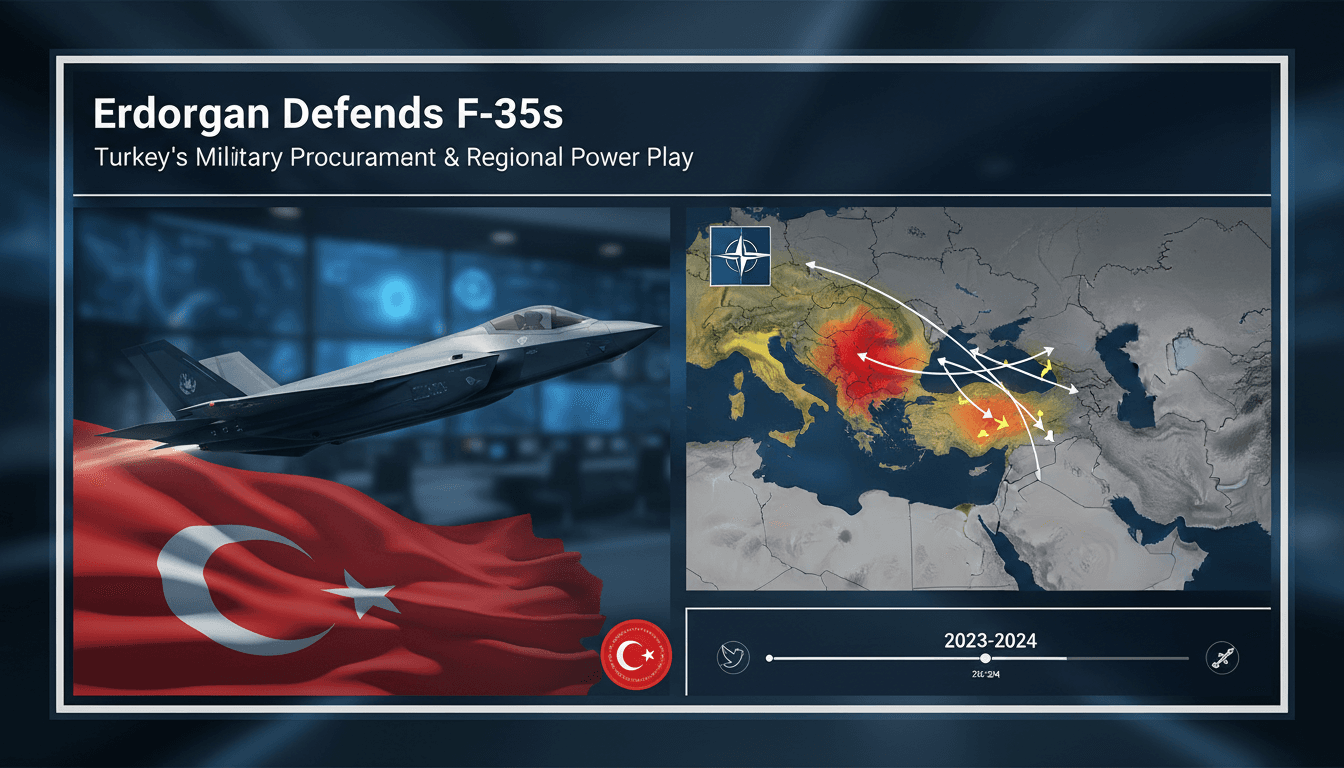
Turkish President Recep Tayyip Erdogan has firmly rejected objections from Israel and Greece regarding Turkey's potential acquisition of F-35 fighter jets from the United States. He emphasized Turkey's sovereign right to pursue military procurement and criticized the disinformation surrounding the issue. Erdogan's remarks come at a time when Turkey is keen to assert its military capabilities and enhance its defense posture.
During a recent NATO summit hosted in Ankara, Erdogan highlighted Turkey's significant military role within the alliance, noting that it commands the second-largest land force in NATO. He also called for the removal of restrictions on defense trade among NATO allies, reinforcing Turkey's position in the defense landscape.
The Context
Erdogan's comments reflect a broader context of regional tensions, particularly concerning Israeli military actions in Gaza and Lebanon. He condemned these actions while emphasizing the need for stability in the region, which is currently facing a severe humanitarian crisis, with an estimated 73,000 Palestinian casualties reported.
Turkey has historically maintained a complex relationship with Greece, and Erdogan pointed out that Turkey has never opposed Greece's defense acquisitions, expecting reciprocity in defense matters. The recent NATO summit in Ankara was described as historic, marking a significant moment for Euro-Atlantic security and Turkey's role within it.
Takeaway
As Turkey continues to assert its military ambitions, the implications for its relationships with NATO allies and neighboring countries will be critical. Observers should monitor developments in Turkey's defense procurement discussions with the U.S., as these could influence NATO dynamics moving forward. The ongoing humanitarian crisis in Gaza will likely continue to shape Turkey's foreign policy, balancing military interests with the need for regional stability.
English-language reporting on Saudi politics, policy, and society.
"Saudi Gazette reflects mainstream Saudi institutional perspectives."
— A47 Editor
Erdogan rejects Israeli and Greek concerns over potential US sale of F-35s to Turkey
President Recep Tayyip Erdogan has dismissed concerns raised by Israeli Prime Minister Benjamin Netanyahu and Greek Prime Minister Kyriakos Mitsotakis regarding the potential sale of F-35 fighter jets from the United States to Turkey, asserting that ...
Pan-Arab news coverage spanning politics, business, sports, and regional affairs.
"Asharq Al-Awsat reflects a broad Arab editorial perspective with strong attention to regional geopolitics."
— A47 Editor
إردوغان: معارضة إسرائيل واليونان لشراء تركيا طائرات «إف-35» لا مكان لها
Turkish President Recep Tayyip Erdoğan stated that Turkey has the right to purchase military aircraft, including F-35 fighter jets, despite opposition from Israel and Greece. He emphasized ongoing discussions regarding Turkey's military procurement.
Arabic-language coverage of international news and geopolitics.
"RT Arabic is a Russian state-funded outlet often criticized for promoting Kremlin-aligned narratives."
— A47 Editor
تركيا وإسرائيل..صراع يتعدى مقاتلات إف-35
Turkey and Israel are engaged in a complex conflict that extends beyond the acquisition of F-35 fighter jets, highlighting broader geopolitical tensions in the region.