
Iran threatens renewed conflict with US and Israel over peace deal compliance
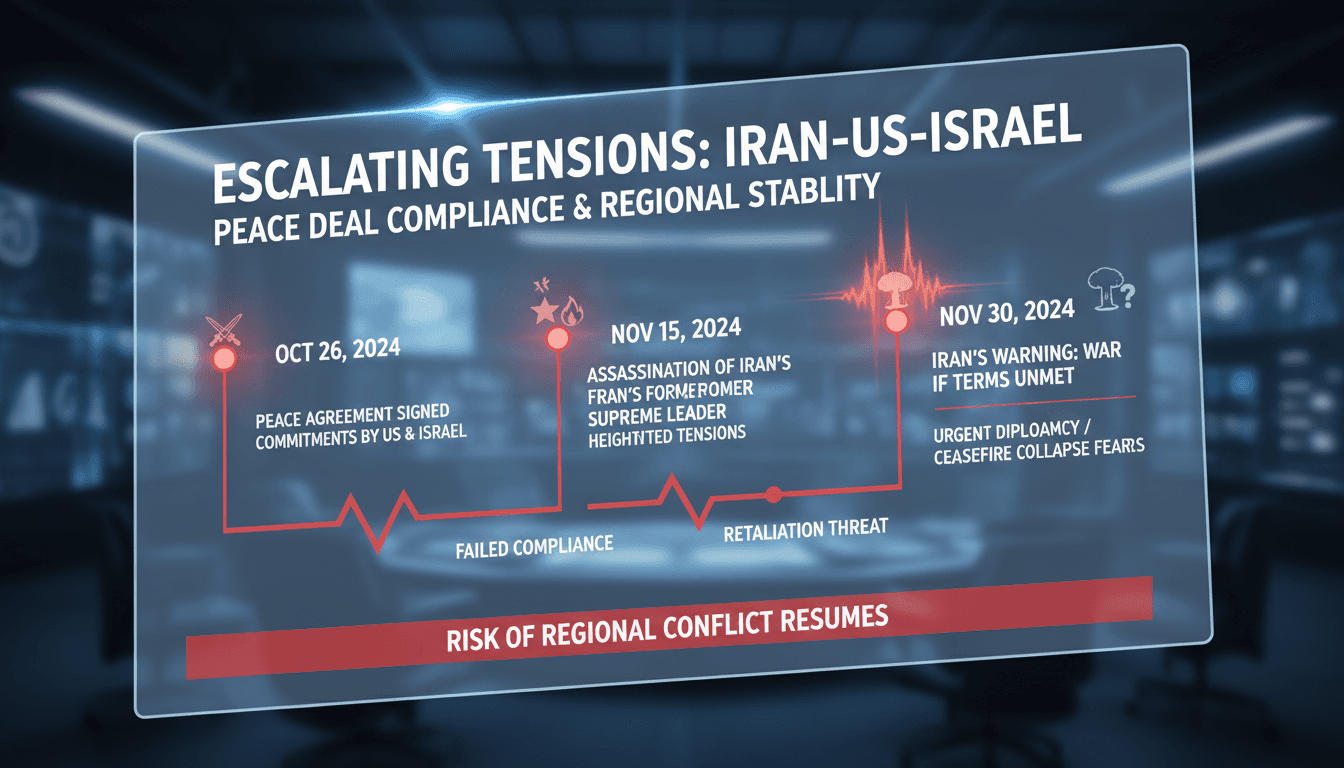
Here's what it means for you.
The escalating tensions between Iran, the U.S., and Israel could have significant implications for regional stability and international relations. As Iran demands compliance with a peace agreement, the potential for renewed conflict looms large, impacting markets and diplomatic efforts. Stakeholders must closely monitor developments, as failure to adhere to commitments could lead to military escalations that disrupt the fragile ceasefire.
What happened
Iran's Parliament Speaker, Mohammad Bagher Ghalibaf, has issued a stark warning to the U.S. and Israel, threatening to resume hostilities if they do not fulfill their obligations under a recent peace deal. This warning comes in the wake of heightened tensions following the assassination of Iran's former supreme leader, Ayatollah Ali Khamenei. The situation has prompted urgent diplomatic discussions as both sides navigate the complexities of the ongoing negotiations.
Ghalibaf emphasized that Iran would respond proportionately if the commitments are not honored. The conflict initially erupted on February 28, 2026, when an Israeli strike resulted in Khamenei's death, marking a significant escalation in hostilities. As negotiations continue, concerns have been raised regarding potential Israeli assassination plots targeting Iranian negotiators.
The Context
The warning from Iran was delivered during a meeting with representatives from China and Belarus, highlighting the international dimensions of the conflict. The assassination of Khamenei has created a power vacuum and increased the urgency for Iran to assert its position in the region. U.S. officials have expressed apprehension about the potential for further violence, particularly regarding Israeli actions against Iranian leaders during the ongoing peace talks.
The fragile ceasefire is at risk as both Iran and its adversaries weigh their next moves. The geopolitical landscape is further complicated by the involvement of external powers, which could influence the outcome of the negotiations. The stakes are high, as the failure to uphold the peace agreement could lead to a significant deterioration in regional stability.
Takeaway
The outlook remains uncertain as both Iran and its adversaries consider their next steps. Continued diplomatic efforts will be crucial to prevent further escalation, but the potential for conflict looms large if agreements are not upheld. Stakeholders should monitor developments in U.S.-Iran negotiations and any military escalations that may arise from this volatile situation.
Reactions from Israel regarding Iran's threats and the ongoing peace talks will also be critical in shaping the future of this conflict. The situation demands close attention, as the implications of a renewed conflict could reverberate throughout the region and beyond.
English-language reporting on Saudi politics, policy, and society.
"Saudi Gazette reflects mainstream Saudi institutional perspectives."
— A47 Editor
US officials believed Israel was plotting to assassinate Iranian negotiators: NYT
US officials have expressed concerns that Israel was planning to assassinate key Iranian negotiators, including Foreign Minister Abbas Araghchi and Parliament Speaker Mohammad Bagher Ghalibaf, amid sensitive negotiations aimed at ending the ongoing c...
Capitol Hill news, legislation, and policy insight.
"The Hill specializes in U.S. politics and policy, with a focus on Capitol Hill developments and a reputation for insider reporting."
— A47 Editor
Iran threatens response without 'full implementation' of US deal
Iran's Parliament Speaker Mohammad Bagher Qalibaf has issued a warning regarding a potential Iranian response if the U.S. and Israel do not fully implement their commitments under the interim peace deal. This statement comes as Iran prepares for the ...
Conservative-leaning political and national coverage.
"The Washington Times is a conservative-leaning newspaper known for its political coverage and advocacy of right-of-center viewpoints."
— A47 Editor
Lead Iran negotiator tells allies Tehran will go to war again if U.S. does not fulfill commitments
Iran's parliament speaker and lead negotiator, Mohammad Bagher Ghalibaf, warned that Tehran is prepared to resume military action if the U.S. fails to meet its obligations under the Islamabad memorandum of understanding, during discussions with repre...