
Delta Airlines Exceeds Q2 Earnings Expectations Amid High Fuel Costs
Here's what it means for you.
Delta Airlines' strong second-quarter performance signals resilience in the airline industry, particularly as travel demand continues to recover. The airline's ability to exceed earnings expectations despite soaring fuel costs highlights its strategic focus on premium and international travel segments. This trend may influence investor confidence and market dynamics as airlines navigate ongoing economic challenges. As Delta reaffirms its profit guidance, stakeholders should monitor how fluctuating fuel prices may impact profitability across the sector. The airline's success could set a precedent for others in the industry, shaping future operational strategies.
What happened
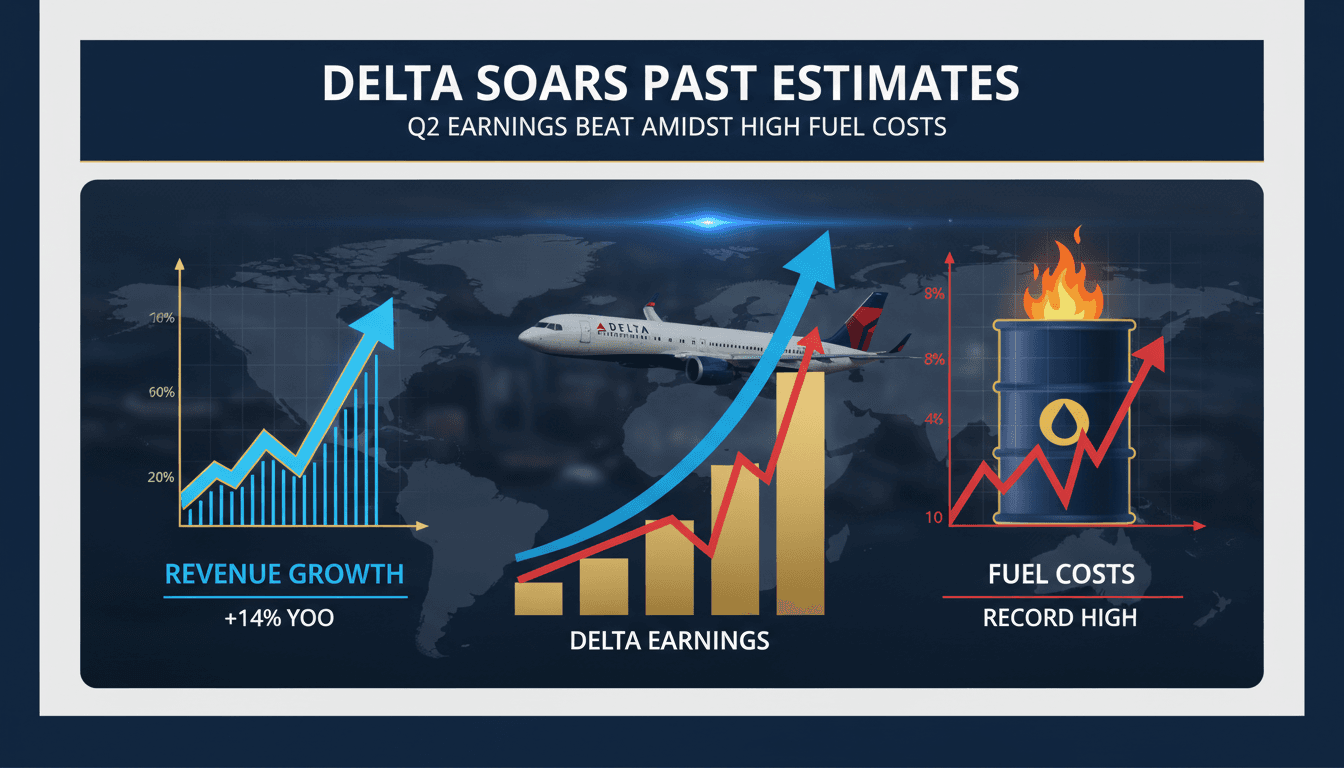
Delta Airlines reported its second-quarter earnings for 2026, surpassing analyst expectations with an adjusted earnings per share of $1.56. The airline achieved a 14% year-over-year revenue increase, driven by strong demand for premium and corporate travel. Despite facing record-high fuel expenses, Delta's capacity grew only slightly by 1%, indicating a strategic focus on maximizing revenue from existing operations.
The airline's performance has led to a reaffirmation of its full-year profit guidance, suggesting confidence in ongoing travel demand. This positive outlook comes at a time when many airlines are grappling with rising operational costs.
The Context
Delta Airlines has positioned itself effectively within the competitive airline landscape, focusing on premium and international travel segments that have shown robust demand. The airline's ability to navigate high fuel costs while maintaining profitability is noteworthy, especially as it marks the highest quarterly fuel expense in its history.
The timing of this report is crucial, as it reflects broader trends in the airline industry where recovery from the pandemic is ongoing. Stakeholders, including investors and industry analysts, will be keenly observing Delta's performance as a bellwether for the sector's health.
Takeaway
Looking ahead, Delta Airlines is well-positioned to continue its growth trajectory, provided it can manage the challenges posed by high fuel prices. Investors should keep an eye on Delta's performance in upcoming quarters to assess whether travel demand remains strong. Additionally, the potential impacts of fluctuating fuel prices on airline profitability will be critical to watch.
As the airline industry evolves, Delta's strategies may serve as a model for others aiming to thrive in a competitive environment. The focus on premium travel segments could become increasingly important as consumer preferences shift.
Global markets, investing, and macroeconomics from a premier financial newsroom.
"Bloomberg is respected for in-depth financial reporting and data-driven analysis."
— A47 Editor
Delta Travel Demand Withstands Fuel Costs
Delta Air Lines reported strong earnings that exceeded expectations, reaffirming its full-year profit guidance as travel demand remains resilient despite rising fuel costs. This positive performance highlights the airline's ability to navigate challe...
Highlights from management calls: outlook, margins, demand signals, and Q&A color.
"Useful to catch tone and forward-looking commentary beyond the headline numbers."
— A47 Editor
Earnings call transcript: Delta beats Q2 2026 estimates but shares slip
Delta Air Lines reported earnings for Q2 2026 that exceeded analysts' expectations, yet its shares experienced a decline following the announcement. This outcome reflects a disconnect between the positive financial results and market reactions, parti...
Global markets, investing, and macroeconomics from a premier financial newsroom.
"Bloomberg is respected for in-depth financial reporting and data-driven analysis."
— A47 Editor
Delta Rises on Profit Guidance; EasyJet Moves on Apollo Bid | Stock Movers
Delta Air Lines shares rose after the company reaffirmed its full-year profit guidance, driven by strong demand for premium and international travel, despite facing record fuel costs. The airline reported an adjusted earnings of $1.56 per share for t...
U.S. business news, corporate developments, and economy.
"The Wall Street Journal is respected for deep financial and economic reporting with a center-right editorial perspective."
— A47 Editor
Delta Sales Keep Climbing While Sky-High Fuel Costs Cut Profit
Delta Air Lines reported a significant increase in revenue for the second quarter, despite only adding 1% to its capacity, indicating strong demand in the travel sector.