
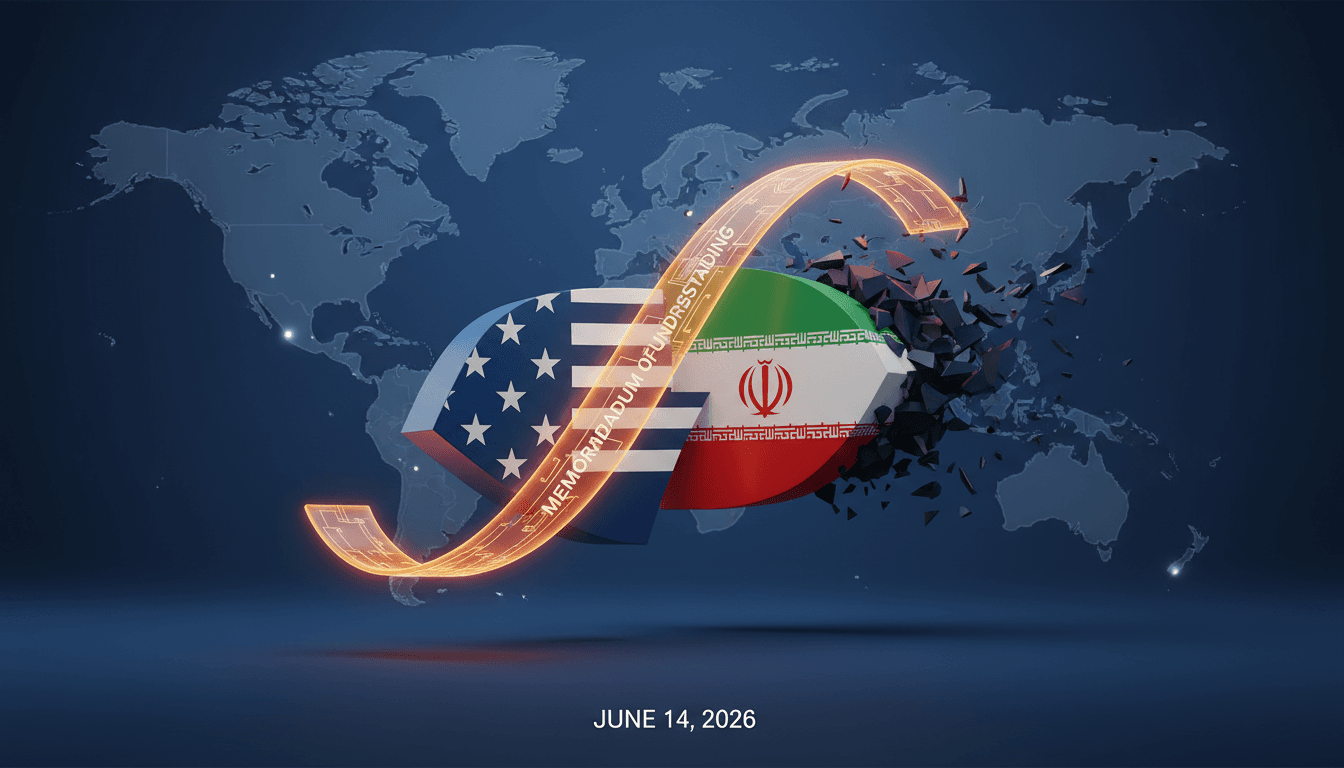
US and Iran sign Memorandum of Understanding to address longstanding tensions
Here's what it means for you.
The recent signing of a Memorandum of Understanding (MoU) between the US and Iran marks a pivotal moment in international relations, particularly in the Middle East. This agreement, emerging from a backdrop of conflict, signals a potential shift in diplomatic engagement that could influence market stability and geopolitical alliances. Stakeholders across various sectors should remain vigilant as the implications of this deal unfold, particularly regarding energy markets and regional security dynamics. The MoU's success hinges on the cooperation of both nations, which may reshape their long-standing adversarial relationship. As the international community closely monitors the situation, the effectiveness of this agreement will be crucial in determining future diplomatic efforts.
What happened
On June 14, 2026, the US and Iran signed a Memorandum of Understanding aimed at addressing longstanding tensions following a three-month conflict. This agreement is the culmination of extensive mediation efforts designed to bridge decades of hostility between the two nations. The signing coincided with President Trump's birthday, adding a layer of significance to the event.
The international community has welcomed the MoU, although reactions have been mixed. While some express cautious optimism about the potential for improved relations, others raise concerns regarding the specifics of the deal, particularly in relation to nuclear issues and sanctions. The urgency for diplomatic solutions is underscored by the recent devastating conflict.
The Context
The MoU represents a significant step in addressing decades of animosity between the US and Iran, with the potential to alter the geopolitical landscape in the region. Mediators worked tirelessly for weeks to facilitate this agreement, reflecting the complexities involved in US-Iran relations. The signing has sparked discussions about the future of regional stability and the broader implications for international relations.
As both nations navigate the intricacies of this agreement, the effectiveness of the MoU will depend on their ability to implement its terms successfully. The deal's timing is critical, coming on the heels of a three-month war that highlighted the urgent need for diplomatic engagement.
Takeaway
Looking ahead, the focus will be on how US and Iranian officials respond to the details of the agreement and the potential impacts on regional stability. Observers should monitor the reactions from both governments, as these will provide insight into the feasibility of the MoU's implementation. The international community will also be watching closely for any shifts in policy that may arise from this new diplomatic framework.
The success of this agreement could redefine US-Iran relations, but it will require sustained cooperation and commitment from both parties. As the world watches these developments, the implications for international diplomacy and security will be significant.
European coverage of Middle East politics and security issues.
"France 24 offers international reporting with a European editorial perspective."
— A47 Editor
Iran deal: Trump is back to square one, but the cards are now in Tehran’s favor
The United States and Iran have signed a Memorandum of Understanding (MoU) following a three-month conflict, marking a significant diplomatic breakthrough. The agreement was announced on June 14, coinciding with President Donald Trump's birthday, and...
Coverage of current events and conflicts in the Middle East.
"France 24 is viewed as a globally focused outlet with balanced coverage and a European perspective."
— A47 Editor
Iran deal: Trump is back to square one, but the cards are now in Tehran’s favor
The United States and Iran have signed a Memorandum of Understanding (MoU) following a three-month conflict, marking a significant diplomatic breakthrough. The agreement was announced on June 14, coinciding with President Donald Trump's birthday, and...
Editor-curated FT homepage stories spanning markets, business, world, and opinion.
"The Financial Times is a globally respected business publication with a centrist/center-left tone and strong markets focus."
— A47 Editor
How the US-Iran deal came together
Mediators have been engaged in extensive discussions to bridge nearly half a century of hostility between Washington and Tehran, culminating in a tentative agreement to extend a ceasefire amid ongoing tensions and military actions. This development f...
Regional and international reporting focused on Middle Eastern politics, diplomacy, and economics.
"Asharq Al-Awsat is a Saudi-owned international newspaper reflecting mainstream Gulf political perspectives."
— A47 Editor
Trump Says Iran Deal Has Been Signed, Text to Come Soon
President Trump announced that a peace deal with Iran has been signed, with details expected to be released soon. This announcement follows a period of heightened tensions and the cancellation of planned military strikes against Iran, suggesting a si...
Pan-Arab news coverage spanning politics, business, sports, and regional affairs.
"Asharq Al-Awsat reflects a broad Arab editorial perspective with strong attention to regional geopolitics."
— A47 Editor
تفاهم ترمب مع إيران يواجه أسئلة صعبة حول «النووي» والعقوبات
U.S. President Donald Trump announced a memorandum of understanding with Iran, eliciting a range of reactions from cautious welcome to concerns regarding the details and implementation mechanisms.