
BMW Lowers 2026 Profit Forecast Amid Chinese Market Decline and Geopolitical Tensions
Here's what it means for you.
BMW's decision to lower its profit forecast signals significant challenges in the automotive sector, particularly in international markets. The company's revised expectations may lead to increased scrutiny from investors and stakeholders, impacting overall market confidence. As competition intensifies, especially from local EV manufacturers in China, BMW's strategic adjustments will be crucial for maintaining its market position.
What happened
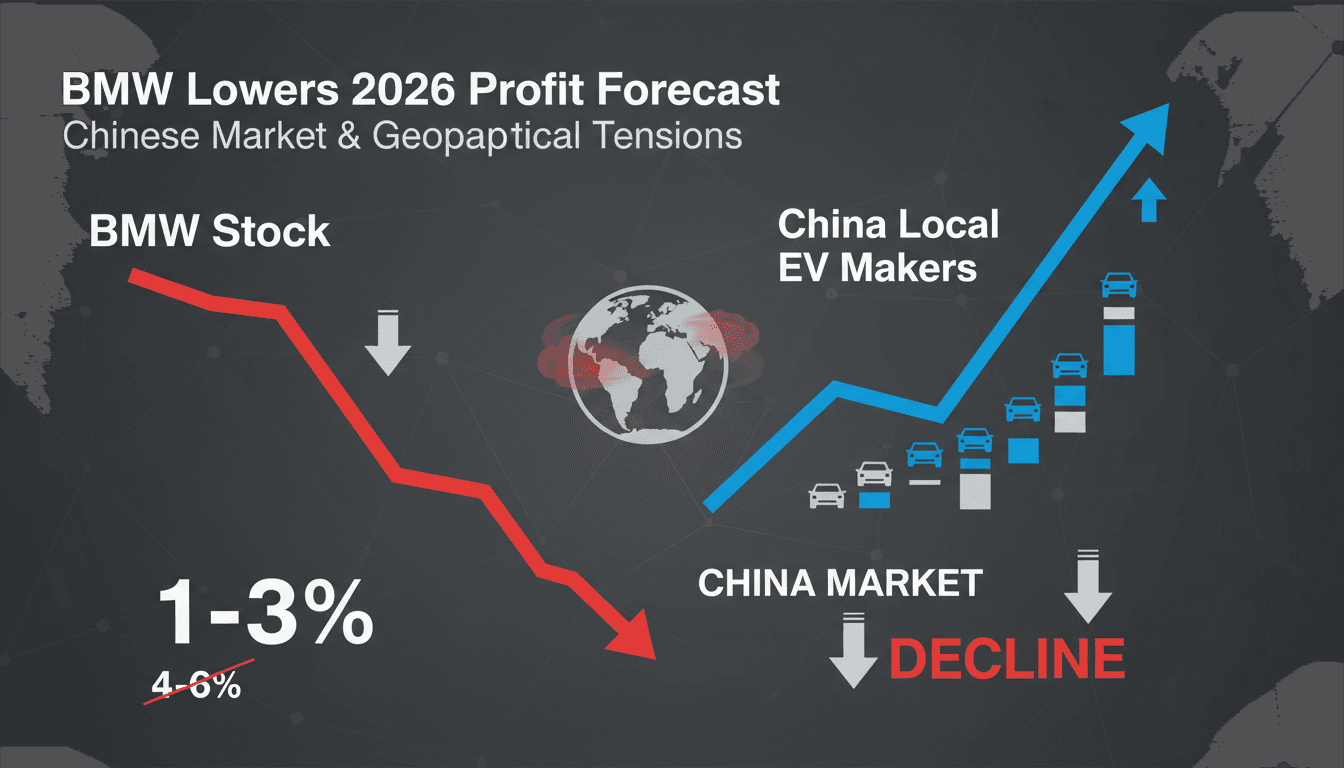
BMW has announced a substantial reduction in its full-year profit forecast, adjusting its expected automotive EBIT margin from 4-6% down to 1-3%. This decision comes in response to a decline in the Chinese market, which has been a key profit driver for the company. The announcement has resulted in an 11% drop in BMW's shares, reflecting significant investor concern over the company's future performance.
The challenges faced by BMW are compounded by geopolitical tensions, particularly the ongoing conflict in the Middle East. These factors have contributed to a more challenging operating environment, prompting the company to reevaluate its strategies moving forward.
The Context
China has long been a vital market for BMW, providing substantial revenue and growth opportunities. However, the rise of local electric vehicle manufacturers has intensified competition, leading to a downturn in BMW's market share. The geopolitical landscape, particularly the conflict in the Middle East, further complicates the situation, affecting supply chains and consumer sentiment.
As BMW navigates these challenges, the implications extend beyond the company itself, impacting the broader European automotive sector. The interconnectedness of global markets means that shifts in one region can have ripple effects, influencing investor confidence and market dynamics across the industry.
Takeaway
Looking ahead, BMW's response to the competitive pressures from Chinese EV manufacturers will be critical. The company must innovate and adapt its strategies to regain its footing in a rapidly evolving automotive landscape. Additionally, monitoring developments in the geopolitical arena will be essential, as these factors continue to shape the operational environment for automotive companies.
As BMW adjusts its approach, stakeholders should remain vigilant for signs of strategic shifts that could influence the company's long-term viability and market position.
Opinionated AI coverage for general audiences.
"TNW’s AI vertical covering tools, ethics, and trends."
— A47 Editor
BMW slashes profit forecast as China’s EV makers squeeze European carmakers on two fronts
BMW has revised its full-year profit forecast downward, adjusting its expected automotive EBIT margin to a range of 1 to 3 percent, down from the previous estimate of 4 to 6 percent, citing a significant decline in the Chinese market and the broader ...
Stock market news, investing ideas, and trading analysis.
"TheStreet provides market news and retail-investor-focused analysis."
— A47 Editor
BMW's biggest market is becoming its biggest headache
BMW has revised its outlook for 2026 downward, primarily due to significant challenges in the Chinese market, which has historically been one of its largest and most profitable regions. The company is grappling with a notable decline in sales, partic...
U.S. business news, corporate developments, and economy.
"The Wall Street Journal is respected for deep financial and economic reporting with a center-right editorial perspective."
— A47 Editor
European Auto Shares Fall After BMW Cuts Guidance
BMW shares fell by 11%, significantly impacting the European auto sector after the company reduced its guidance, citing a declining Chinese market and the adverse effects of ongoing conflicts in the Middle East.