
EasyJet reports £552 million pretax loss amid rising fuel costs and Middle East conflict
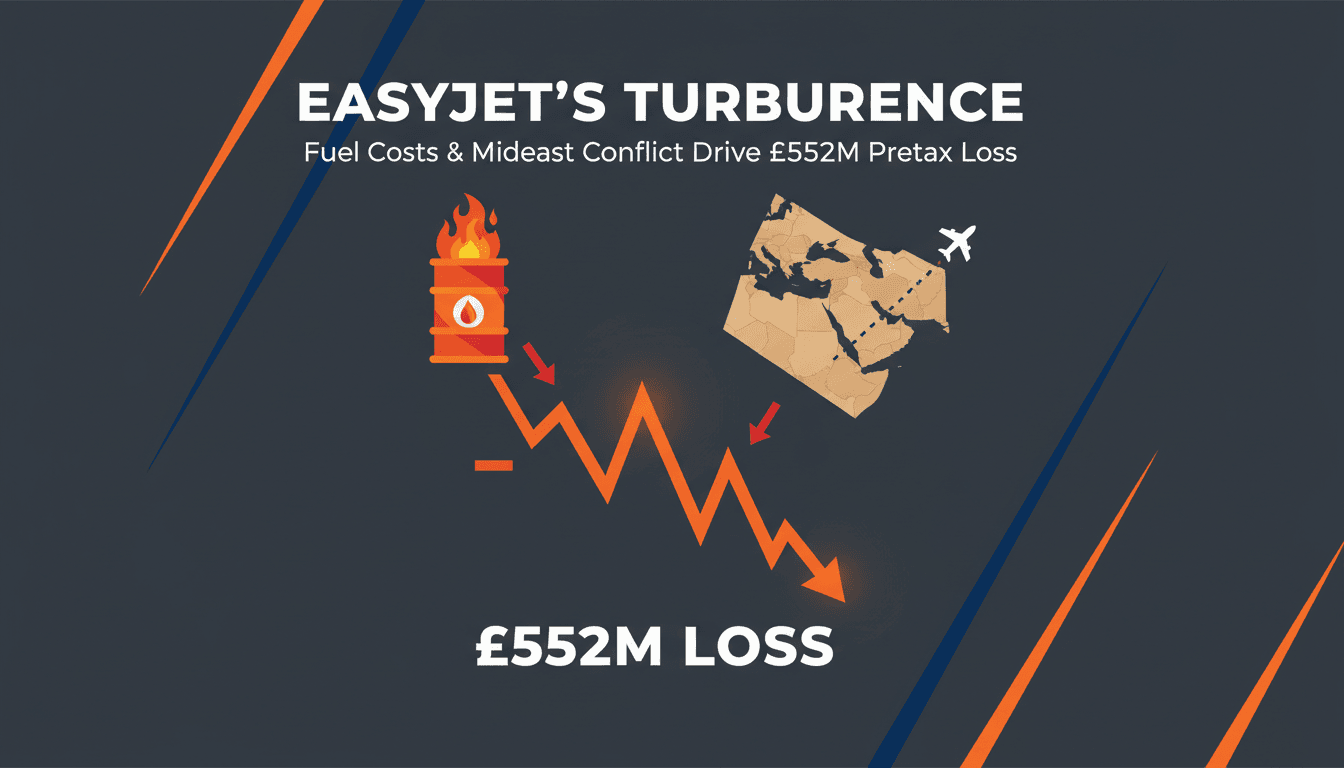
Here's what it means for you.
The airline industry faces significant challenges due to geopolitical tensions and fluctuating fuel prices.
What happened
EasyJet posted a pretax loss of £552 million for H1 2026.
The Context
- Rising fuel costs: The airline's losses are influenced by increased fuel prices.
- Booking uncertainties: The Middle East conflict has created booking uncertainties.
- Uncertain outlook: The company's full-year outlook is uncertain due to these factors.
Takeaway
The airline industry may continue to face challenges due to geopolitical tensions and fluctuating fuel prices.
U.S. business news, corporate developments, and economy.
"The Wall Street Journal is respected for deep financial and economic reporting with a center-right editorial perspective."
— A47 Editor
easyJet Posts Widened Pretax Loss as Middle East Conflict Heightens Uncertainty
easyJet has reported a widened pretax loss, attributing the uncertainty in its full-year outlook to booking delays and volatile fuel prices amid the ongoing conflict in the Middle East. The airline's financial struggles reflect broader challenges fac...
Highlights from management calls: outlook, margins, demand signals, and Q&A color.
"Useful to catch tone and forward-looking commentary beyond the headline numbers."
— A47 Editor
Earnings call transcript: EasyJet’s H1 2026 results show increased losses
EasyJet has reported increased losses for the first half of 2026, with anticipated pre-tax losses ranging from £540 million to £560 million, primarily due to declining flight bookings linked to the ongoing conflict in the Middle East and rising fuel ...
Quarterly results: revenue/EPS beats or misses, guidance changes, and key line-item takeaways.
"Good snapshot feed for earnings season; pair with transcripts for context."
— A47 Editor
EasyJet H1 loss lands within range at £552 mln as fuel, Mideast war weigh
EasyJet reported a pre-tax loss of £552 million for the first half of 2026, falling within its anticipated range, largely due to declining flight bookings and rising fuel prices linked to the ongoing conflict in the Middle East.