
Viktor Orban re-elected as Fidesz party leader amid changing political dynamics in Hungary
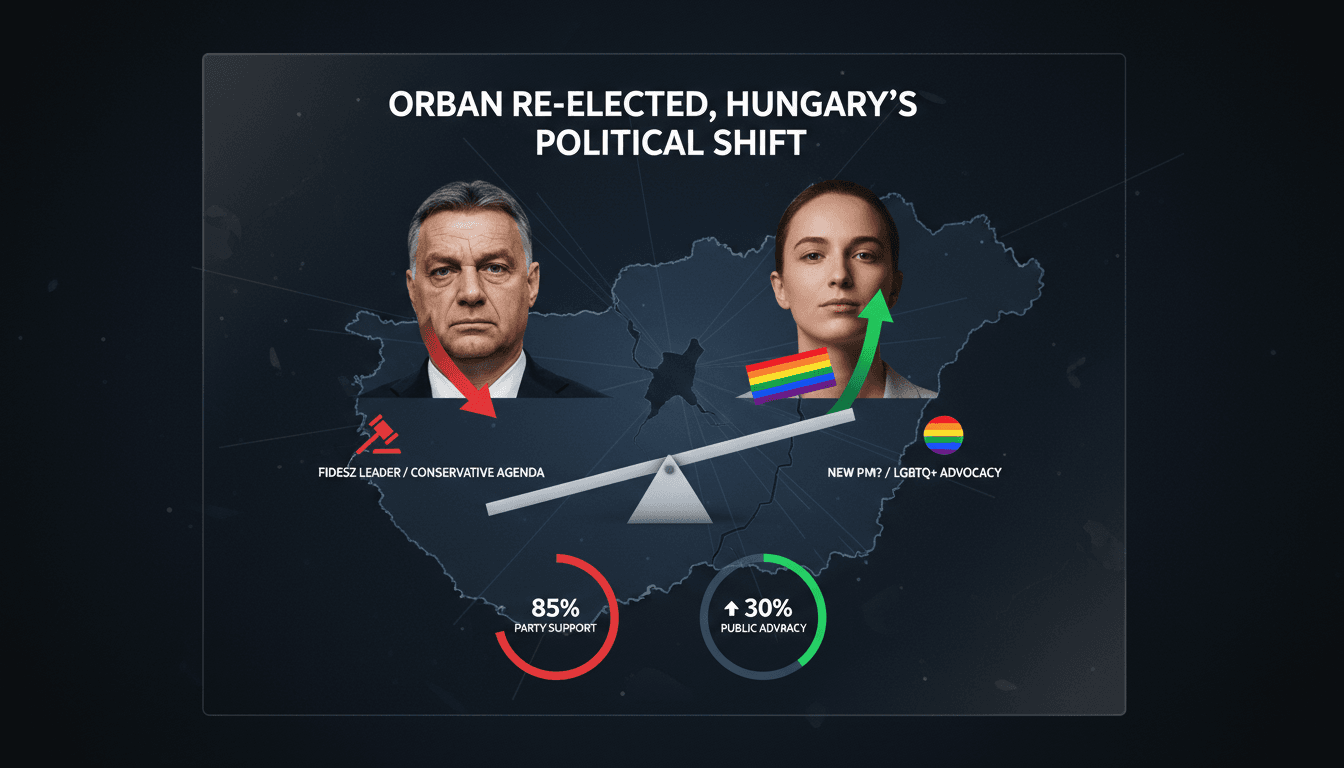
Here's what it means for you.
Viktor Orban's re-election as the leader of the Fidesz party underscores his significant influence within the party, even after a notable electoral defeat. This event signals a potential continuity in Fidesz's policies, particularly regarding contentious social issues like LGBTQ rights. As public advocacy for social change grows, Orban's leadership will be pivotal in shaping the party's response to these evolving dynamics. The implications of this re-election extend beyond party politics, as they may affect Hungary's broader political landscape and its relationship with European norms on human rights. Observers will be keen to see how Orban navigates these challenges in the coming months.
What happened
Viktor Orban was re-elected as the leader of Hungary's Fidesz party with overwhelming support, receiving 729 out of 737 votes at the party congress. His re-election comes despite a significant electoral defeat in April, where his party lost to the new centre-right prime minister, Peter Magyar. Orban ran unopposed for the leadership position, indicating his strong hold on the party.
This overwhelming support from party delegates reflects Orban's enduring influence, even in the face of recent setbacks. He has taken full responsibility for the party's loss, which adds a layer of accountability to his leadership moving forward.
The Context
Orban's Fidesz party faced a significant defeat in the April elections, marking a shift in Hungary's political landscape with the election of Peter Magyar as prime minister. This change has raised questions about the future direction of Fidesz, particularly regarding its policies on LGBTQ rights, which have drawn criticism under Orban's previous administration.
The re-election of Orban occurs at a time when social issues are becoming increasingly prominent in public discourse. Advocacy for LGBTQ rights and other progressive causes is gaining traction, potentially challenging the traditional stances held by Fidesz.
Takeaway
Orban's continued leadership may influence the direction of Fidesz and its policies, especially in light of recent electoral challenges. Observers should monitor potential policy changes regarding LGBTQ rights under the new prime minister, as this could signal a shift in the party's approach to social issues.
Additionally, it will be important to watch how Orban's leadership impacts Fidesz's strategy in future elections, particularly as public sentiment evolves. The interplay between Orban's influence and rising advocacy for social change will be crucial in shaping Hungary's political future.
Global news coverage with extensive reporting on Middle Eastern conflicts and geopolitics.
"Al Jazeera is a Qatar-based broadcaster known for wide regional coverage and alternative perspectives."
— A47 Editor
Hungary’s former PM Orban re-elected party leader despite election loss
Viktor Orban has been re-elected as the leader of the Fidesz party despite his recent electoral defeat, where he took full responsibility for the loss against opposition leader Péter Magyar and the Tisza Party. This election marked the end of Orban's...
Comprehensive coverage of Middle Eastern and global issues.
"Al Jazeera is a prominent voice from the Global South, especially the Middle East, with an emphasis on underreported stories."
— A47 Editor
Hungary’s former PM Orban re-elected party leader despite election loss
Viktor Orban has been re-elected as the leader of the Fidesz party despite his recent electoral defeat, where he took full responsibility for the loss against opposition leader Péter Magyar and the Tisza Party. This election marked the end of Orban's...
Global coverage of politics, crises, and international affairs.
"HuffPost provides progressive-oriented reporting on international developments, often focusing on humanitarian and social justice issues."
— A47 Editor
Viktor Orbán Re-Elected As Fidesz Party Leader In Hungary Despite Election Loss
Viktor Orbán has been re-elected as the leader of the Fidesz party in Hungary, receiving overwhelming support from 729 out of 737 delegates at the party congress, despite having recently conceded defeat in parliamentary elections that ended his 16-ye...
24/7 international news from a French perspective in multiple languages.
"France 24 is viewed as a globally focused outlet with balanced coverage and a European perspective."
— A47 Editor
LGBTQ rights in Hungary: 'We are very hopeful that changes will be made'
Peter Magyar has been sworn in as Hungary's new Prime Minister, marking the end of Viktor Orbán's 16-year rule. This transition follows a decisive victory in the parliamentary elections held on April 12, 2026, where Magyar's Tisza party secured over ...