
Iran escalates military attacks on Gulf states amid U.S. strikes
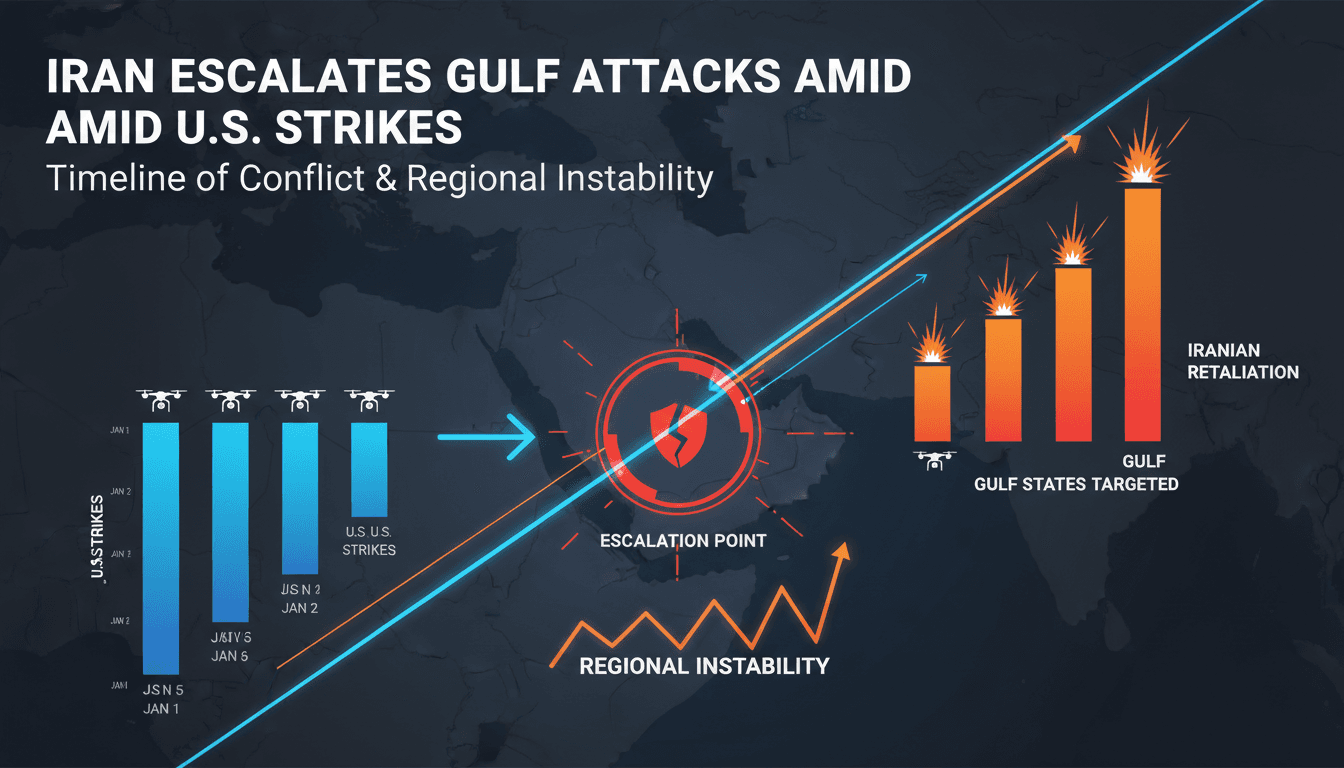
Here's what it means for you.
The recent escalation of military actions between Iran and Gulf states signals a significant shift in regional stability, impacting both diplomatic relations and security frameworks. As Iran retaliates against U.S. allies following sustained U.S. strikes, the potential for broader conflict increases, which could disrupt international trade routes and energy supplies. Stakeholders in the region, including the Gulf Cooperation Council, are now calling for accountability and international intervention, highlighting the urgent need for diplomatic solutions.
What happened
Iran has intensified its military attacks on Gulf states in response to a series of U.S. strikes targeting Iranian military positions. Following seven consecutive nights of U.S. military engagement, Iran's actions have notably affected civilian infrastructure, including a water desalination plant in Kuwait. The Gulf Cooperation Council has condemned these attacks, labeling them as war crimes, marking a significant deterioration in regional relations.
The situation escalated after a fragile ceasefire agreement collapsed, leading to renewed hostilities. Iran's strikes have primarily targeted Kuwait, Bahrain, and Jordan, raising alarms about the safety of civilians and the stability of the region. This ongoing conflict underscores the precarious balance of power in the Gulf.
The Context
The backdrop of this conflict involves a complex interplay of military and political dynamics in the Gulf region. The U.S. has been actively targeting Iranian military infrastructure, which has prompted Iran to retaliate against its allies in the region. The Gulf Cooperation Council, representing several key states, has taken a strong stance against Iran's actions, emphasizing the need for international accountability.
This escalation comes at a time when regional security is already fragile, and the strategic Strait of Hormuz remains a focal point for international shipping and energy supplies. The ongoing military exchanges reflect a broader struggle for influence, with implications for both regional and global stability. As tensions rise, the potential for further escalation looms large.
Takeaway
As military actions continue, the outlook for the Gulf region remains uncertain, with significant implications for international diplomatic efforts. Observers should monitor potential responses from the Gulf Cooperation Council regarding Iran's actions and the likelihood of further U.S. military engagement. The situation calls for urgent attention to prevent a broader conflict that could destabilize the region.
Future developments will likely hinge on the effectiveness of diplomatic channels and the international community's response to the escalating violence. The potential for increased military engagement raises concerns about civilian safety and the overall security landscape in the Gulf.
European coverage of Middle East politics and security issues.
"France 24 offers international reporting with a European editorial perspective."
— A47 Editor
Gulf council blasts "war crimes" by Iran
The ongoing conflict between the United States and Iran has intensified, with the U.S. conducting airstrikes for the seventh consecutive night, targeting Iranian military infrastructure. In retaliation, Iran has launched missile and drone attacks aga...
24/7 international news from a French perspective in multiple languages.
"France 24 is viewed as a globally focused outlet with balanced coverage and a European perspective."
— A47 Editor
Gulf council blasts "war crimes" by Iran
The ongoing conflict between the United States and Iran has intensified, with the U.S. conducting airstrikes for the seventh consecutive night, targeting Iranian military infrastructure. In retaliation, Iran has launched missile and drone attacks aga...
Regional and international reporting focused on Middle Eastern politics, diplomacy, and economics.
"Asharq Al-Awsat is a Saudi-owned international newspaper reflecting mainstream Gulf political perspectives."
— A47 Editor
GCC Says Iranian Attacks on Kuwait, Bahrain and Jordan Amount to War Crimes
The Gulf Cooperation Council (GCC) has condemned recent missile and drone attacks by Iran targeting Kuwait, Bahrain, and Jordan, labeling these actions as war crimes and violations of sovereignty. This condemnation reflects heightened tensions in the...
Pan-Arab news coverage spanning politics, business, sports, and regional affairs.
"Asharq Al-Awsat reflects a broad Arab editorial perspective with strong attention to regional geopolitics."
— A47 Editor
بيان خليجي يصف اعتداء إيران على الكويت والبحرين والأردن بجرائم حرب
The Gulf Cooperation Council (GCC) stated on Saturday that the Iranian regime's targeting of infrastructure and civilian facilities in Bahrain, Kuwait, and Jordan constitutes war crimes that require international accountability.
Regional coverage and analysis focused on politics, diplomacy, and business across the Middle East.
"Al-Monitor is known for analytical reporting on Middle East politics and policy developments."
— A47 Editor
Iran renews attacks on Gulf states after another night of US strikes
Iran has intensified its military actions against U.S. allies in the Gulf, launching missile and drone strikes following a week of U.S. airstrikes targeting Iranian military sites. This escalation comes after a fragile ceasefire agreement collapsed, ...