
Discovery of 5,000-Year-Old Wooden Structure Near Stonehenge
Here's what it means for you.
The recent discovery of a 5,000-year-old wooden structure near Stonehenge has significant implications for our understanding of prehistoric cultures and their astronomical practices. This find may indicate that early societies were engaged in complex solar rituals long before the construction of the iconic monument itself. As further research unfolds, it could lead to a reevaluation of how ancient peoples interacted with their environment and constructed their monuments. This discovery not only enriches the archaeological narrative of the region but also highlights the importance of ongoing research in uncovering the complexities of human history. The implications extend beyond academia, potentially influencing tourism and educational initiatives centered around ancient sites.
What happened
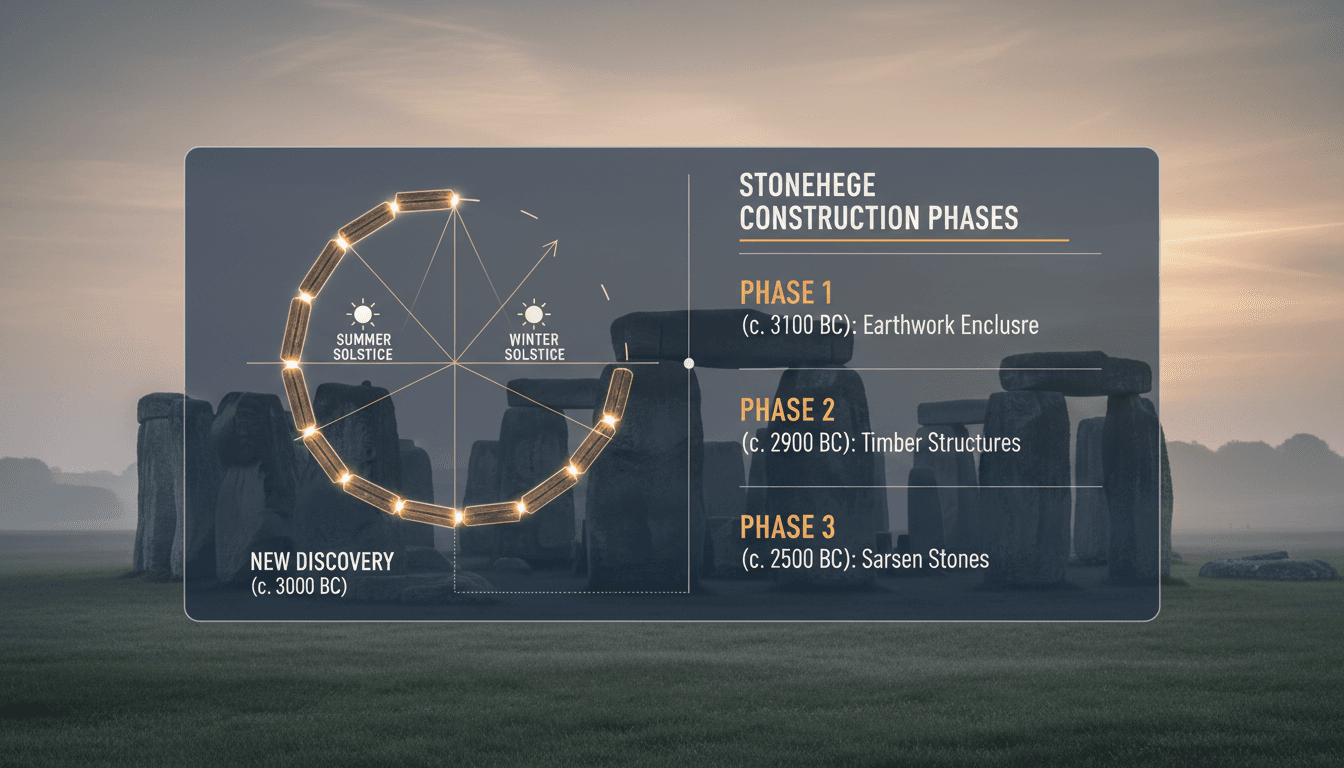
Archaeologists have uncovered a wooden structure dating back 5,000 years, located just three miles from Stonehenge. This ancient monument, carbon dated to around 3000 BC, is aligned with the summer and winter solstices, suggesting its significance in prehistoric solar rituals. The discovery was made by Wessex Archaeology and is being hailed as a "once in a lifetime" find.
The structure consists of two posts and may represent an earlier attempt at solar alignment that influenced the construction of Stonehenge. This revelation adds a new layer to our understanding of the region's archaeological landscape, particularly in relation to the famous monument.
The Context
The newly discovered site is situated in Bulford, Wiltshire, a mere 5 kilometers from the world heritage site of Stonehenge. Its alignment with significant solar events indicates that it may have played a crucial role in the cultural practices of prehistoric societies. The timing of this discovery coincides with ongoing archaeological efforts to explore the area surrounding Stonehenge, which has long been a focal point for researchers.
As the earliest phases of Stonehenge's construction are believed to have occurred around the same time as this wooden structure, the find could reshape our understanding of how ancient peoples constructed monuments and engaged with celestial events. The implications of this discovery extend to various stakeholders, including historians, archaeologists, and cultural heritage advocates.
Takeaway
As research continues, this discovery may lead to new insights into the cultural and astronomical practices of prehistoric societies in the region. Further archaeological studies are expected to reveal more about the site's purpose and its relationship to other potential prehistoric structures nearby. The findings could also spark interest in exploring additional sites that may hold similar significance.
The ongoing investigations will likely provide a clearer picture of how ancient peoples understood and utilized their environment, particularly in relation to solar alignments. This could ultimately enhance our appreciation of the complexities of prehistoric life and the monumental architecture that emerged from it.
Discoveries, research, environment, and health innovations.
"New Scientist is a well-respected publication offering accessible science news, commentary, and expert analysis."
— A47 Editor
Ancient monument may have been an early Stonehenge prototype
Archaeologists have uncovered a wooden structure dating back 5,000 years, located 5 kilometers from Stonehenge, which is believed to have served as an early prototype for the iconic monument, specifically for marking the summer solstice.
Reports on climate change, environmental science, sustainability, and nature.
"BBC News is widely regarded as a reputable international news organization, known for its impartial tone and public service mandate."
— A47 Editor
Simpler, older version of Stonehenge found three miles from famous site
A simpler and older version of Stonehenge has been discovered approximately three miles from the iconic site, consisting of two posts that aligned with the solstices around 5,000 years ago. This finding sheds light on prehistoric construction techniq...
United Kingdom-focused news including local politics, business, and social issues.
"BBC News is widely regarded as a reputable international news organization, known for its impartial tone and public service mandate."
— A47 Editor
Simpler, older version of Stonehenge found three miles from famous site
A simpler and older version of Stonehenge has been discovered approximately three miles from the iconic site, consisting of two posts that aligned with the solstices around 5,000 years ago. This finding sheds light on prehistoric construction techniq...
Reports on science policy, discoveries, and public debate in the scientific realm.
"The Guardian’s science section is known for thoughtful and critical reporting on global research, ethics, and public understanding of science."
— A47 Editor
Solstice-aligned 5,000-year-old monument ‘once in a lifetime find’, say archaeologists
Archaeologists from Wessex Archaeology have discovered a 5,000-year-old monument near Stonehenge, believed to be a prototype for the iconic site, aligned with the summer and winter solstices. The structure, located in Bulford, has been carbon dated t...
International coverage from The Guardian's global desks.
"The Guardian is known for its progressive editorial stance and in-depth analysis."
— A47 Editor
Solstice-aligned 5,000-year-old monument ‘once in a lifetime find’, say archaeologists
Archaeologists from Wessex Archaeology have discovered a 5,000-year-old monument near Stonehenge, believed to be a prototype for the iconic site, aligned with the summer and winter solstices. The structure, located in Bulford, has been carbon dated t...