
US and Iran agree to halt military attacks and resume peace talks
Here's what it means for you.
The recent agreement between the United States and Iran to pause military hostilities signals a potential shift in the geopolitical landscape of the Gulf region. This truce may provide a temporary respite for global energy markets, particularly concerning the vital Strait of Hormuz, a key shipping route. However, the underlying tensions suggest that both nations remain poised for military action if provoked, indicating that the path to lasting peace is fraught with uncertainty. The implications of this agreement extend beyond immediate military concerns, as it opens the door for renewed diplomatic engagement. Stakeholders in the energy sector and international relations will be closely monitoring the developments in upcoming talks, particularly in Qatar, to gauge the stability of this fragile truce.
What happened
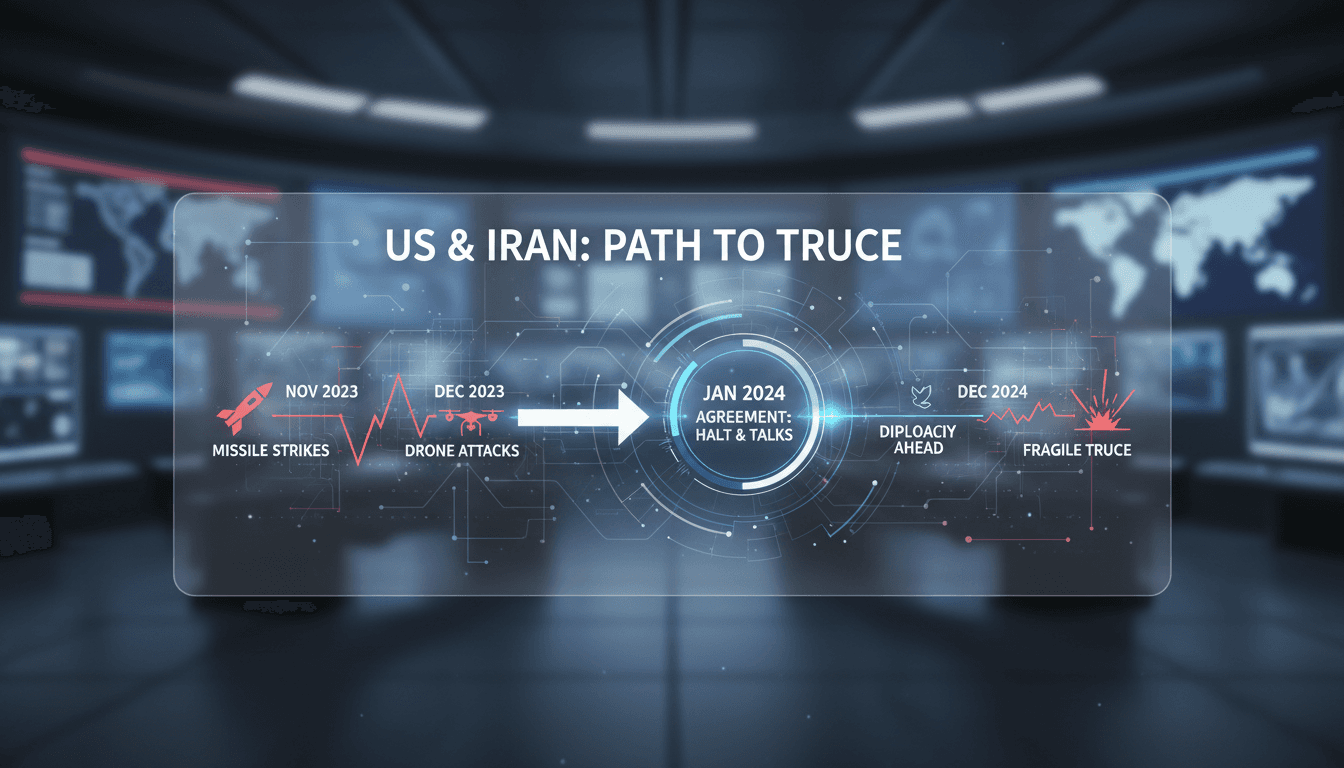
The United States and Iran have agreed to halt military attacks against each other, paving the way for renewed peace talks regarding the Strait of Hormuz. This decision follows a series of escalating strikes that raised tensions in the region, including missile and drone exchanges. Both nations are now seeking to stabilize the situation and allow maritime traffic to resume, which is critical for global energy security.
The agreement comes after a week of accusations from both sides regarding ceasefire violations, highlighting the fragile nature of the current truce. While hostilities have paused, the potential for renewed conflict remains, as both countries are prepared to respond with force if provoked.
The Context
The Strait of Hormuz is a crucial energy shipping route, and recent military exchanges have heightened global concerns over energy security. The agreement to halt attacks follows a significant escalation in hostilities, with both the US and Iran engaging in missile and drone strikes. Additionally, regional dynamics are complicated by ongoing military activities involving other actors, such as Israel's strikes on Iran-backed Hezbollah targets.
This moment marks a critical juncture in US-Iran relations, as both nations aim to address key issues through dialogue. The timing of this agreement is particularly important, as it comes ahead of anticipated peace talks expected to resume this week.
Takeaway
While the cessation of hostilities offers a chance for diplomatic engagement, the underlying tensions suggest that the situation remains precarious. The upcoming talks in Qatar will be pivotal in determining the future of US-Iran relations and the stability of the region. Stakeholders should remain vigilant, as any violations of the ceasefire could lead to renewed military responses from either side.
The fragile nature of this truce indicates that while there may be a temporary pause in hostilities, the potential for conflict remains ever-present. Observers will be closely watching how both nations navigate this delicate situation in the coming weeks.
UAE-based English-language newspaper covering regional politics, economics, and global affairs.
"The National reflects Emirati policy perspectives while maintaining international editorial standards."
— A47 Editor
Manus on Markets: Stability elusive after latest US-Iran clash
Recent military confrontations between the United States and Iran have escalated tensions in the Middle East, particularly following a drone attack by Iran on a Singapore-flagged cargo ship in the Strait of Hormuz. The U.S. responded with airstrikes ...
UAE-based English-language newspaper covering regional politics, economics, and global affairs.
"The National reflects Emirati policy perspectives while maintaining international editorial standards."
— A47 Editor
US and Iran expected to stop fighting, Iraq expands anti-corruption drive and Saudi helicopter crash
The United States and Iran have agreed to pause military strikes and resume diplomatic talks following a series of missile exchanges that escalated tensions in the Gulf region. This decision comes amid ongoing conflicts, including drone attacks on Ba...
Global markets, investing, and macroeconomics from a premier financial newsroom.
"Bloomberg is respected for in-depth financial reporting and data-driven analysis."
— A47 Editor
US, Iran Agree to Halt Attacks Ahead of Talks
The United States and Iran have reached an agreement to halt mutual attacks ahead of peace talks scheduled for this week, focusing on issues related to the strategically significant Strait of Hormuz. This decision follows a series of escalating tensi...
International coverage of politics, culture, and current affairs.
"BBC News is widely regarded as a reputable international news organization, known for its impartial tone and public service mandate."
— A47 Editor
US says it has agreed to 'stand down' after exchange of strikes with Iran
The United States and Iran have engaged in a series of military strikes against each other, escalating tensions just days after a ceasefire agreement was reached. The U.S. accused Iran of violating the ceasefire following a drone attack on a cargo sh...
International news coverage curated for readers in the UAE and Gulf region.
"Emirates 24|7 world coverage presents global developments through a UAE-facing and Gulf-relevant editorial lens."
— A47 Editor
US and Iran agree to halt attacks and resume talks after escalation
The United States and Iran have reached an agreement to halt military strikes and resume negotiations regarding the Strait of Hormuz, following a series of escalating missile exchanges that heightened tensions in the Gulf region. This decision reflec...
Regional and international reporting focused on Middle Eastern politics, diplomacy, and economics.
"Asharq Al-Awsat is a Saudi-owned international newspaper reflecting mainstream Gulf political perspectives."
— A47 Editor
Washington Says US and Iran Pausing Strikes, Talks to Proceed
The United States and Iran have agreed to pause military strikes and resume diplomatic talks, particularly concerning the Strait of Hormuz, following a series of missile exchanges that escalated tensions in the Gulf region. This decision reflects a m...