
Global Framework for Reparatory Justice Adopted in Ghana
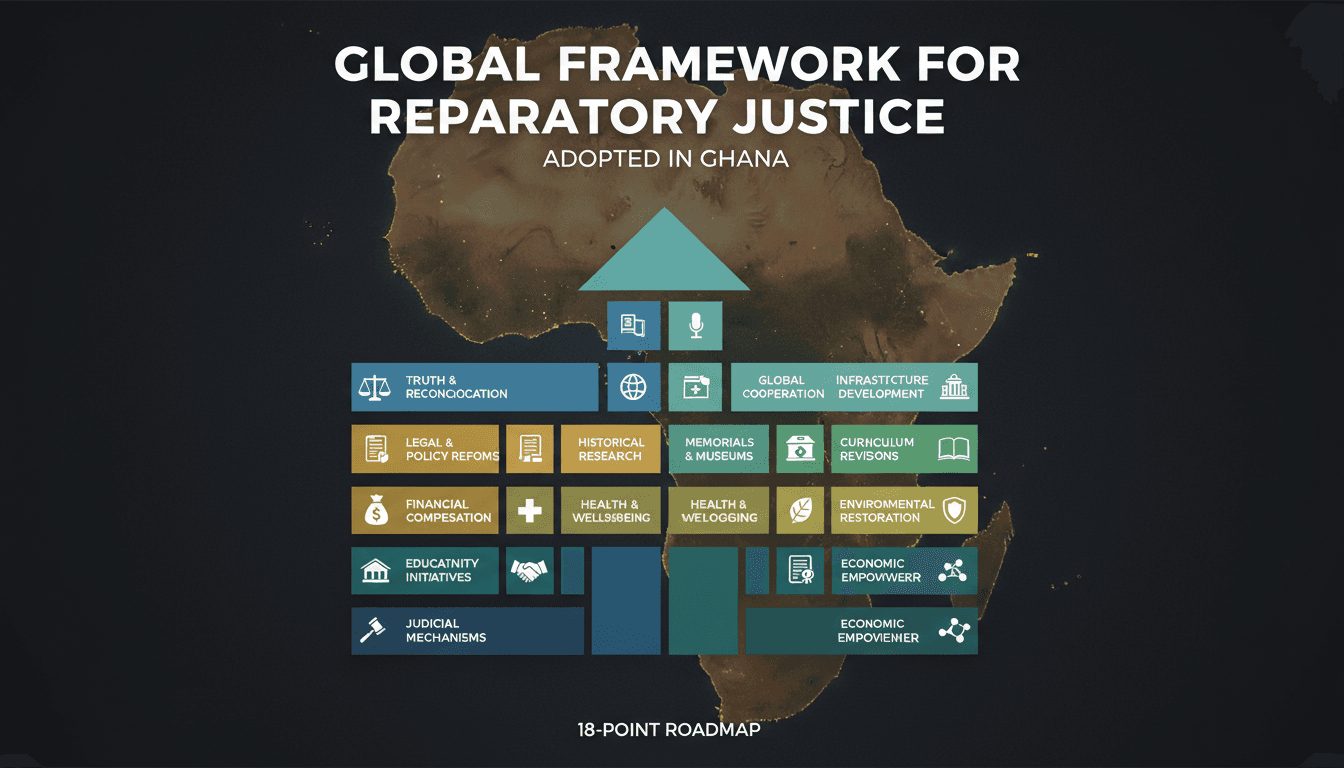
Here's what it means for you.
The adoption of a global framework for reparatory justice in Ghana signifies a transformative moment in addressing historical injustices linked to the transatlantic slave trade. This initiative not only acknowledges the profound impacts of slavery but also sets a precedent for how reparations can be approached on a global scale. Stakeholders across various sectors should prepare for potential shifts in policy discussions and public sentiment regarding reparations. As nations reflect on their historical roles in slavery, this framework could catalyze similar movements worldwide, prompting governments to reconsider their reparative responsibilities. The implications for social justice and equity are profound, as this framework aims to ensure fair compensation for those affected by slavery.
What happened
A landmark conference in Accra, Ghana, culminated in the formal adoption of a global framework for reparatory justice. This initiative is a direct response to a United Nations resolution that declared the trafficking of enslaved Africans a grave crime against humanity. The framework includes an 18-point strategic roadmap designed to facilitate compensation and debt relief for affected communities.
Leaders from Africa and the Caribbean gathered to discuss and endorse this significant step towards addressing the legacies of the transatlantic slave trade. The conference marks a pivotal moment in the global movement for reparatory justice, emphasizing the need for actionable steps to rectify historical wrongs.
The Context
The conference in Ghana is set against a backdrop of increasing global awareness regarding the injustices of slavery. Ghana has taken proactive measures by implementing a 10-point plan to enforce the UN resolution on reparations, showcasing its commitment to this cause. The participation of leaders from various regions underscores the collaborative effort needed to tackle these historical injustices.
This initiative is particularly timely as discussions around reparations gain momentum in various countries. By adopting this framework, Ghana positions itself as a leader in the reparatory justice movement, potentially influencing other nations to follow suit.
Takeaway
The successful implementation of the reparatory justice framework in Ghana could inspire similar initiatives worldwide, reshaping the discourse around historical injustices and reparations. Observers should monitor the progress of Ghana's 10-point plan and its impact on local communities. Additionally, responses from other nations regarding their own reparative measures will be crucial in determining the framework's global influence.
As this movement evolves, it will be essential to track how these discussions translate into tangible actions and policies. The adoption of this framework could serve as a catalyst for broader reparative justice efforts across the globe.
International coverage from The Guardian's global desks.
"The Guardian is known for its progressive editorial stance and in-depth analysis."
— A47 Editor
Global framework for reparatory justice adopted at landmark conference in Ghana
A global framework for reparatory justice was adopted at a landmark conference in Accra, Ghana, where heads of state and government approved an 18-point strategic roadmap aimed at ensuring fair compensation for those affected by the legacies of ensla...
24/7 international news from a French perspective in multiple languages.
"France 24 is viewed as a globally focused outlet with balanced coverage and a European perspective."
— A47 Editor
Ghana brings reparations for transatlantic slave trade a step further
Ghana is advancing the call for reparations related to the transatlantic slave trade by adopting a 10-point plan to enforce a recent UN resolution, which has been described as the 'gravest crime against humanity.' This initiative follows a significan...
News, politics, and cultural topics across the African continent.
"France 24 is viewed as a globally focused outlet with balanced coverage and a European perspective."
— A47 Editor
Ghana pushes for concrete slavery reparations
Ghana is hosting a landmark conference in Accra aimed at advancing reparatory justice for the transatlantic slave trade, gathering leaders from Africa and the Caribbean to discuss concrete reparations. This event follows a significant UN resolution t...