
Algeria begins construction of Trans-Saharan gas pipeline to Europe
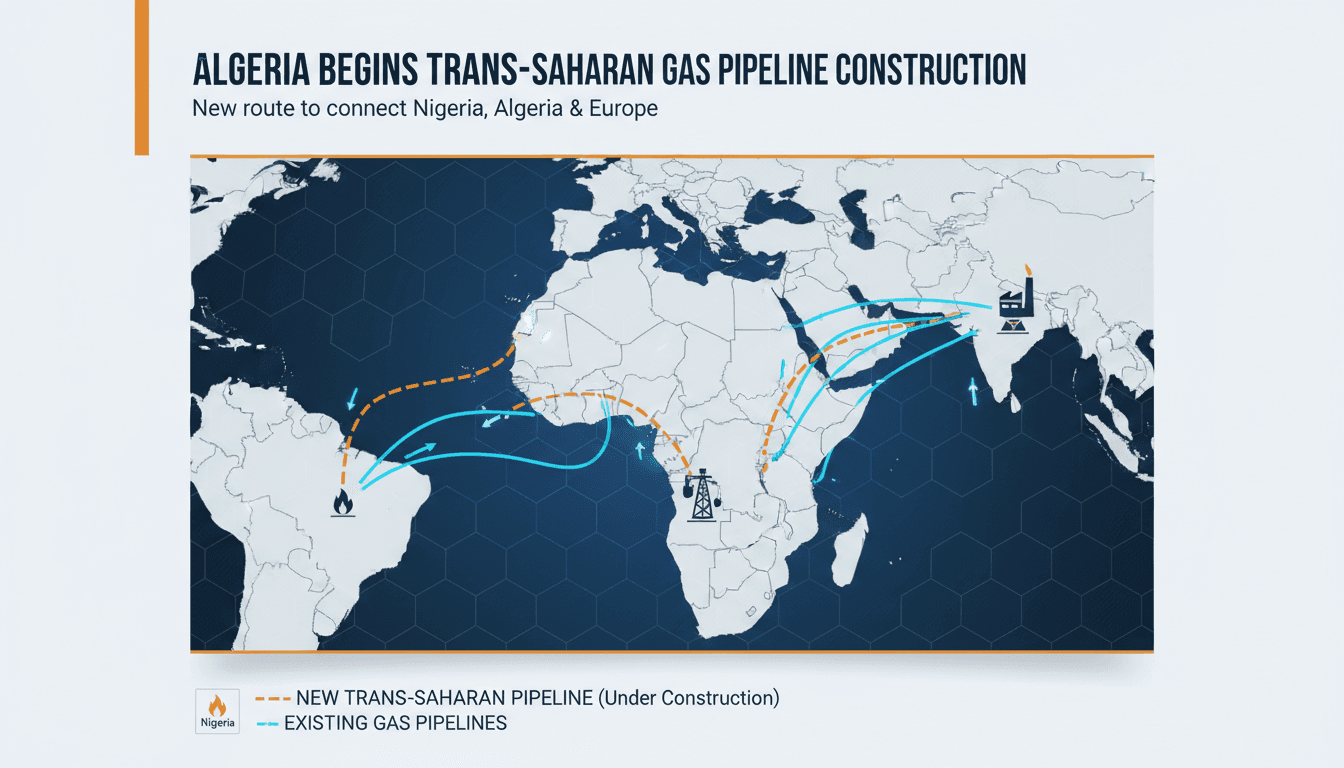
Here's what it means for you.
The commencement of the Trans-Saharan gas pipeline construction marks a pivotal moment for energy supply in Europe. This project is expected to enhance Algeria's role as a key energy supplier, particularly as European markets seek to diversify their energy sources. The collaboration among Algeria, Niger, and Nigeria underscores a significant regional partnership aimed at meeting rising energy demands. As the pipeline progresses, stakeholders will closely monitor its impact on energy dynamics in Europe, especially regarding supply stability and pricing. The successful completion of this project could reshape the energy landscape, reducing reliance on other sources.
What happened
Algeria has officially begun construction on the Trans-Saharan gas pipeline, a major initiative designed to transport gas from Nigeria to Europe. This project, which has been in the works for decades, aims to bolster energy supplies to European markets amid increasing demand. The construction is being overseen by Algeria's state-owned energy company, Sonatrach, which is responsible for a significant section of the pipeline.
The pipeline will connect to existing gas supply systems in Algeria, facilitating a more efficient distribution of natural gas. This development is a crucial step in enhancing energy cooperation between Algeria, Niger, and Nigeria, highlighting the importance of regional collaboration in energy supply.
The Context
The Trans-Saharan gas pipeline project involves collaboration among three countries: Algeria, Niger, and Nigeria. This partnership is essential for addressing the energy needs of Europe while promoting regional economic development. The project was first proposed decades ago, reflecting the long-term vision of these nations to enhance energy cooperation.
Energy ministers from Algeria, Niger, and Nigeria are overseeing the construction, ensuring that the project aligns with the strategic goals of each country. The pipeline's connection to Algeria's existing gas supply system in the Aoulef region is particularly significant, as it will streamline the flow of gas to European markets.
Takeaway
The successful completion of the Trans-Saharan gas pipeline could significantly elevate Algeria's status as a key energy supplier to Europe. As construction progresses, stakeholders should monitor any potential delays and the reactions from European energy markets regarding supply changes. This project not only aims to meet the growing energy demands of Europe but also serves as a catalyst for regional economic collaboration.
Looking ahead, the implications of this pipeline could reshape energy dynamics in Europe, potentially reducing reliance on other sources and increasing Algeria's influence in the energy sector. The ongoing developments will be crucial for understanding the future landscape of energy supply in Europe.
Regional coverage and analysis focused on politics, diplomacy, and business across the Middle East.
"Al-Monitor is known for analytical reporting on Middle East politics and policy developments."
— A47 Editor
Algeria begins work on Trans-Saharan gas pipeline to Europe
Algeria's state-owned energy company Sonatrach has commenced construction on a section of the Trans-Saharan gas pipeline, which will connect to an existing system in the Aoulef region, aimed at enhancing gas supplies to Europe. This initiative marks ...
Global markets, investing, and macroeconomics from a premier financial newsroom.
"Bloomberg is respected for in-depth financial reporting and data-driven analysis."
— A47 Editor
Algeria Starts Work on Trans-Saharan Gas Pipe to Supply Europe
Algeria has commenced construction on a pipeline designed to traverse the Sahara Desert, a project initially proposed decades ago, aimed at transporting gas from Nigeria and the surrounding region to European markets.
Arabic-language coverage of international news and geopolitics.
"RT Arabic is a Russian state-funded outlet often criticized for promoting Kremlin-aligned narratives."
— A47 Editor
بدء تنفيذ الجزء الجزائري من مشروع أنبوب الغاز العابر للصحراء
The Algerian segment of the Trans-Saharan Gas Pipeline project has officially entered the execution phase, overseen by the energy ministers of Algeria, Niger, and Nigeria. This marks a significant step towards realizing one of Africa's largest energy...