
Slovenia lifts arms embargo on Israel amid political shift
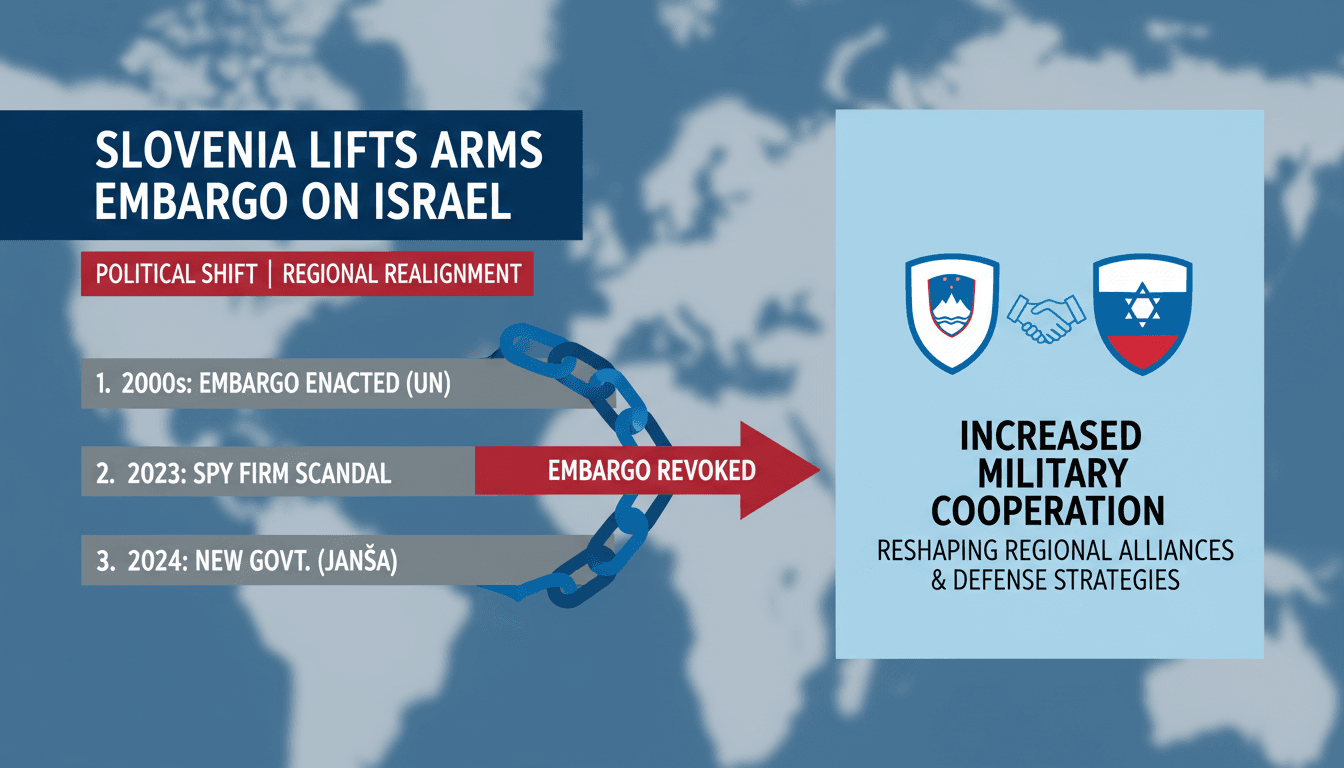
Here's what it means for you.
Slovenia's decision to lift its arms embargo on Israel signals a notable shift in its foreign policy, potentially enhancing military cooperation between the two nations. This change may influence Slovenia's defense strategies and regional alliances, particularly within the European Union. Stakeholders in defense and international relations should monitor the implications of this decision closely, as it could reshape the geopolitical landscape in Central Europe.
What happened
Slovenia has officially revoked its arms embargo on Israel, a significant policy change enacted by the newly elected government led by Prime Minister Janez Janša. The embargo, which was initially imposed in July 2025, has now been lifted as of June 11, 2026. Alongside the arms ban, Slovenia also removed a travel restriction on Israeli Prime Minister Benjamin Netanyahu.
The Slovenian government justified this decision by stating that the existing national and EU regulations rendered the embargo unnecessary. This move marks a pivotal moment in Slovenia's foreign relations, particularly in its dealings with Israel.
The Context
The arms embargo was first established in response to various geopolitical tensions and concerns regarding military cooperation. However, the recent political shift in Slovenia, coupled with a scandal involving an Israeli spy firm, has prompted a reevaluation of these policies. The current conservative government, under Janša, appears to be aligning more closely with Israel, which may have broader implications for Slovenia's role in regional security.
This decision comes at a time when European nations are reassessing their defense strategies and alliances. As Slovenia strengthens its ties with Israel, it may provoke reactions from neighboring countries and influence the dynamics within the EU.
Takeaway
The lifting of the arms embargo could lead to increased military cooperation between Slovenia and Israel, potentially reshaping defense agreements and strategies in the region. Observers should monitor how other EU countries respond to Slovenia's decision, as this may affect collective security policies. Additionally, changes in Slovenia's defense policy and arms trade agreements are likely to emerge as the government seeks to solidify its new stance.
As these developments unfold, the implications for regional alliances and defense strategies will be critical to watch, particularly in the context of ongoing geopolitical tensions.
RT is a Russian state-funded network covering global events from a Russian perspective.
"RT is widely criticized for promoting pro-Kremlin narratives and is considered by many to be a state propaganda outlet."
— A47 Editor
EU state lifts arms embargo on Israel after spy scandal
Slovenia's Prime Minister has lifted a ban on arms exports to Israel following an intervention by an Israeli spy firm in a recent election, marking a significant shift in Slovenia's defense policy.
Pan-Arab news coverage spanning politics, business, sports, and regional affairs.
"Asharq Al-Awsat reflects a broad Arab editorial perspective with strong attention to regional geopolitics."
— A47 Editor
سلوفينيا ترفع منع الدخول على نتانياهو وحظر الأسلحة على إسرائيل
The new conservative government of Slovenia, led by nationalist Janez Janša, has lifted the arms embargo on Israel and the entry ban on Israeli Prime Minister Benjamin Netanyahu. This decision marks a significant shift in Slovenia's foreign policy to...
Regional coverage and analysis focused on politics, diplomacy, and business across the Middle East.
"Al-Monitor is known for analytical reporting on Middle East politics and policy developments."
— A47 Editor
Slovenia lifts ban on arms trade with Israel
Slovenia's government has lifted a ban on the export and transit of weapons and military equipment to Israel, as well as most arms imports from the country, a decision made public by the Defence Ministry on June 11. The ban, which was initially impos...