
Global Mapping of Arbuscular Mycorrhizal Fungi Reveals Extensive Ecological Networks
Here's what it means for you.
The recent mapping of arbuscular mycorrhizal fungi networks has significant implications for agriculture and climate science. By revealing the vast scale of these underground ecosystems, researchers highlight their essential role in supporting plant life and regulating carbon cycles. This understanding could lead to innovative agricultural practices that enhance soil health and improve crop yields. As the world grapples with climate change, these findings underscore the importance of preserving fungal networks that contribute to carbon sequestration. The potential applications of this research could reshape policies aimed at sustainable farming and environmental conservation.
What happened
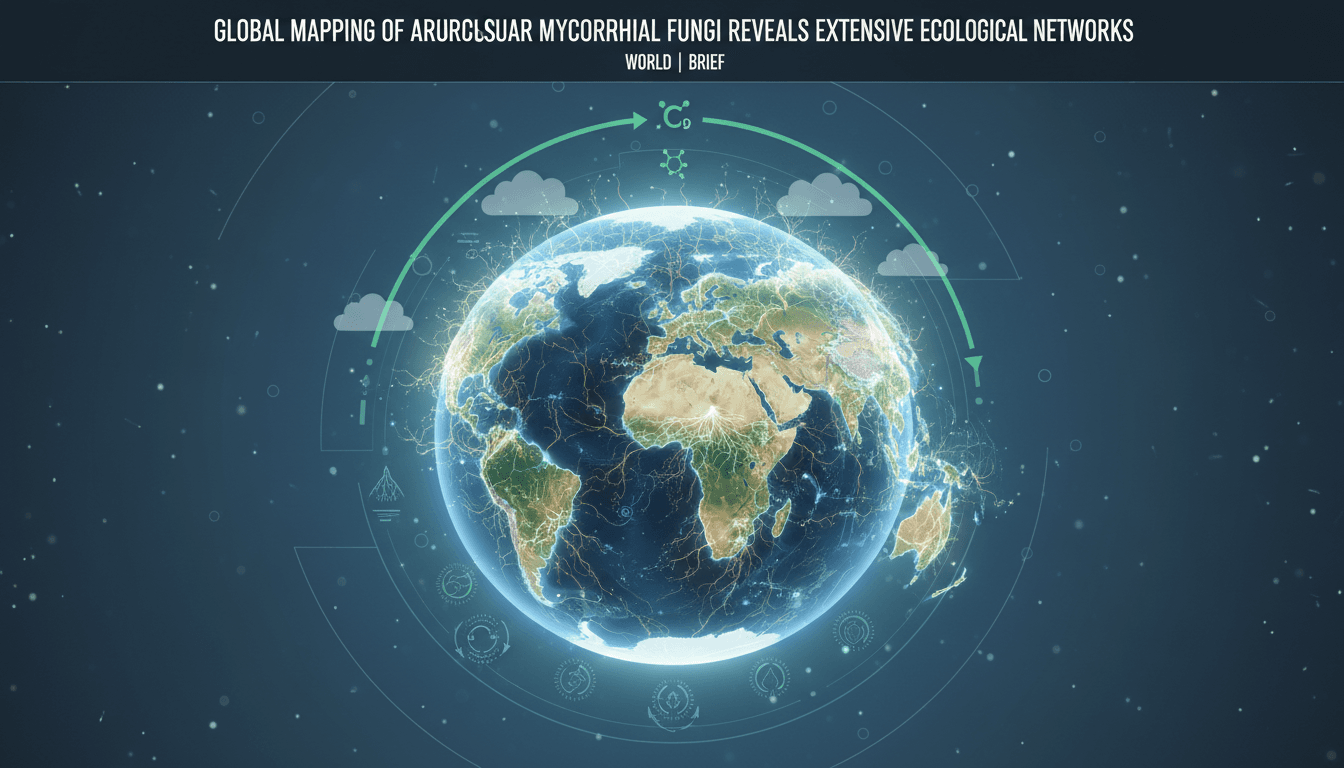
Researchers have published the first global map of arbuscular mycorrhizal fungi networks, showcasing their immense scale and ecological importance. This groundbreaking study reveals that these subterranean fungi networks are estimated to stretch over 100 quadrillion kilometers, a distance sufficient to reach from Earth to the sun nearly 750 million times. The mapping utilized advanced technologies, including machine learning and high-resolution imaging, to provide unprecedented insights into these underground ecosystems.
The study was published on June 11, 2026, marking a significant milestone in mycology and environmental science. By highlighting the interconnectedness of these fungi with over 70% of plant species, the research emphasizes their critical role in nutrient and water provision for plants.
The Context
Arbuscular mycorrhizal fungi have been evolving for approximately 475 million years, playing a crucial role in Earth's carbon cycle. Their partnerships with plants are vital for sustaining life, as they facilitate nutrient exchange and enhance soil health. The timing of this research is particularly relevant as global agricultural practices face increasing pressure from climate change and soil degradation.
Understanding these fungal networks is essential for stakeholders in agriculture, environmental policy, and climate science. The findings could inform strategies for improving crop resilience and soil management, ultimately contributing to more sustainable agricultural practices.
Takeaway
The mapping of arbuscular mycorrhizal fungi networks opens new avenues for research and application in agriculture and climate science. Future studies may focus on the impact of these fungi on soil health and plant growth, as well as their role in carbon sequestration. As researchers continue to explore the complexities of these underground networks, their potential applications could become increasingly significant in addressing global challenges.
The implications of this research extend beyond academia, potentially influencing agricultural policies and practices aimed at climate change mitigation. Understanding and preserving these ecosystems will be crucial for future sustainability efforts.
Scientific discoveries, health, technology, and natural phenomena.
"Live Science reports on scientific discoveries, health, technology, and natural phenomena with a popular science tone."
— A47 Editor
Earth's underground fungal network is so massive, it would span 10% of the Milky Way, map reveals
A newly released global map has revealed the extensive reach of Earth's underground fungal networks, indicating that these networks could span up to 10% of the Milky Way. This groundbreaking visualization highlights the vastness and complexity of sub...
Top international stories selected by The Guardian editors.
"The Guardian is known for its progressive editorial stance and in-depth analysis."
— A47 Editor
Subterranean fungi networks more than 100 quadrillion km in length, study finds
A groundbreaking study has revealed that the global networks of arbuscular mycorrhizal fungi, which are essential for sustaining plant life, extend over 100 quadrillion kilometers. These subterranean fungi, forming partnerships with over 70% of plant...
Scientific research, space, environment, and health coverage.
"The New York Times is a globally recognized newspaper offering authoritative reporting with a center-left editorial stance."
— A47 Editor
Scientists Measure Earth’s Vast Underground Fungal Webs
Scientists have utilized machine learning and a high-resolution imaging robot to measure and map the extensive underground fungal networks of Earth, revealing their significant role in the planet's carbon circulatory system.
News in science and technology, with a focus on consumer and innovation stories.
"Popular Science simplifies complex scientific topics for general audiences and celebrates innovation."
— A47 Editor
621 trillion miles of fungi networks crisscross the planet
A newly released global map has unveiled the extensive underground fungal networks that crisscross the planet, measuring approximately 621 trillion miles. This groundbreaking visualization highlights the vastness and complexity of these networks, whi...
Science and technology stories including AI.
"Longstanding science magazine with thoughtful AI coverage."
— A47 Editor
See the hidden fungal network so big it could stretch to Proxima Centauri and back
Researchers have unveiled the first high-resolution global map of one of Earth's largest and least visible living networks, revealing the extensive reach of a hidden fungal network that could stretch to Proxima Centauri and back. This groundbreaking ...
Scientific research, technology, environment, and society.
"Scientific American is one of the oldest and most authoritative science magazines, known for deep dives into science, technology, and society."
— A47 Editor
See the hidden fungal network so big it could stretch to Proxima Centauri and back
Researchers have unveiled the first high-resolution global map of one of Earth's largest and least visible living networks, revealing the extensive reach of a hidden fungal network that could stretch to Proxima Centauri and back. This groundbreaking ...