
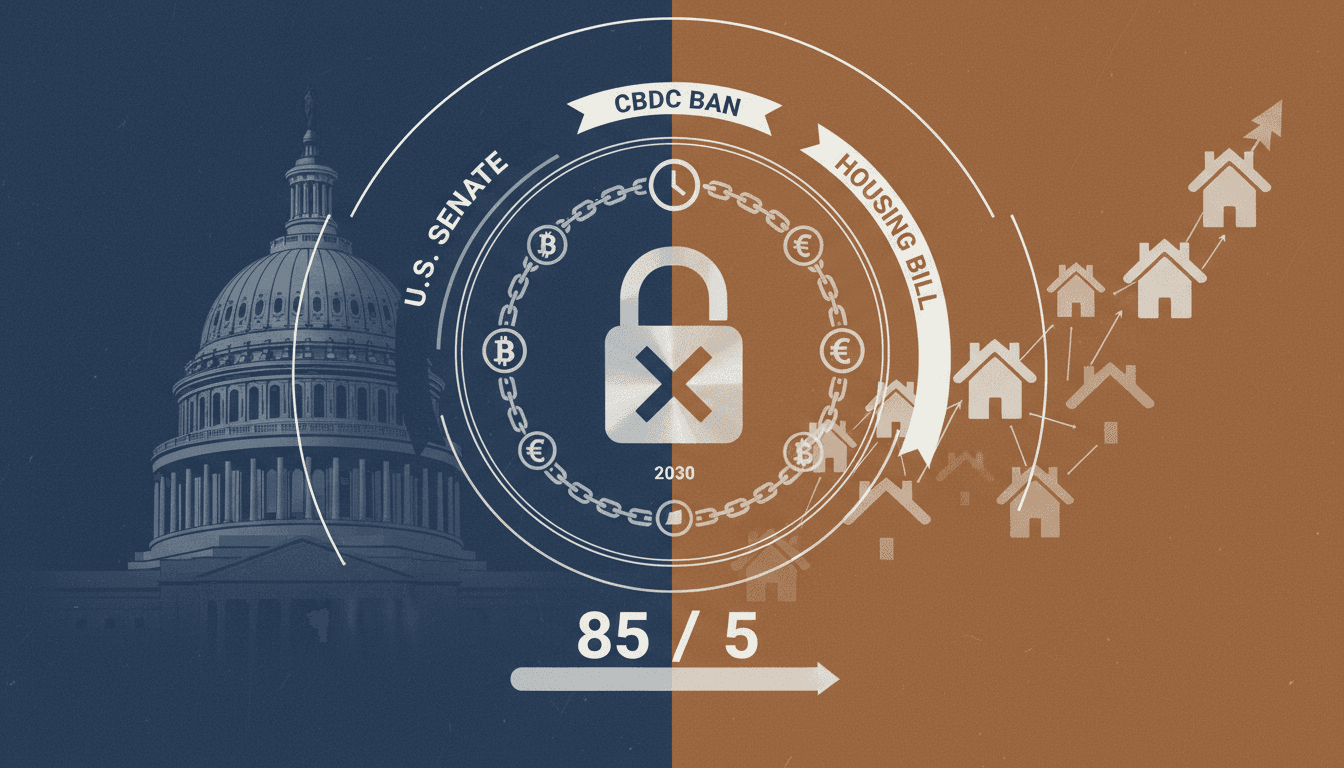
U.S. Senate Passes Housing Bill Banning CBDC Until 2030
Here's what it means for you.
The U.S. Senate's recent decision to ban the Federal Reserve from creating a central bank digital currency (CBDC) until 2030 signals a significant shift in the regulatory landscape for digital currencies. This legislative action, embedded within a housing affordability bill, reflects a growing caution among lawmakers regarding the integration of digital currencies into the financial system. As discussions around digital currency regulation intensify, this ban may influence future policies and taxation frameworks in the United States. Stakeholders in the financial sector should prepare for ongoing debates and potential changes in the regulatory environment.
What happened
The U.S. Senate voted overwhelmingly, 85-5, to prohibit the Federal Reserve from issuing a CBDC until 2030. This vote was part of a broader housing affordability bill aimed at addressing pressing housing issues across the country. The bill will now advance to the House of Representatives for further consideration.
This legislative move underscores the Senate's commitment to regulating digital currencies amid rising concerns about their implications for the economy. The strong bipartisan support for the ban indicates a unified stance among lawmakers on this critical issue.
The Context
The ban on the CBDC is situated within a larger legislative framework focused on housing affordability, highlighting the interconnectedness of financial policy and social issues. As Congress deliberates on this bill, it is also considering a separate measure regarding tax deferrals for staking under H.R. 9175, which could further impact the digital currency landscape.
The timing of this decision is crucial, as it comes amid increasing scrutiny of digital currencies and their potential effects on the financial system. The outcome of this legislative effort will likely shape future discussions on digital currency regulation and taxation in the United States.
Takeaway
As the House prepares to review the Senate's housing bill, the implications of the CBDC ban will be closely monitored by industry stakeholders and policymakers alike. The decision may set a precedent for how digital currencies are regulated in the future, influencing both market dynamics and legislative approaches.
In the coming weeks, attention will also be directed toward developments regarding the staking tax deferral legislation. These discussions will be pivotal in determining the trajectory of digital currency regulation in the U.S.
Beginner-friendly crypto tutorials, guides, and news.
"99Bitcoins is a crypto education and news site known for easy-to-understand content and comprehensive guides."
— A47 Editor
Bitcoin News: Digital Dollar Blocked to 2030 While Staking Tax Bill Stalls in Congress
Congress has enacted a ban on the Federal Reserve's ability to issue a Central Bank Digital Currency (CBDC) until 2030, coinciding with ongoing discussions regarding the staking tax deferral under H.R. 9175. This legislative move reflects a significa...
Covers Bitcoin plus altcoin news, market updates, and educational resources.
"Bitcoin.com provides news, market data, and guides focused on Bitcoin and the wider crypto industry."
— A47 Editor
Senate Votes 85-5 to Ban a Fed Digital Dollar Through 2030
The U.S. Senate voted overwhelmingly, 85-5, to pass a housing bill that includes a ban on the Federal Reserve's ability to issue a Central Bank Digital Currency (CBDC) until 2030. This legislative decision reflects a significant bipartisan agreement ...
Covers blockchain, cryptocurrency news, project analysis, and market insights.
"Cointelegraph is a leading crypto-focused media outlet known for timely news, analysis, and educational content related to blockchain and digital assets."
— A47 Editor
US Senate passes housing bill with CBDC ban until 2030
The US Senate has passed a significant housing affordability bill with an overwhelming vote of 85-5, which includes a ban on the Federal Reserve's ability to issue a central bank digital currency (CBDC) until 2030. This legislative move reflects ongo...