
Ötzi the Iceman's gut microbiome remains active 5,300 years post-mortem
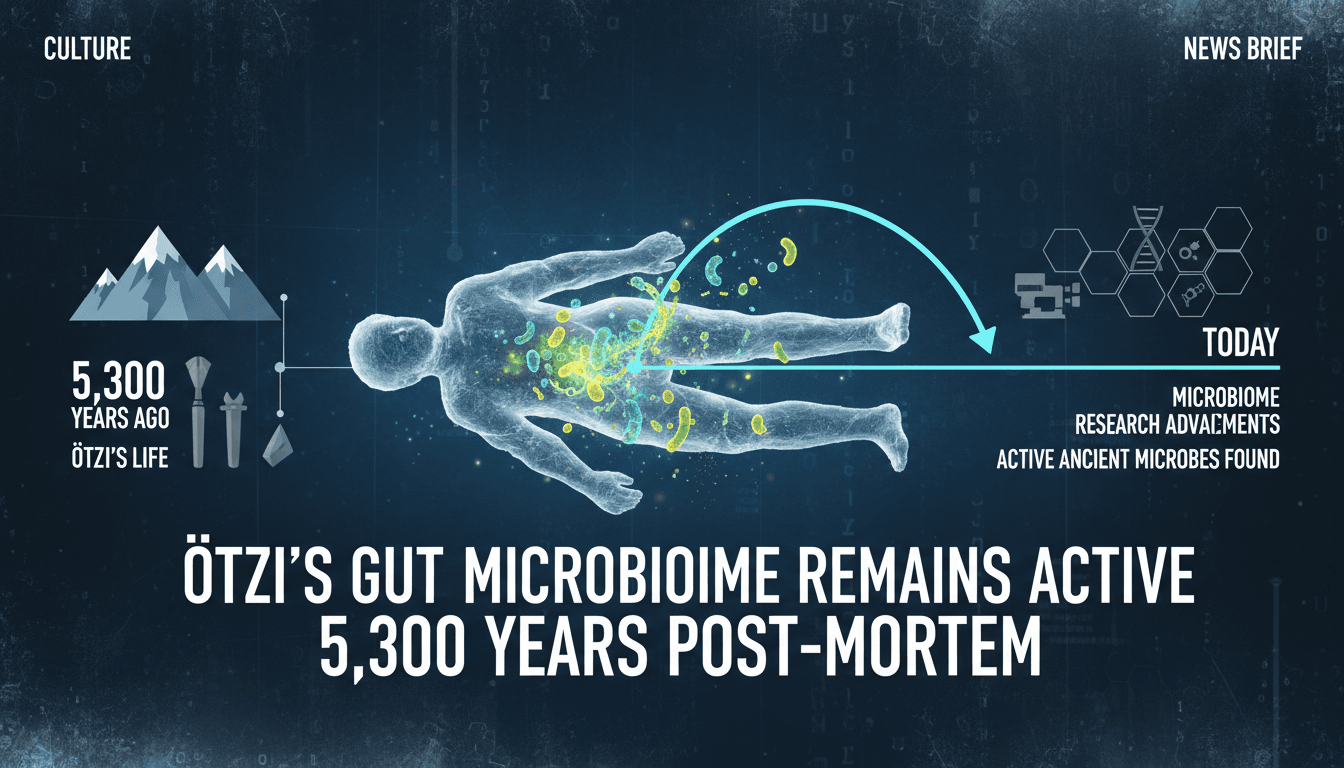
Here's what it means for you.
The discovery that Ötzi the Iceman's gut microbiome remains active after 5,300 years offers profound implications for our understanding of ancient human health. This research not only enhances our knowledge of microbial resilience but also opens new avenues for exploring how ancient microbiomes can inform modern science. The findings could lead to advancements in health and nutrition, particularly in the study of gut microbiomes.
What happened
Researchers have identified that Ötzi the Iceman's gut microbiome is still active, revealing both ancient bacteria and cold-tolerant yeasts that have survived for millennia. This groundbreaking study highlights the presence of living microbes in Ötzi's remains, which were preserved in ice for over 5,300 years. The team successfully cultivated four strains of ancient yeast from his body, demonstrating the potential for ancient microbiomes to provide insights into past human health.
The research underscores the resilience of microbial life, showcasing how these organisms can endure extreme conditions over long periods. This discovery not only sheds light on Ötzi's life but also raises questions about the implications for our understanding of ancient human health and nutrition.
The Context
Ötzi was discovered in the Alps in 1991 and is one of the oldest known mummies, providing a unique window into prehistoric life. The recent study, conducted in 2026, reveals the active microbes present in his remains, emphasizing the potential for ancient microbiomes to inform modern health practices. The identification of cold-adapted yeasts that were cultivated for sourdough further illustrates the practical applications of this research.
Understanding the microbiome of ancient humans like Ötzi can significantly impact our knowledge of human evolution and health. As researchers delve deeper into the study of ancient microbiomes, the findings could reshape our approach to nutrition and health in contemporary society.
Takeaway
The implications of this research extend beyond Ötzi himself, as it paves the way for further exploration of ancient microbiomes and their relevance to modern science. Future studies may focus on the preservation of microbial life in extreme conditions and how these findings can inform our understanding of human health. As researchers continue to investigate ancient human health and microbiomes, the potential for groundbreaking discoveries remains high.
The resilience of microbial life over millennia could lead to new insights into the evolution of gut health and nutrition. This ongoing research will likely attract attention from various fields, including medicine, nutrition, and anthropology.
Science and technology stories including AI.
"Longstanding science magazine with thoughtful AI coverage."
— A47 Editor
Ötzi the murdered Iceman’s microbiome is still active
Researchers have discovered that more than 5,300 years after Ötzi the Iceman's death, genetic material from his gut microbiome remains active, including yeasts that continue to exist despite the mummy being preserved in freezing conditions. This find...
Scientific research, technology, environment, and society.
"Scientific American is one of the oldest and most authoritative science magazines, known for deep dives into science, technology, and society."
— A47 Editor
Ötzi the murdered Iceman’s microbiome is still active
Researchers have discovered that more than 5,300 years after Ötzi the Iceman's death, genetic material from his gut microbiome remains active, including yeasts that continue to exist despite the mummy being preserved in freezing conditions. This find...
Discoveries, research, environment, and health innovations.
"New Scientist is a well-respected publication offering accessible science news, commentary, and expert analysis."
— A47 Editor
Ötzi's frozen remains may harbour metabolically active microbes
Researchers have discovered that Ötzi, a 5,300-year-old mummified man, harbors bacteria that were active in his gut during his lifetime, alongside cold-tolerant fungi that colonized his remains post-mortem. This finding highlights the microbial life ...
Scientific discoveries, health, technology, and natural phenomena.
"Live Science reports on scientific discoveries, health, technology, and natural phenomena with a popular science tone."
— A47 Editor
'It was very very good': Ötzi the Iceman's body is covered in ancient yeast — and scientists just used it to make a sourdough
Scientists have cultivated four strains of cold-adapted yeasts that were found on the body of Ötzi the Iceman, who died 5,300 years ago in the Alps. This research highlights the unique preservation of ancient microorganisms and their potential applic...