
Egypt's Minister of Culture resigns after court upholds plagiarism conviction
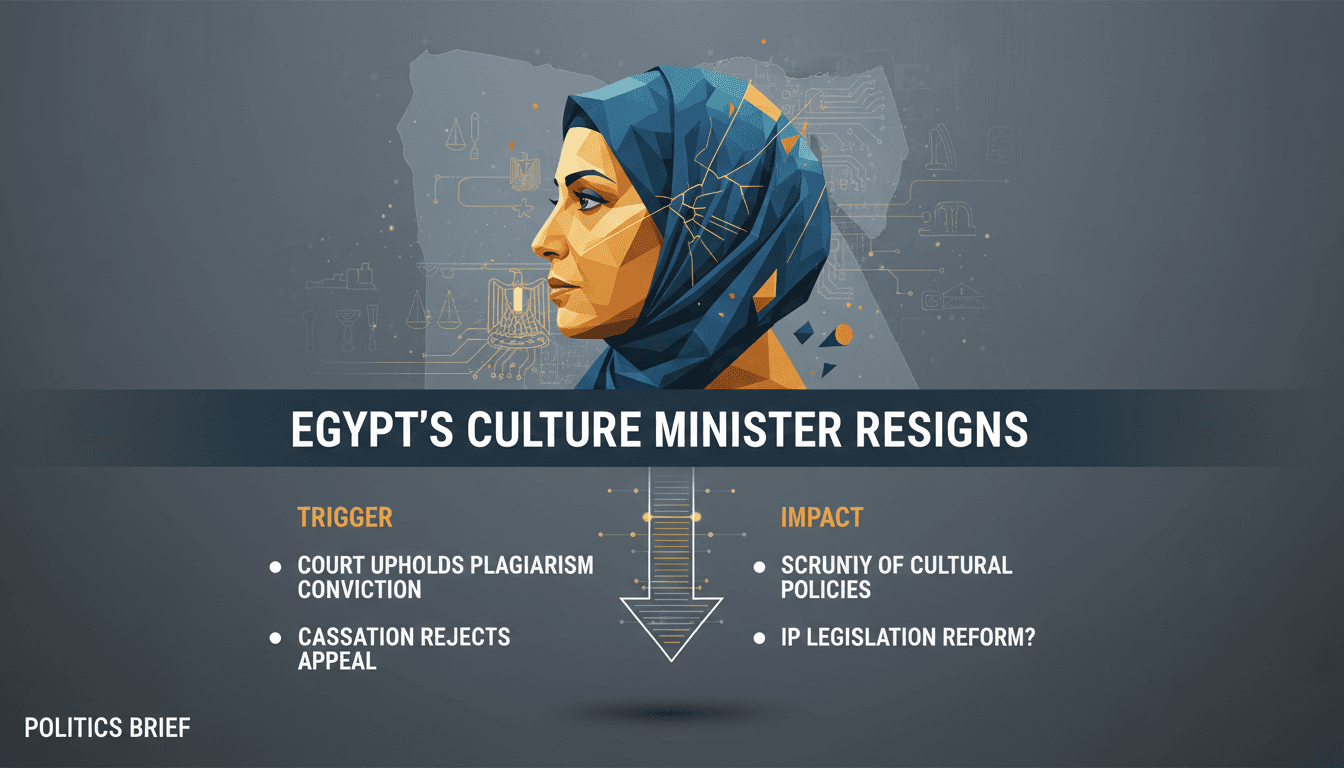
Here's what it means for you.
The resignation of Jehan Zaki as Egypt's Minister of Culture underscores the critical importance of intellectual property rights in the cultural sector. This event may prompt a reevaluation of existing policies and legislative measures aimed at protecting creative works. Stakeholders in the cultural landscape will likely face increased scrutiny as the government seeks to restore public trust in its leadership. The implications of this ruling extend beyond Zaki's departure, potentially influencing future appointments within the Ministry of Culture. As the government navigates this sensitive issue, public and governmental responses will be pivotal in shaping the future of cultural policies in Egypt.
What happened
Jehan Zaki has resigned from her role as Egypt's Minister of Culture following a court ruling that upheld her conviction for intellectual property infringement. The Egyptian Court of Cassation rejected her appeal, leading to her immediate resignation on July 7, 2026. This case, widely referred to as the "book theft case," has garnered significant media attention and scrutiny.
Zaki's resignation was accepted by Prime Minister Mostafa Madbouly, marking a significant shift in Egypt's cultural leadership. The ruling has raised awareness about the responsibilities of public officials in upholding copyright laws, highlighting the ongoing challenges within the cultural sector.
The Context
The case against Jehan Zaki involved allegations of plagiarism related to published works, which has sparked discussions about the enforcement of intellectual property rights in Egypt. The timing of the court's decision and her subsequent resignation comes at a moment when cultural policies are under increased examination. This situation reflects broader concerns regarding the integrity of cultural institutions and the protection of creative works.
As the government grapples with the fallout from this ruling, it faces the challenge of restoring public confidence in its cultural leadership. The implications of this case may lead to a more rigorous approach to intellectual property rights, influencing future legislative measures and cultural policies.
Takeaway
The resignation of Jehan Zaki highlights the ongoing issues surrounding intellectual property rights in Egypt's cultural sector. As the government seeks to address these challenges, stakeholders should be prepared for potential changes in leadership and policy direction within the Ministry of Culture.
Future appointments and public responses to this ruling will be critical in shaping the landscape of cultural governance in Egypt. Observers should watch for developments that may signal a shift in how intellectual property rights are enforced and prioritized in the country.
Arabic-language coverage of international news and geopolitics.
"RT Arabic is a Russian state-funded outlet often criticized for promoting Kremlin-aligned narratives."
— A47 Editor
حكم قضائي يطيح بوزيرة مصرية من الحكومة ويدفعها للاستقالة
Egyptian Culture Minister Jehan Zaki submitted her resignation to Prime Minister Mostafa Madbouly following a final court ruling in a case related to intellectual property rights infringement. This decision marks a significant shift in the government...
Pan-Arab news coverage spanning politics, business, sports, and regional affairs.
"Asharq Al-Awsat reflects a broad Arab editorial perspective with strong attention to regional geopolitics."
— A47 Editor
قضية «ملكية فكرية» تطيح بوزيرة الثقافة المصرية
The Egyptian government announced on Tuesday the acceptance of the resignation of Culture Minister Jihan Zaki following a final court ruling that found her guilty in a copyright infringement case. This decision comes in the wake of legal challenges s...
Arabic-language coverage of international news and geopolitics.
"RT Arabic is a Russian state-funded outlet often criticized for promoting Kremlin-aligned narratives."
— A47 Editor
القضاء يؤيد إدانة وزيرة مصرية في قضية سرقة
The Egyptian Court of Cassation upheld the conviction of Culture Minister Gehan Zaki in a case involving intellectual property rights infringement, commonly referred to as the 'book theft case,' and rejected her appeal.