
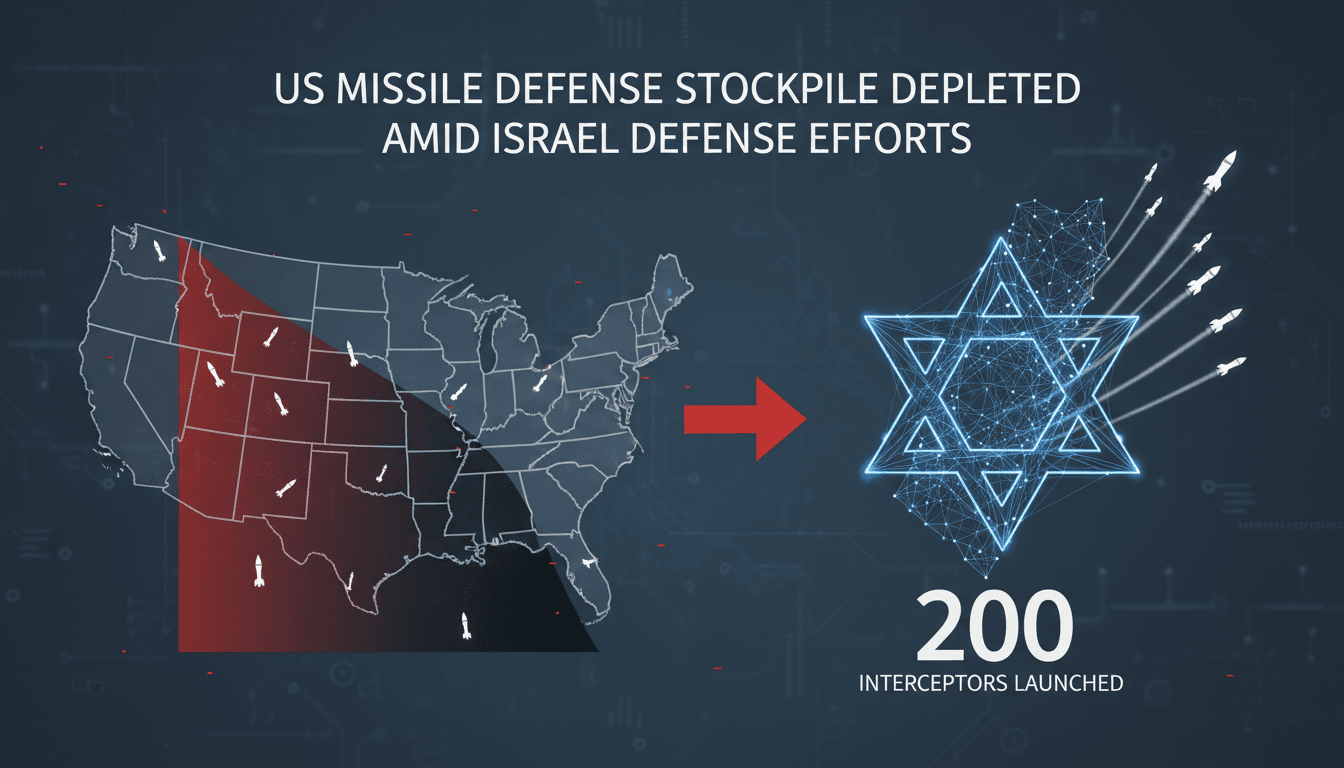
US Missile Defense Stockpile Depleted Amid Israel Defense Efforts
Here's what it means for you.
The depletion of the U.S. missile defense stockpile raises significant concerns regarding the sustainability of military support for allies like Israel. As the U.S. continues to engage in extensive defense efforts, the implications for future military readiness and strategy in the Middle East are becoming increasingly critical. This situation may prompt a reassessment of U.S. commitments in the region, particularly as tensions with Iran persist.
What happened
The United States has significantly depleted its stockpile of advanced missile defense systems while defending Israel. Reports indicate that the U.S. military has launched over 200 interceptors in response to ongoing threats against Israel, particularly from Iran. This unprecedented depletion of advanced air defense systems has raised alarms within the Pentagon regarding the sustainability of U.S. military support amid ongoing conflicts.
The reliance on U.S. defense systems has notably increased during the current conflict, with the U.S. utilizing more missile interceptors for Israel than the Israeli military itself. This extensive military engagement underscores the scale of U.S. involvement in Israel's defense efforts.
The Context
The ongoing conflict with Iran has heightened the need for robust missile defense capabilities in the region. As tensions escalate, the U.S. has played a crucial role in bolstering Israel's defense, utilizing a significant portion of its advanced interceptors. The situation is further complicated by the internal assessments within the Pentagon, which indicate that the depletion of defense systems could impact future military engagements.
The timeline of events shows that as early as May 21, 2026, reports emerged detailing the extensive use of interceptors for Israel. By May 22, 2026, major media outlets began publishing exclusive reports on the depletion of U.S. missile defense stocks, highlighting the urgency of the situation.
Takeaway
Looking ahead, the depletion of U.S. missile defense resources may necessitate a reassessment of military commitments in the Middle East. Observers should monitor potential shifts in U.S. defense strategy as the situation evolves. Additionally, responses from Israel regarding its defense needs and reliance on U.S. support will be critical in shaping future engagements.
As regional tensions persist, the implications for U.S. military readiness and strategy will remain a focal point for policymakers and defense analysts alike.
Pan-Arab political news and analysis.
"Al-Quds Al-Arabi is a London-based Arabic newspaper known for political coverage."
— A47 Editor
واشنطن بوست: أمريكا استنفدت مخزونها الإستراتيجي من الصواريخ الاعتراضية للدفاع عن إسرائيل
The Washington Post reported that the United States has utilized a significant portion of its strategic stockpile of interceptor missiles to defend Israel, surpassing the efforts of the Israeli military itself. This extensive use of advanced defensiv...
Arabic-language coverage of international news and geopolitics.
"RT Arabic is a Russian state-funded outlet often criticized for promoting Kremlin-aligned narratives."
— A47 Editor
البنتاغون: واشنطن تتحمل العبء الأكبر في دفاع إسرائيل الصاروخي واستنزاف غير مسبوق لمنظوماتها المتقدمة
The Washington Post reported that internal assessments from the Pentagon reveal significant depletion of the United States' advanced air defense systems during the ongoing conflict with Iran, indicating that Washington bears the largest burden in Isr...
Jordanian news and regional updates.
"Roya News is a Jordanian outlet focused on breaking news and local affairs."
— A47 Editor
واشنطن بوست: الجيش الأمريكي استهلك أكثر من نصف مخزون صواريخ ثاد للدفاع عن تل أبيب
Reports indicate that U.S. forces have launched more than 200 THAAD missiles to defend Tel Aviv, consuming over half of their stockpile. This significant usage highlights the ongoing military engagement and the strategic importance of missile defense...