
Whitehat hacker exploits Renegade's dark pool vulnerability and returns most of the funds
Here's what it means for you.
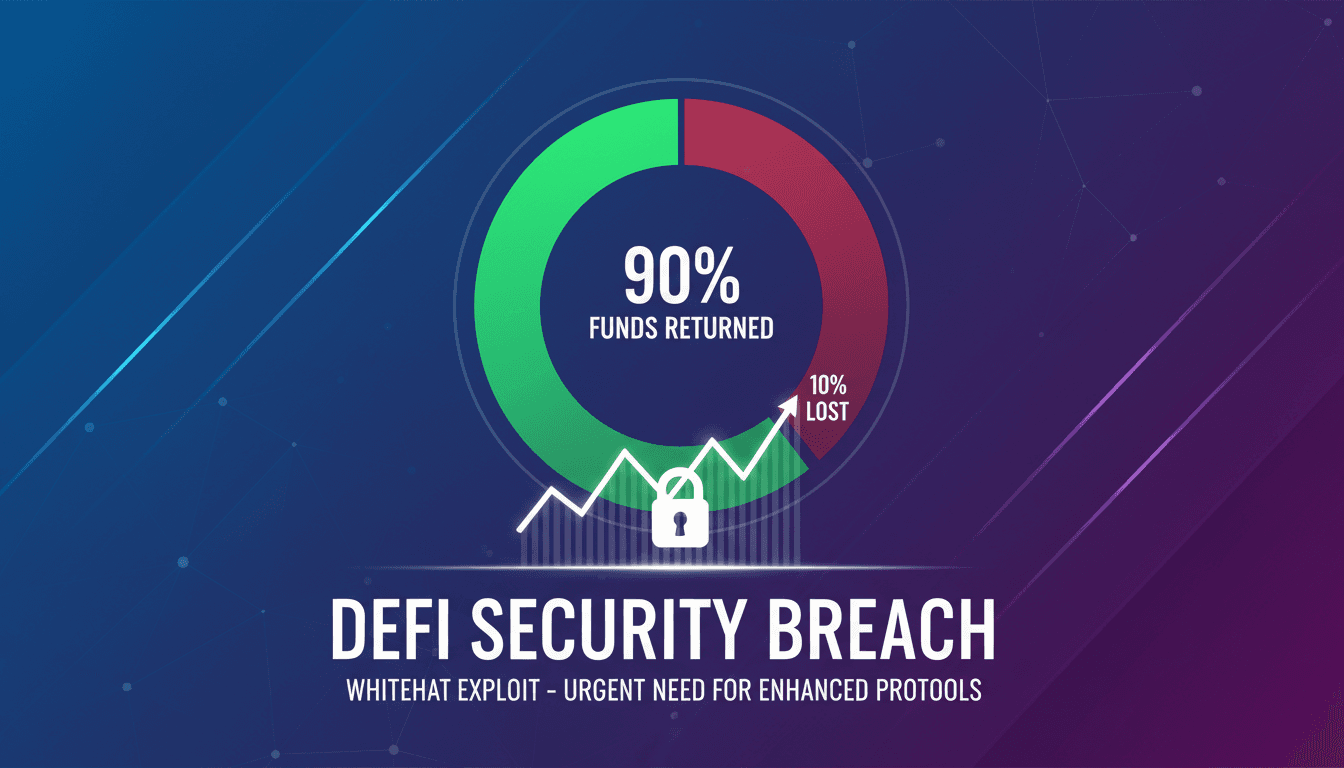
This incident underscores the urgent need for enhanced security measures in decentralized finance protocols.
What happened
A whitehat hacker returned $190,000 to Renegade after exploiting a vulnerability that drained approximately $209,000 from its dark pool.
The Context
- The exploit targeted a dark pool on Renegade's platform.
- The hacker's actions were framed as a protective measure for DeFi users.
- The incident highlights the need for improved security audits in DeFi.
Takeaway
The incident emphasizes the necessity for robust security protocols in DeFi to prevent future exploits.
This article was generated by AI from 3 verified sources and reviewed by A47 editorial systems.
Research, news, and analysis on blockchain startups, DeFi, and regulations.
"Crypto Briefing provides research, news, and analysis on blockchain startups, DeFi, and crypto regulations with investor-focused coverage."
— A47 Editor
Renegade recovers $190K after hacker returns 90% of stolen funds
Renegade successfully recovered $190,000 after a hacker returned 90% of the stolen funds, highlighting the importance of security measures in decentralized finance (DeFi). The incident underscores the vulnerabilities that can exist within blockchain ...
Real-time updates, analysis, and reports on the blockchain and cryptocurrency sectors.
"Crypto News delivers real-time updates, analysis, and reports on the blockchain and cryptocurrency sectors."
— A47 Editor
Renegade recovers $190K after whitehat returns stolen crypto
Renegade.fi successfully recovered approximately $190,000 after a whitehat hacker exploited a vulnerability in one of its Arbitrum-based dark pools, returning over 90% of the stolen assets. The exploit, identified by blockchain security firm Blockaid...
Covers blockchain, cryptocurrency news, project analysis, and market insights.
"Cointelegraph is a leading crypto-focused media outlet known for timely news, analysis, and educational content related to blockchain and digital assets."
— A47 Editor
Whitehat returns $190K to Renegade hours after hacking the protocol
A whitehat hacker returned $190,000 to Renegade just hours after exploiting the protocol's dark pool, claiming the action was taken to safeguard the funds and security of decentralized finance (DeFi) users.