
Fossils of 550 Million-Year-Old Worm Provide Earliest Evidence of Handedness in Animals
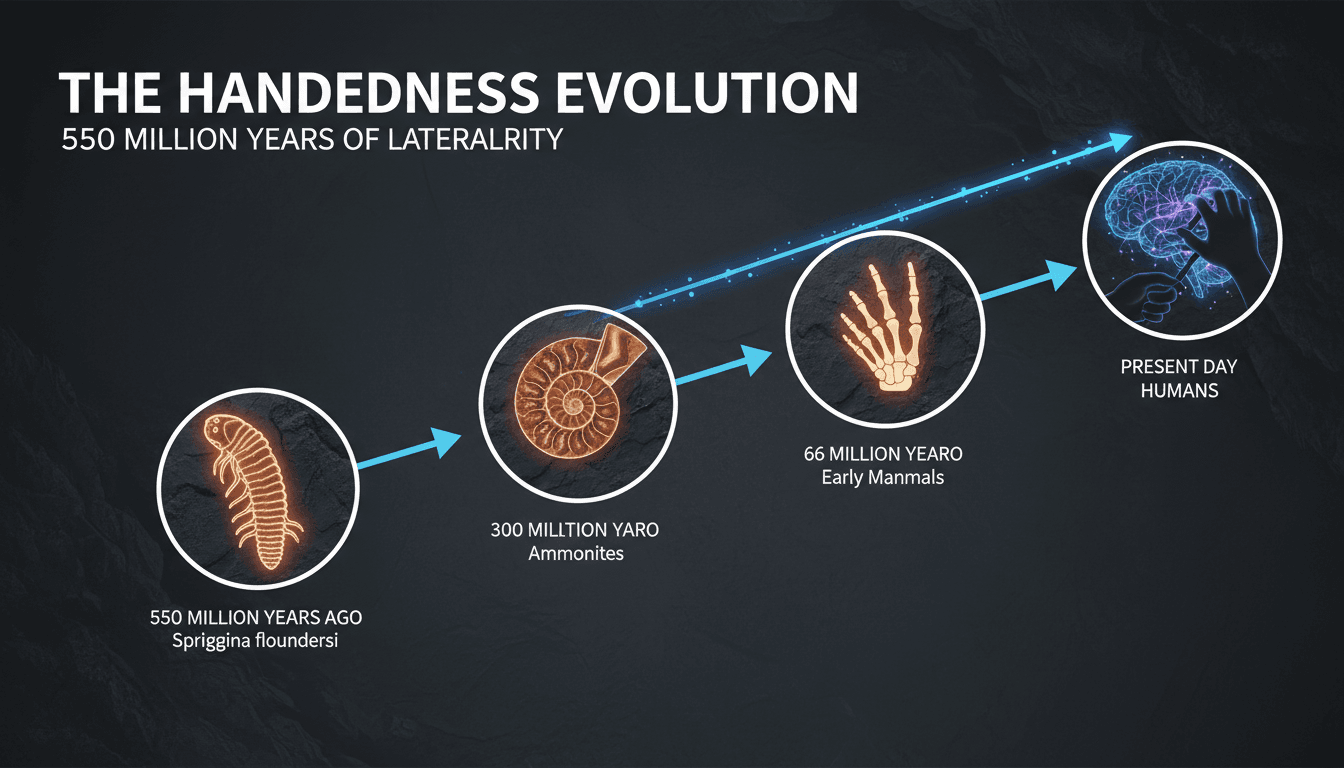
Here's what it means for you.
The discovery of handedness in ancient species like Spriggina floundersi could reshape our understanding of animal behavior and evolution. This finding suggests that the preference for one side of the body may have deep evolutionary roots, influencing how we study nervous system development across various species. As researchers delve deeper into this topic, it may open new avenues for understanding the complexities of animal behavior.
What happened
Recent fossil discoveries of the ancient worm Spriggina floundersi have revealed the earliest evidence of handedness in animals, dating back 550 million years. This groundbreaking finding indicates that the preference for one side of the body may have originated much earlier than previously believed. The fossils suggest that animals may have favored one side long before the emergence of modern species, challenging existing assumptions about behavioral traits.
The implications of this research extend beyond mere curiosity; they provide insight into the evolutionary history of handedness. The findings have been reported by multiple scientific outlets, including Popular Science and The New York Times, highlighting the significance of this discovery in the scientific community.
The Context
The fossils of Spriggina floundersi date back 550 million years, suggesting a long evolutionary history of handedness that predates many known species. Handedness is a characteristic of nervous systems, similar to the right- and left-handedness observed in humans today. This discovery may reshape our understanding of how behavioral traits have evolved over time and the fundamental aspects of animal behavior.
As researchers continue to explore the implications of these findings, the study of handedness could provide valuable insights into the development of complex nervous systems across various species. Understanding these ancient behaviors may also inform current studies on how handedness affects modern animal behavior.
Takeaway
The discovery of handedness in Spriggina floundersi opens up new avenues for research into the evolution of behavior in animals. Future studies may focus on the implications of handedness in ancient species and how these traits have influenced modern animal behavior. As the research progresses, it could lead to a deeper understanding of the evolution of complex nervous systems across different species.
The long-term impact of this research may challenge existing paradigms in evolutionary biology, prompting scientists to reconsider the timeline of behavioral traits in animals. Continued exploration of this topic will be essential for unraveling the complexities of animal behavior and evolution.
News in science and technology, with a focus on consumer and innovation stories.
"Popular Science simplifies complex scientific topics for general audiences and celebrates innovation."
— A47 Editor
World’s first right-hander could be this 550 million-year-old worm
Recent findings suggest that a 550 million-year-old worm may represent the earliest known instance of right-handedness in animals, indicating a preference for rightward movement that predates previous assumptions. This discovery challenges existing n...
Scientific research, space, environment, and health coverage.
"The New York Times is a globally recognized newspaper offering authoritative reporting with a center-left editorial stance."
— A47 Editor
These Fossils May Be the Earliest Evidence of Handedness in Animals
Scientists have proposed that recently uncovered fossils may represent the earliest evidence of behavioral handedness in animals, suggesting a significant evolutionary trait. This discovery could reshape the understanding of animal behavior and cogni...
Discoveries, research, environment, and health innovations.
"New Scientist is a well-respected publication offering accessible science news, commentary, and expert analysis."
— A47 Editor
A worm that lived half a billion years ago preferred turning right
Fossils of the ancient worm species Spriggina floundersi, which lived approximately half a billion years ago, have been discovered, providing the earliest evidence of animals exhibiting a preference for one side of their body over the other. This cha...