
Kevin Warsh's First FOMC Meeting Marks Shift in Federal Reserve Policy
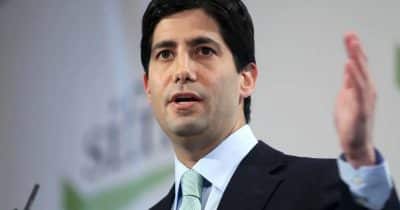
Here's what it means for you.
The Federal Reserve's new communication style under Kevin Warsh could reshape investment strategies globally.
Why it matters
The Federal Reserve's approach to monetary policy directly influences global markets and economic stability.
What happened (in 30 seconds)
- Kevin Warsh presided over his first FOMC meeting on June 17, 2026, signaling a new era for the Federal Reserve.
- The committee unanimously decided to maintain the benchmark interest rate at 3.5%–3.75%.
- The statement released was only 141 words long, a significant reduction from previous communications.
The context you actually need
- Warsh's appointment follows a period of rising inflation, peaking at 9.1% in 2021-2022, prompting a reevaluation of the Fed's strategies.
- The Fed's previous leadership faced criticism for its handling of inflation and communication, leading to calls for a more streamlined approach.
- Warsh's vision includes a comprehensive review of monetary policy and communication practices to enhance clarity and effectiveness.
What's really happening
Kevin Warsh's inaugural meeting as Chair of the Federal Reserve marks a pivotal moment in the central bank's operational style. The decision to keep the benchmark interest rate unchanged at 3.5%–3.75% reflects a cautious approach amid ongoing inflation concerns. However, the most striking aspect of this meeting was the brevity of the FOMC statement, which clocked in at just 141 words. This is a stark contrast to the previous statements that often exceeded 340 words, indicating Warsh's commitment to a 'regime change' in how the Fed communicates its policies.
This shift is not merely cosmetic; it represents a fundamental change in the Fed's approach to transparency and clarity. By streamlining communication, Warsh aims to focus on essential policy messages, potentially reducing market confusion and speculation. The omission of detailed voting breakdowns and forward guidance in the statement suggests a move towards a more straightforward, less prescriptive communication style. This could lead to a more reactive market environment, where investors must adapt quickly to new information rather than relying on extensive guidance.
Warsh's plans to overhaul the Fed's communication practices and re-evaluate its dot plot and balance sheet size signal a broader reassessment of the Fed's operational framework. This could have significant implications for how monetary policy is perceived and enacted in the future. Investors and market analysts are likely to scrutinize Warsh's future communications closely, anticipating further changes that could impact inflation and interest rates.
The unanimous vote at this meeting has been interpreted as a sign of cohesion within the FOMC under Warsh's leadership. This unity may bolster confidence among market participants, who are looking for stability in the Fed's direction. Initial reactions from government officials and economists suggest cautious optimism regarding the Fed's new approach, which could influence capital flows and investor sentiment globally.
Who feels it first (and how)
- Investors: Changes in communication style may lead to more volatile market reactions.
- Economists: Analysts will need to adjust their forecasts based on the Fed's new approach.
- Businesses: Companies reliant on stable interest rates may face uncertainty in planning and investment.
- Consumers: Changes in monetary policy could affect borrowing costs and consumer spending.
What to watch next
- Future FOMC statements: Monitor the length and content of upcoming communications for further signs of Warsh's approach.
- Inflation metrics: Keep an eye on inflation rates to gauge the effectiveness of the Fed's policies under Warsh.
- Market reactions: Watch how global markets respond to shifts in U.S. monetary policy, particularly in capital flows.
Warsh's first meeting resulted in a unanimous decision to maintain interest rates.
Future communications will continue to be concise and focused on essential policy messages.
The long-term impact of Warsh's changes on inflation and economic stability remains to be seen.
Frequently Asked Questions
- Why it matters?
- The Federal Reserve's approach to monetary policy directly influences global markets and economic stability.
- What happened (in 30 seconds)?
- Kevin Warsh presided over his first FOMC meeting on June 17, 2026, signaling a new era for the Federal Reserve. The committee unanimously decided to maintain the benchmark interest rate at 3.5%–3.75%. The statement released was only 141 words long, a significant reduction from previous communications.
- What's really happening?
- Kevin Warsh's inaugural meeting as Chair of the Federal Reserve marks a pivotal moment in the central bank's operational style. The decision to keep the benchmark interest rate unchanged at 3.5%–3.75% reflects a cautious approach amid ongoing inflation concerns. However, the most striking aspect of this meeting was the brevity of the FOMC statement, which clocked in at just 141 words. This is a stark contrast to the previous statements that often exceeded 340 words, indicating Warsh's commitment
- Who feels it first (and how)?
- Investors: Changes in communication style may lead to more volatile market reactions. Economists: Analysts will need to adjust their forecasts based on the Fed's new approach. Businesses: Companies reliant on stable interest rates may face uncertainty in planning and investment. Consumers: Changes in monetary policy could affect borrowing costs and consumer spending.
- What to watch next?
- Future FOMC statements: Monitor the length and content of upcoming communications for further signs of Warsh's approach. Inflation metrics: Keep an eye on inflation rates to gauge the effectiveness of the Fed's policies under Warsh. Market reactions: Watch how global markets respond to shifts in U.S. monetary policy, particularly in capital flows.
Research, news, and analysis on blockchain startups, DeFi, and regulations.
"Crypto Briefing provides research, news, and analysis on blockchain startups, DeFi, and crypto regulations with investor-focused coverage."
— A47 Editor
New Fed Chair Warsh signals regime change with single-proposal FOMC meeting
Kevin Warsh, the newly appointed Chair of the Federal Reserve, has indicated a significant shift in monetary policy by conducting a streamlined FOMC meeting focused on a single proposal, which may tighten financial conditions and impact risk assets.
Research, news, and analysis on blockchain startups, DeFi, and regulations.
"Crypto Briefing provides research, news, and analysis on blockchain startups, DeFi, and crypto regulations with investor-focused coverage."
— A47 Editor
Federal Reserve Chair Kevin Warsh signals openness to new economic data sources
Federal Reserve Chair Kevin Warsh has expressed a willingness to explore new economic data sources, a move that could enhance the Fed's responsiveness to market conditions. This approach may lead to increased scrutiny over the Federal Reserve's ties ...
Global markets, investing, and macroeconomics from a premier financial newsroom.
"Bloomberg is respected for in-depth financial reporting and data-driven analysis."
— A47 Editor
Fed's Warsh Says He Doesn't Think Submitting Dots Is Helpful
Federal Reserve Chair Kevin Warsh stated that he does not find the practice of submitting 'dots'—a method used to indicate future interest rate projections—helpful during a news conference following the Fed's decision to keep interest rates unchanged...
Corporate leadership, finance, technology, and market trends.
"Fortune covers financial trends, leadership, and innovation with a pragmatic editorial approach."
— A47 Editor
Kevin Warsh’s first Fed meeting sees rates hold steady and makes outright promise to deliver price stability—but don’t expect many details on when
The Federal Open Market Committee (FOMC) decided to maintain interest rates between 3.5% and 3.75% during Kevin Warsh's inaugural meeting as chairman, emphasizing a commitment to price stability amid ongoing economic uncertainty.
Pan-Arab news coverage spanning politics, business, sports, and regional affairs.
"Asharq Al-Awsat reflects a broad Arab editorial perspective with strong attention to regional geopolitics."
— A47 Editor
في أول إطلالة... وارش ينهي عصر «التوجيهات المستقبلية» ويتمسك بـ2% للتضخم
Kevin Warsh, the new Federal Reserve Chair, announced the abandonment of forward guidance, emphasizing that the 2% inflation target is a red line. This marks a significant shift in the Fed's approach to monetary policy.
Pan-Arab news coverage spanning politics, business, sports, and regional affairs.
"Asharq Al-Awsat reflects a broad Arab editorial perspective with strong attention to regional geopolitics."
— A47 Editor
إليك أبرز مفاجآت قرار الاحتياطي الفيدرالي
The Federal Reserve, under the leadership of its new chairman Kevin Warsh, has unveiled a series of operational and digital surprises that have reshaped market expectations. This development marks a significant shift in the Fed's approach and strateg...
Macro commentary, policy analysis, growth/inflation themes, and global outlooks.
"Contextual macro coverage that complements day-to-day market headlines."
— A47 Editor
Fed chief Warsh appears to forgo a ’dot’ indicating his rate-path view
Kevin Warsh, the newly elected chair of the U.S. Federal Reserve's rate-setting committee, has opted not to provide a 'dot' in his first rate projection, which typically indicates his views on future interest rate paths. This decision comes amid ongo...
Editor-curated FT homepage stories spanning markets, business, world, and opinion.
"The Financial Times is a globally respected business publication with a centrist/center-left tone and strong markets focus."
— A47 Editor
Fed drops bias for rate cuts as Kevin Warsh era begins
The Federal Reserve has shifted its stance on interest rates under new chair Kevin Warsh, moving away from a bias towards rate cuts as inflation, exacerbated by Donald Trump's policies in Iran, has surged to nearly double the central bank's target.
Global markets, investing, and macroeconomics from a premier financial newsroom.
"Bloomberg is respected for in-depth financial reporting and data-driven analysis."
— A47 Editor
Warsh Says ‘We Had a Good Family Fight’ on Fed Policy
Kevin Warsh, recently confirmed as the chair of the U.S. Federal Reserve, stated that the discussions surrounding Fed policy have been robust, describing them as a 'good family fight.' This remark reflects the intense scrutiny and debate within the i...