
U.S. and Iran reach interim peace deal triggering backlash in Israel
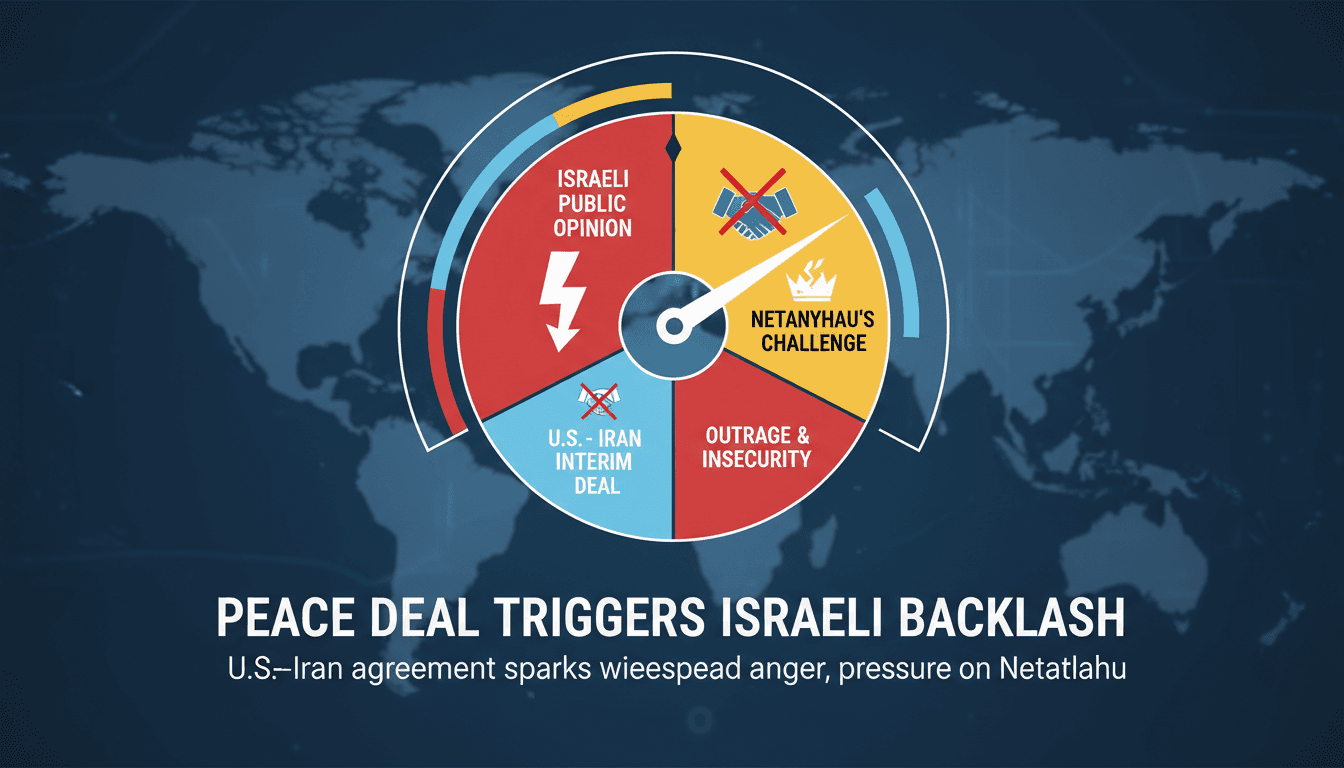
Here's what it means for you.
The recent interim peace deal between the U.S. and Iran has significant implications for regional stability and Israeli politics. As tensions rise, Israeli Prime Minister Benjamin Netanyahu faces increasing scrutiny over his leadership and security policies. The backlash from Israeli society could reshape the political landscape, impacting future negotiations and military strategies. The deal, aimed at reducing hostilities, has been met with skepticism and anger from many Israelis who perceive it as a threat to their national security. This sentiment may lead to heightened political pressure on Netanyahu, compelling him to reassess his approach to Iran and regional defense.
What happened
On June 15, 2026, the U.S. and Iran announced an interim deal designed to end hostilities in the Middle East. This agreement has sparked widespread outrage among Israelis, particularly directed at Prime Minister Benjamin Netanyahu. Many Israelis view the deal as detrimental to their security interests, leading to significant political backlash against Netanyahu's leadership.
Israeli Defense Minister Israel Katz has publicly stated that military forces will not withdraw from southern Lebanon, emphasizing the ongoing complexities of the situation. As the interim deal unfolds, it is expected to lead to a final settlement in approximately two months, further intensifying the scrutiny on Netanyahu's wartime policies.
The Context
The announcement of the interim deal has ignited a wave of anger in Israel, with many citizens perceiving it as a disaster for their nation. Netanyahu's leadership is under pressure as he faces criticism from various sectors of Israeli society, questioning his ability to protect national interests. The timing of the deal coincides with ongoing military operations in southern Lebanon, where Israeli forces have seized territory.
The political ramifications of this agreement are significant, as Netanyahu must navigate the backlash while maintaining a strong defense posture. The Israeli government’s stance, particularly from military leaders, indicates a commitment to retaining military positions in the region, which complicates the peace process.
Takeaway
As the situation develops, the political fallout from the U.S.-Iran deal will likely continue to unfold in Israel. Observers should monitor Netanyahu's responses to domestic criticism and any shifts in military strategy. The final settlement negotiations between the U.S. and Iran will also be crucial, as they may influence Israel's security policies and regional alliances.
Netanyahu's ability to effectively address the backlash will be pivotal for his leadership and the future of Israel's security strategy. The coming weeks will reveal how the Israeli government adapts to the new geopolitical landscape shaped by this interim agreement.
Editor-curated FT homepage stories spanning markets, business, world, and opinion.
"The Financial Times is a globally respected business publication with a centrist/center-left tone and strong markets focus."
— A47 Editor
Netanyahu faces domestic backlash over US-Iran deal
Israeli Prime Minister Benjamin Netanyahu is facing significant domestic backlash following a controversial US-Iran deal, which he defends as a success of his wartime policies. Despite the criticism, Netanyahu insists that military strikes against Ir...
International coverage from The Guardian's global desks.
"The Guardian is known for its progressive editorial stance and in-depth analysis."
— A47 Editor
Dismay and defiance in Israel as US and Iran move to end war on ‘all fronts’
Israeli Defence Minister Israel Katz announced that military forces will not withdraw from territories seized in southern Lebanon, following a preliminary agreement between the US and Iran to end hostilities in the region. This announcement has spark...
European coverage of Middle East politics and security issues.
"France 24 offers international reporting with a European editorial perspective."
— A47 Editor
Interim US-Iran peace deal sparks anger among Israelis, who lash out at Netanyahu
An interim peace deal between the United States and Iran has sparked widespread anger among Israelis, who view the agreement as a significant threat to their national security. Prime Minister Benjamin Netanyahu has faced intense criticism from variou...
Coverage of current events and conflicts in the Middle East.
"France 24 is viewed as a globally focused outlet with balanced coverage and a European perspective."
— A47 Editor
Interim US-Iran peace deal sparks anger among Israelis, who lash out at Netanyahu
An interim peace deal between the United States and Iran has sparked widespread anger among Israelis, who view the agreement as a significant threat to their national security. Prime Minister Benjamin Netanyahu has faced intense criticism from variou...
International coverage of politics, culture, and current affairs.
"BBC News is widely regarded as a reputable international news organization, known for its impartial tone and public service mandate."
— A47 Editor
Iran deal presents political nightmare for Netanyahu
U.S. President Donald Trump has announced a significant peace deal with Iran, which is expected to reshape the geopolitical landscape following the cancellation of military strikes against the nation. This agreement, hailed as a pivotal moment in U.S...
Conservative-leaning political and national coverage.
"The Washington Times is a conservative-leaning newspaper known for its political coverage and advocacy of right-of-center viewpoints."
— A47 Editor
Interim U.S.-Iran peace deal sparks anger among Israelis, who lash out at Netanyahu
Israelis expressed widespread anger following the announcement of an interim peace deal between the U.S. and Iran, viewing it as a significant threat to their national security and directing their ire towards Prime Minister Benjamin Netanyahu.