
OpenAI expands Codex into a comprehensive enterprise work platform
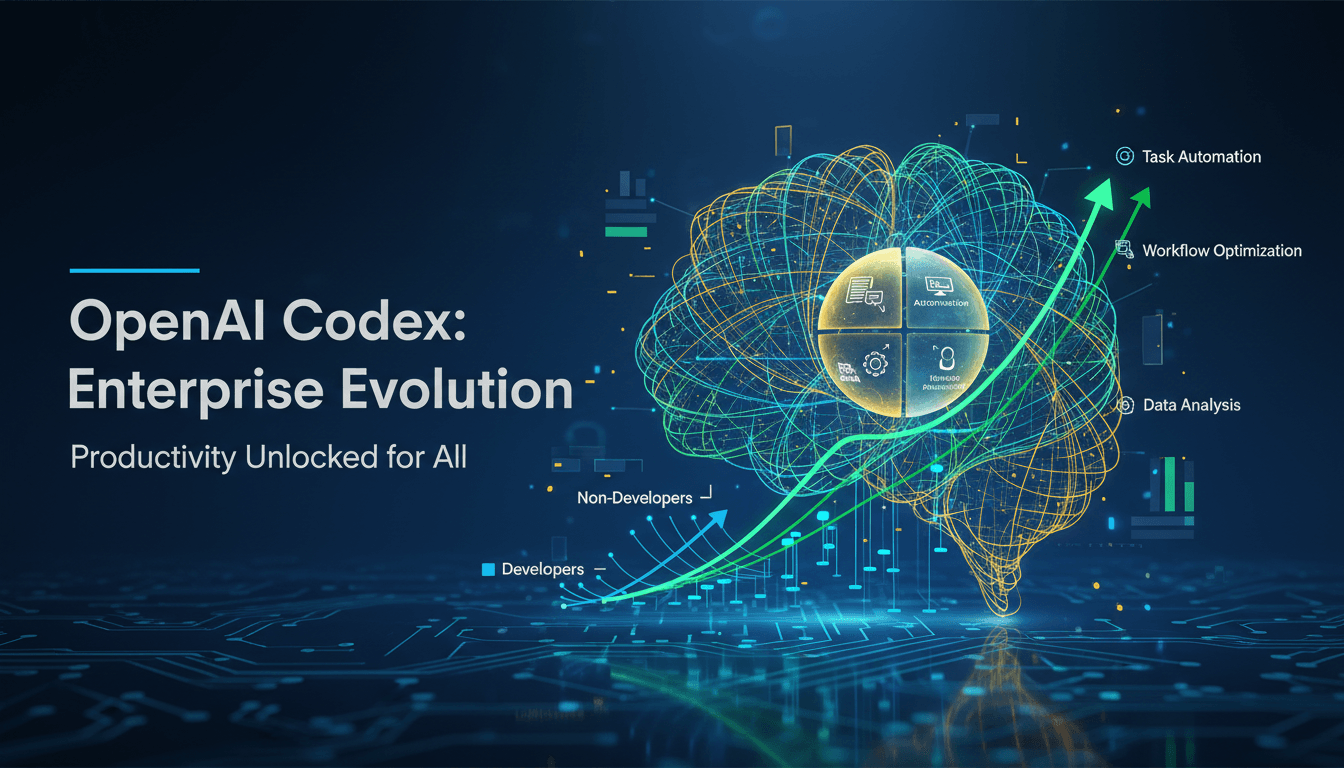
Here's what it means for you.
OpenAI's latest update to Codex signifies a pivotal shift in how businesses can leverage AI for productivity. By catering to non-developers, the platform is set to democratize access to advanced tools, allowing a broader range of professionals to automate tasks and enhance workflows. This move could reshape the competitive landscape in enterprise productivity, as companies increasingly seek solutions that streamline operations without requiring extensive technical expertise. As Codex evolves, its ability to attract and retain users from diverse professional backgrounds will be crucial. The implications for knowledge workers are significant, as they gain access to tools that can simplify complex tasks and improve efficiency.
What happened
OpenAI has launched a major update to its Codex platform, transforming it from a specialized coding tool into a comprehensive enterprise work platform. This update introduces new features designed to enhance productivity for business professionals, including role-specific plugins, an in-place editing tool, and a web-hosting feature. The expansion is particularly aimed at non-developers, who are rapidly adopting the technology.
With over 5 million weekly users, approximately 20% of whom are non-developers, Codex is experiencing significant growth. The new features include 'Sites' for creating interactive web applications and 'Annotations' for precise editing, reflecting a strategic shift in OpenAI's approach to user demographics.
The Context
The rapid adoption of Codex by non-developers, who are engaging with the platform three times faster than traditional engineers, highlights a significant shift in its user base. OpenAI's strategy is to cater to a growing population of knowledge workers in the corporate sector, aiming to enhance productivity across various business functions. The introduction of six role-specific plugins that integrate with 62 popular business applications further underscores this focus.
This update comes at a time when businesses are increasingly looking for innovative solutions to streamline operations and improve efficiency. By positioning Codex as a versatile enterprise platform, OpenAI is not only responding to current market demands but also setting the stage for future growth in the enterprise productivity space.
Takeaway
The expansion of Codex positions OpenAI to compete more effectively in the enterprise productivity market. As the platform continues to evolve, its impact on user engagement and productivity across various industries will be crucial to monitor. The introduction of new features is likely to attract more non-developer users, which could reshape how businesses approach task automation.
In the coming months, it will be important to observe how competitors respond to this shift and whether other AI and productivity tool providers will adapt their offerings in light of Codex's advancements. The long-term implications for businesses could be significant, as they seek to leverage these tools for enhanced operational efficiency.
Daily AI news: models, tools, and policy.
"Independent outlet tracking the fast pace of AI."
— A47 Editor
OpenAI expands Codex with role-specific plugins to build a general-purpose app for non-developers
OpenAI has expanded its Codex tool by introducing role-specific plugins aimed at enhancing functionalities for data analysis, sales, and investment banking. This move is designed to cater to a growing user base of non-developers, which has reportedly...
Opinionated AI coverage for general audiences.
"TNW’s AI vertical covering tools, ethics, and trends."
— A47 Editor
OpenAI is turning Codex from a coding tool into an enterprise work platform, and non-developers are adopting it 3x faster than engineers
OpenAI has announced a significant transformation of its Codex tool, evolving it from a coding assistant into a comprehensive enterprise work platform. This update introduces three new features: Sites for creating interactive web applications, Annota...
Startup news with frequent AI coverage.
"Covers launches, funding, and product updates in AI."
— A47 Editor
OpenAI launches new Codex tools for white-collar work
OpenAI has launched a new suite of six Codex plug-ins tailored for various white-collar professions, including data analytics, creative production, sales, product design, equity investing, and investment banking. These tools are designed to enhance t...
Focuses on transformative tech, AI, gaming, and startup innovation.
"VentureBeat is respected for its in-depth reporting on AI, startups, and disruptive technologies in Silicon Valley and beyond."
— A47 Editor
OpenAI's Codex update lets agents build interactive enterprise workspaces via Sites and role-specific plugins
OpenAI has announced a significant update to its Codex platform, introducing features such as domain-specific workflows, a semi-private web hosting option called 'Sites', and an editing tool named 'Annotations'. This update aims to transition Codex f...
Curated tech headlines including AI stories.
"Influential aggregator surfacing the day’s top tech/AI links."
— A47 Editor
OpenAI releases a new report on knowledge work: Codex now has 5M+ weekly active users, up 6x+ since February, and knowledge workers are ~20% of Codex users (OpenAI)
OpenAI has released a report indicating that Codex, its AI tool, has surpassed 5 million weekly active users, marking a sixfold increase since February. The report highlights that approximately 20% of these users are knowledge workers, showcasing Cod...