
Vance Announces Preliminary US-Iran Agreement Achieving Key Trump Administration Goals
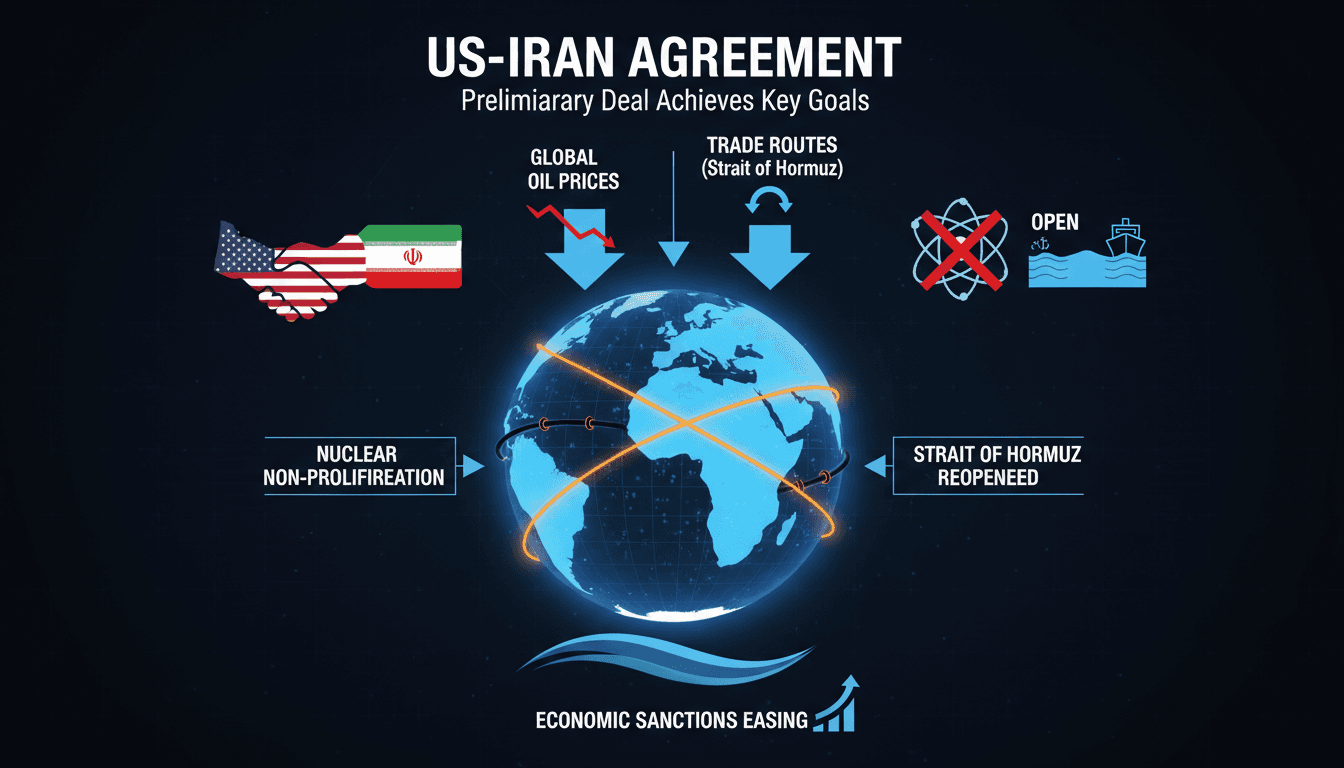
Here's what it means for you.
If you’re involved in global trade or energy markets, this preliminary agreement could reshape pricing and logistics in the coming months.
Why it matters
This deal signals a potential shift in U.S.-Iran relations that could stabilize energy markets and impact global supply chains.
What happened (in 30 seconds)
- Vice President JD Vance announced a preliminary agreement with Iran on June 14, 2026, aimed at reopening the Strait of Hormuz and preventing nuclear weapon development.
- The agreement extends the U.S.–Iran ceasefire for 60 days and sets a framework for future negotiations regarding Iran's nuclear program and economic sanctions.
- Market reactions are being monitored as the U.S. expresses optimism, while concerns linger about Iran's compliance and implications for U.S. allies like Israel.
The context you actually need
- The U.S.-Iran relationship has been historically contentious, particularly after the U.S. withdrew from the Joint Comprehensive Plan of Action (JCPOA) in 2018.
- The Trump administration's strategy focused on maximum pressure against Iran, aiming to curb its nuclear ambitions and regional influence.
- This preliminary agreement represents a potential pivot towards diplomatic engagement, with the U.S. seeking to stabilize the region and address Iran's nuclear program.
What's really happening
The preliminary agreement reached between the U.S. and Iran marks a significant moment in a long-standing geopolitical conflict. Vice President JD Vance emphasized that the deal aligns with the Trump administration's objectives, particularly in ensuring that Iran does not develop nuclear weapons and in reopening the vital Strait of Hormuz, a critical chokepoint for global oil shipments. The extension of the ceasefire for 60 days is a strategic move that allows both parties to engage in further negotiations without the immediate threat of military escalation.
The U.S. is leveraging its strong negotiating position, suggesting that if Iran complies with the terms of the agreement, economic sanctions could be eased. This would allow Iranian oil to re-enter the global market, potentially lowering energy prices and increasing supply. The implications of this are vast, as a stable Iran could lead to a more predictable energy market, which is crucial for global economies, particularly those heavily reliant on oil imports.
However, the deal is not without its challenges. Concerns about Iran's compliance remain high, especially among U.S. allies in the region, such as Israel, which has historically opposed any concessions to Iran. The Israeli government has expressed skepticism about the effectiveness of the agreement, fearing that it may embolden Iran's regional ambitions. This tension could lead to further complications in U.S. foreign policy and regional stability.
Market reactions will be closely monitored as the situation develops. Investors are likely to react to fluctuations in oil prices and geopolitical stability, which could impact logistics and investment opportunities in key markets, including Dubai and the UAE. The agreement could lead to increased stability in the region, which may lower energy prices and create new avenues for trade and investment.
In summary, while the preliminary agreement represents a step towards diplomatic engagement, the path forward is fraught with uncertainty. The balance of power in the region, the response from U.S. allies, and Iran's adherence to the terms will all play critical roles in shaping the future of U.S.-Iran relations and the global energy landscape.
Who feels it first (and how)
- Energy sector professionals: They will see immediate impacts on oil prices and supply chains.
- Investors in global markets: Fluctuations in energy prices will affect investment strategies and market stability.
- Logistics companies: Changes in trade routes and energy costs will influence operational decisions.
- U.S. allies in the Middle East: Countries like Israel may feel increased tension and uncertainty regarding regional security.
What to watch next
- Iran's compliance with the agreement: Monitoring how Iran responds to the terms will be crucial for future negotiations and regional stability.
- Market reactions to oil prices: Fluctuations in energy prices will indicate how the agreement is perceived by investors and its impact on global supply chains.
- Responses from U.S. allies: Observing how countries like Israel react to the deal will provide insights into potential geopolitical tensions.
The preliminary agreement extends the U.S.–Iran ceasefire for 60 days.
If Iran complies, economic sanctions may be eased, allowing Iranian oil back into the global market.
The long-term implications for U.S.-Iran relations and regional stability remain uncertain.
Frequently Asked Questions
- Why it matters?
- This deal signals a potential shift in U.S.-Iran relations that could stabilize energy markets and impact global supply chains.
- What happened (in 30 seconds)?
- Vice President JD Vance announced a preliminary agreement with Iran on June 14, 2026, aimed at reopening the Strait of Hormuz and preventing nuclear weapon development. The agreement extends the U.S.–Iran ceasefire for 60 days and sets a framework for future negotiations regarding Iran's nuclear program and economic sanctions. Market reactions are being monitored as the U.S. expresses optimism, while concerns linger about Iran's compliance and implications for U.S. allies like Israel.
- What's really happening?
- The preliminary agreement reached between the U.S. and Iran marks a significant moment in a long-standing geopolitical conflict. Vice President JD Vance emphasized that the deal aligns with the Trump administration's objectives, particularly in ensuring that Iran does not develop nuclear weapons and in reopening the vital Strait of Hormuz, a critical chokepoint for global oil shipments. The extension of the ceasefire for 60 days is a strategic move that allows both parties to engage in further n
- Who feels it first (and how)?
- Energy sector professionals: They will see immediate impacts on oil prices and supply chains. Investors in global markets: Fluctuations in energy prices will affect investment strategies and market stability. Logistics companies: Changes in trade routes and energy costs will influence operational decisions. U.S. allies in the Middle East: Countries like Israel may feel increased tension and uncertainty regarding regional security.
- What to watch next?
- Iran's compliance with the agreement: Monitoring how Iran responds to the terms will be crucial for future negotiations and regional stability. Market reactions to oil prices: Fluctuations in energy prices will indicate how the agreement is perceived by investors and its impact on global supply chains. Responses from U.S. allies: Observing how countries like Israel react to the deal will provide insights into potential geopolitical tensions.
Conservative-leaning coverage of current events.
"Fox News is a highly influential conservative news outlet known for right-leaning political commentary and coverage."
— A47 Editor
Vance says Trump administration's key objectives have been reached in US-Iran deal
JD Vance announced that the Trump administration has achieved key objectives in the U.S.-Iran deal, which aims to permanently prevent Iran from developing nuclear weapons and to reopen the strategically vital Strait of Hormuz. This deal is expected t...
Oil, metals, and agriculture: supply/demand headlines, OPEC chatter, inventories, and price action.
"Solid tape for energy and metals traders tracking macro and micro catalysts."
— A47 Editor
Vance says funds won’t be transferred to Iran in exchange for signing deal to halt war
U.S. official Vance has confirmed that no funds will be transferred to Iran as part of a deal aimed at halting the ongoing conflict. This statement comes amid negotiations to finalize a peace agreement that includes reopening the strategically import...
International coverage of politics, culture, and current affairs.
"BBC News is widely regarded as a reputable international news organization, known for its impartial tone and public service mandate."
— A47 Editor
Bowen: Iran deal ends Trump's war that revealed limit of US dominance
A peace deal between the United States and Iran has been announced, aiming to end hostilities and reopen the strategically vital Strait of Hormuz, following a period of intense conflict that resulted in significant loss of life. The agreement is expe...
Capitol Hill news, legislation, and policy insight.
"The Hill specializes in U.S. politics and policy, with a focus on Capitol Hill developments and a reputation for insider reporting."
— A47 Editor
Vance says US signed Iran deal Sunday; hopes to release text this week
Vice President JD Vance announced that the United States has signed a preliminary agreement with Iran to facilitate the reopening of the Strait of Hormuz, with the text of the deal expected to be released this week. Vance emphasized that Iran will no...
Regional coverage and analysis focused on politics, diplomacy, and business across the Middle East.
"Al-Monitor is known for analytical reporting on Middle East politics and policy developments."
— A47 Editor
Vance says he hopes to release text of agreement to halt war in Iran this week
U.S. Vice President JD Vance announced that he hopes to release the text of an agreement aimed at halting the war in Iran and reopening the strategically vital Strait of Hormuz within the week. Ongoing negotiations are focused on finalizing the detai...
Global business headlines with AI angles.
"General business outlet that frequently covers AI."
— A47 Editor
JD Vance Says 'a Lot' Of Details Still Need To Be Negotiated With Iran But U.S. Holds 'All The Cards'
Vice President JD Vance stated that significant details remain to be negotiated with Iran to formally conclude the ongoing conflict, asserting that the U.S. possesses a strong negotiating position.
Conservative-leaning political and national coverage.
"The Washington Times is a conservative-leaning newspaper known for its political coverage and advocacy of right-of-center viewpoints."
— A47 Editor
Vance: U.S. has upper hand in peace talks; Iran must decide if it wants to extend hand to the world
Vice President J.D. Vance stated that the United States holds a favorable position in ongoing peace negotiations with Iran, emphasizing that a potential deal would benefit the American populace while asserting that the U.S. retains leverage if Iran f...