
U.S. and Iran Reach Preliminary Ceasefire Agreement Impacting Energy Markets
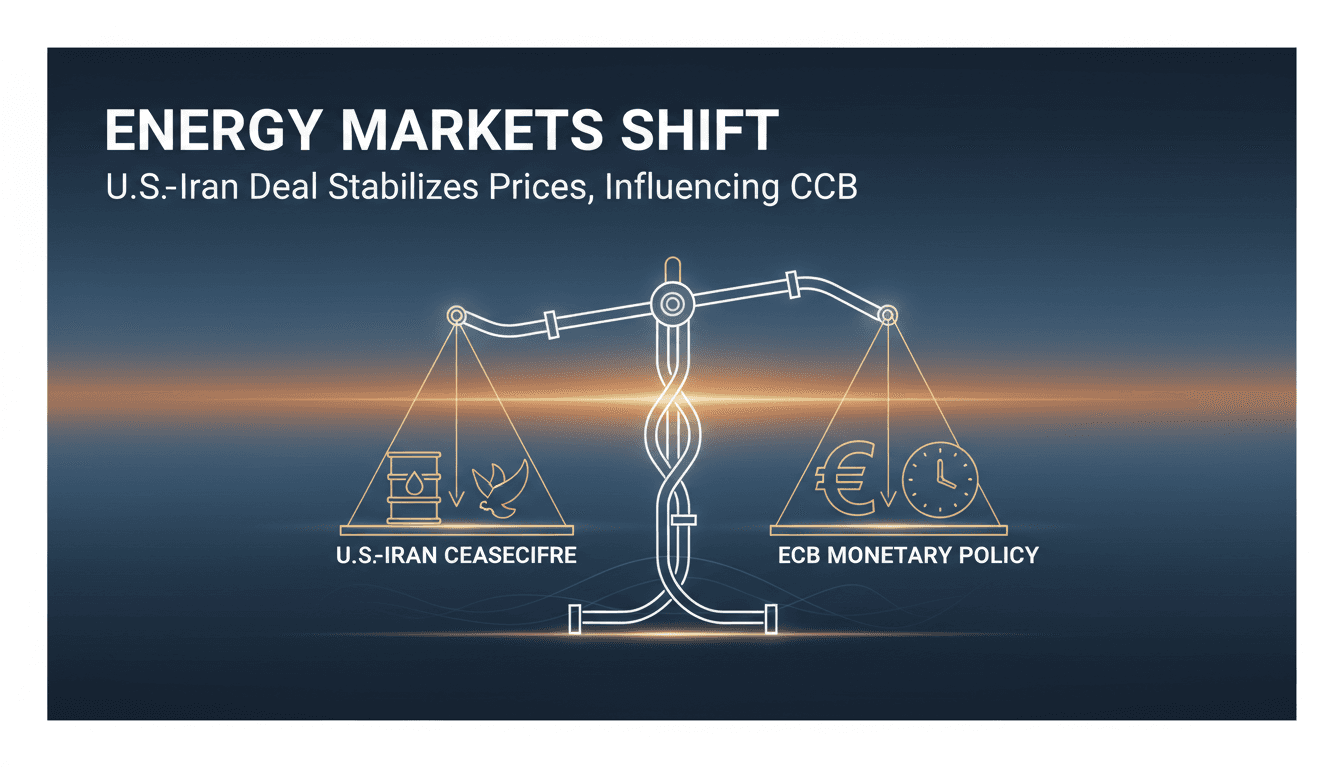
Here's what it means for you.
The recent ceasefire agreement between the U.S. and Iran could lead to a stabilization of energy prices, particularly affecting markets reliant on the Strait of Hormuz. While this development is promising, inflation pressures in the eurozone are expected to persist, complicating monetary policy for the European Central Bank (ECB). Stakeholders in energy markets should remain vigilant as the geopolitical landscape evolves.
What happened
On June 15, 2026, the U.S. and Iran announced a preliminary ceasefire agreement aimed at reducing hostilities between the two nations. This agreement has the potential to impact energy prices significantly, particularly by reopening the critical shipping route of the Strait of Hormuz. ECB President Christine Lagarde welcomed the news, highlighting its potential benefits for energy shipping.
Despite the ceasefire, Bundesbank President Joachim Nagel cautioned that inflation pressures in the eurozone would likely continue due to high energy prices. The immediate economic landscape remains challenging, with ongoing inflation concerns complicating the situation.
The Context
The ceasefire agreement comes at a time when both the U.S. and Iran are seeking to improve regional stability and reduce hostilities. The Strait of Hormuz is a vital energy shipping route, and its reopening could have far-reaching implications for global energy markets. However, the ECB is maintaining a cautious approach to monetary policy, as inflation in the eurozone is expected to remain elevated.
The dynamics between the U.S. and Iran are critical not only for regional stability but also for the broader global economy. The ongoing inflationary pressures, driven by high energy prices, pose significant challenges for policymakers in Europe, who must navigate these complexities while considering the implications of the ceasefire.
Takeaway
As the situation develops, it will be essential to monitor ECB policy decisions in response to inflation data. The long-term effects of the ceasefire on energy prices and inflation will require close observation, particularly as stakeholders assess the geopolitical landscape. The ECB's cautious stance will likely influence its monetary policy decisions moving forward.
In the coming weeks, developments in U.S.-Iran relations will be pivotal in shaping global energy markets. Stakeholders should remain alert to any changes that could impact economic stability and inflationary trends.
Social/economic commentary and analysis relevant to business and markets.
"WSJ blends data-driven economic insight with commentary on policy and society."
— A47 Editor
Impact of Iran War to Persist Despite Deal Offering Hope for Peace, ECB’s Nagel Says
Bundesbank President Joachim Nagel stated that the impact of rising energy prices due to the ongoing war in Iran will continue to be felt in the coming months, despite recent diplomatic efforts aimed at peace.
Global political, business, and cultural coverage from WSJ international desks.
"The Wall Street Journal offers extensive international reporting with a reputation for financial insight and a center-right editorial stance."
— A47 Editor
Impact of Iran War to Persist Despite Deal Offering Hope for Peace, ECB’s Nagel Says
Bundesbank President Joachim Nagel stated that the impact of rising energy prices due to the ongoing war in Iran will continue to be felt in the coming months, despite recent diplomatic efforts aimed at peace.
Pan-Arab news coverage spanning politics, business, sports, and regional affairs.
"Asharq Al-Awsat reflects a broad Arab editorial perspective with strong attention to regional geopolitics."
— A47 Editor
صناع السياسة في «المركزي الأوروبي» يتمسكون بالتشديد النقدي رغم تهدئة أزمة هرمز
Joachim Nagel, a monetary policy maker at the European Central Bank, stated on Monday that he does not anticipate a rapid decline in inflation pressures stemming from rising energy prices. This statement comes despite a recent easing of tensions in t...
Regional coverage and analysis focused on politics, diplomacy, and business across the Middle East.
"Al-Monitor is known for analytical reporting on Middle East politics and policy developments."
— A47 Editor
ECB's Lagarde welcomes Iran deal, Nagel cautions on lasting inflation
On June 15, 2026, European Central Bank (ECB) President Christine Lagarde welcomed the announcement of a ceasefire agreement between the U.S. and Iran, which aims to reopen the strategically important Strait of Hormuz. This development has led to a d...