
Qatar intercepts missile attack amid ongoing security threats
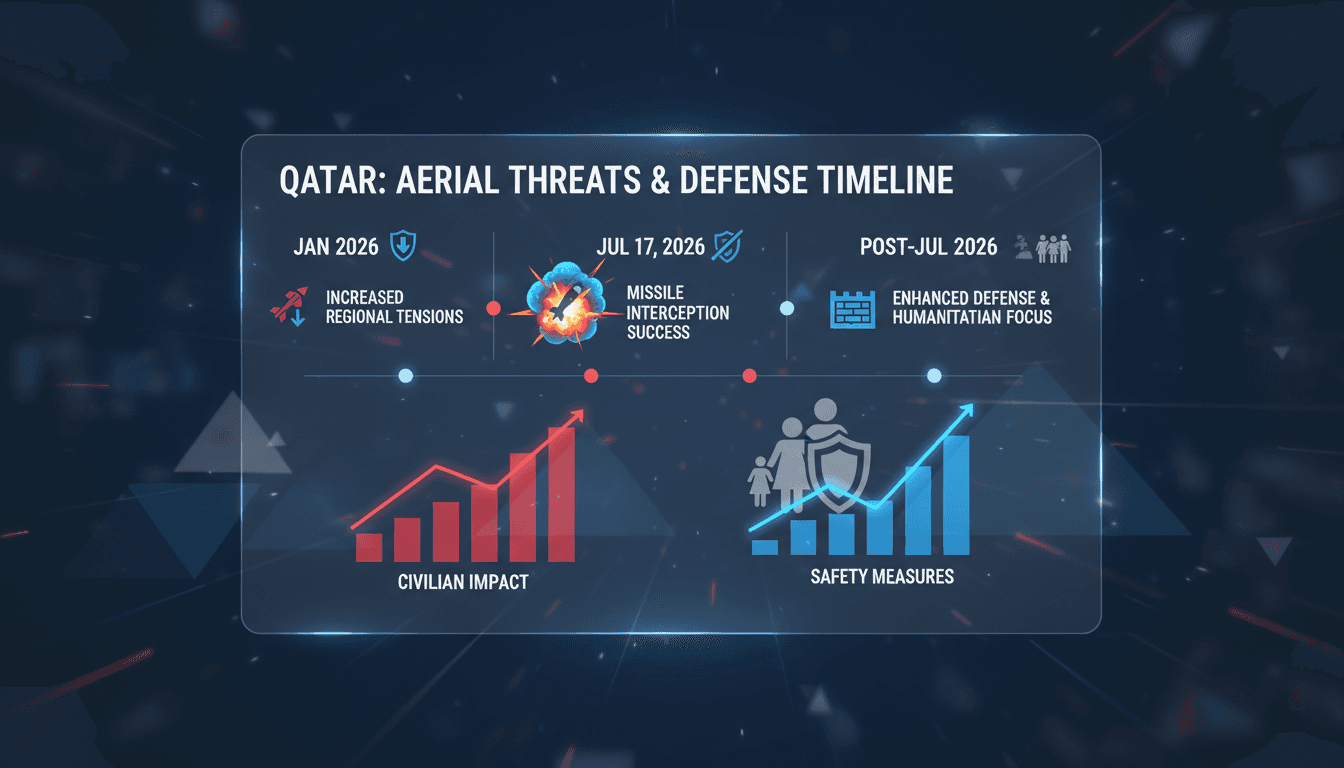
Here's what it means for you.
The recent missile interception by Qatar's defense forces highlights the escalating security challenges in the region. This incident underscores the necessity for nations to bolster their military readiness in response to increasing aerial threats. The collateral damage from such military actions raises critical questions about civilian safety and humanitarian impacts. As Qatar navigates these threats, the implications for regional stability and international relations could be significant. Stakeholders must remain vigilant as the situation evolves, particularly regarding the humanitarian consequences of military engagements.
What happened
On July 17, 2026, Qatar's armed forces successfully intercepted a missile attack aimed at the nation. The interception occurred in the early hours of the morning, showcasing the military's readiness to respond to aerial threats. However, the operation resulted in injuries to a child from debris, emphasizing the risks associated with such military engagements.
The Qatari Ministry of Defense confirmed the interception and has reiterated its commitment to countering ongoing aerial threats. Footage of the interception has been shared across various news platforms, illustrating the event's significance.
The Context
The missile attack and subsequent interception are part of a broader pattern of escalating security threats in the region. Qatar has been increasingly vigilant in its defense measures, responding to the growing risks posed by aerial assaults. The incident not only highlights the immediate dangers but also raises concerns about the long-term implications for civilian safety.
The injury of a child during the interception underscores the collateral damage that can occur in military operations. As Qatar continues to address these threats, the government faces the dual challenge of enhancing its defense capabilities while mitigating the humanitarian impacts on its civilian population.
Takeaway
The situation in Qatar serves as a reminder of the ongoing security challenges the nation faces. As the government works to enhance its defense measures, it will be crucial to monitor further developments regarding aerial threats in the region. Additionally, updates on the condition of the injured child will be important for understanding the humanitarian implications of military actions.
Looking ahead, stakeholders should remain attentive to how Qatar balances its military readiness with the need to protect civilian lives. The evolving dynamics in the region will likely influence both domestic policy and international relations.
Arabic-language coverage of political affairs and current events.
"Okaz political coverage typically follows mainstream Saudi framing on national and regional affairs."
— A47 Editor
«الدفاع القطرية» تعلن استمرار التصدي لعدد من الهجمات الجوية التي تستهدف الدولة
The Qatari Ministry of Defense announced that the armed forces are continuing to respond to a series of aerial attacks targeting the state. According to the Qatar News Agency, the military successfully intercepted a missile attack aimed at the countr...
Arabic-language coverage of international news and geopolitics.
"RT Arabic is a Russian state-funded outlet often criticized for promoting Kremlin-aligned narratives."
— A47 Editor
قطر.. إصابة طفل بشظايا اعتراض الصواريخ (فيديو)
A child was injured by shrapnel resulting from the interception of aerial attacks in Qatar, as announced by the Qatari Ministries of Interior and Defense. News platforms have shared footage of the missile defense operations taking place in the skies ...
Pan-Arab political news and analysis.
"Al-Quds Al-Arabi is a London-based Arabic newspaper known for political coverage."
— A47 Editor
عاجل.. وزارة الدفاع القطرية: اعتراض هجوم صاروخي
The Qatari Ministry of Defense has announced the interception of a missile attack, indicating a significant security incident that has been successfully managed. This development highlights the ongoing threats faced by the region and the capabilities...