
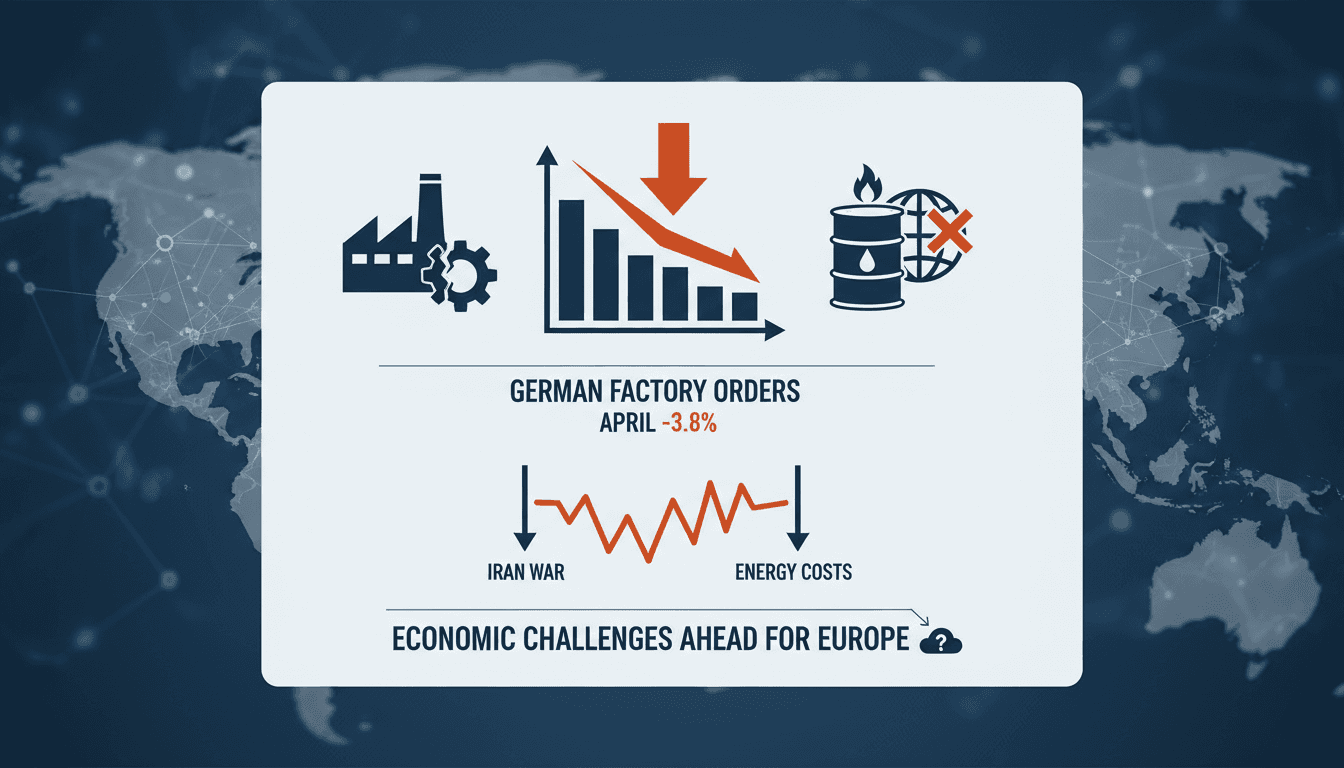
German factory orders decline by 3.8% amid Iran war and rising energy costs
Here's what it means for you.
The recent decline in German factory orders signals potential economic turbulence for Europe’s largest economy. As manufacturing activity contracts, businesses and policymakers must brace for the implications of rising energy costs and geopolitical tensions. This downturn could affect not only Germany but also the broader European market, necessitating strategic adjustments. The situation calls for close monitoring of energy prices and their impact on manufacturing. Stakeholders should prepare for possible economic shifts in the coming months as indicators suggest a contraction may be on the horizon.
What happened
In April, German factory orders fell by 3.8%, a decline that exceeded analysts' expectations. This downturn marks a significant reversal from previous gains, raising alarms about the economic outlook for Germany. The drop is primarily attributed to the ongoing Iran war and escalating energy costs, which are straining the manufacturing sector.
The decline in orders follows a period of stock building that occurred after the outbreak of the Iran war. As manufacturers grapple with increased costs and uncertainty, the risk of economic contraction looms larger, prompting concerns about the broader European economic landscape.
The Context
The decline in factory orders highlights the vulnerabilities of Germany's economy amidst geopolitical tensions and rising energy prices. Stakeholders, including manufacturers and policymakers, are increasingly concerned about the potential economic impact of these factors. If the current trends persist, Germany may face significant economic challenges in the coming months.
This downturn could have broader implications for the European economy, as Germany plays a crucial role in the region's economic stability. The timing of this decline is particularly critical, as analysts are already expressing concerns about potential contraction in the second quarter.
Takeaway
As the situation develops, it is essential to monitor energy prices and their impact on manufacturing. Economic indicators in the second quarter will be crucial in assessing the likelihood of a contraction in Germany's economy. Stakeholders should remain vigilant and prepared for potential shifts in the economic landscape.
The ongoing geopolitical tensions and rising energy costs necessitate close observation of both domestic and international factors that could influence Germany's economic trajectory.
Social/economic commentary and analysis relevant to business and markets.
"WSJ blends data-driven economic insight with commentary on policy and society."
— A47 Editor
German Factory Orders Fell Back in April as Iran War Damps Demand
German factory orders experienced a decline in April, marking the first drop since January, as demand weakened due to the ongoing war in Iran. This reversal follows a brief increase in March, which was driven by stockpiling in response to the conflic...
Global political, business, and cultural coverage from WSJ international desks.
"The Wall Street Journal offers extensive international reporting with a reputation for financial insight and a center-right editorial stance."
— A47 Editor
German Factory Orders Fell Back in April as Iran War Damps Demand
German factory orders experienced a decline in April, marking the first drop since January, as demand weakened due to the ongoing war in Iran. This reversal follows a brief increase in March, which was driven by stockpiling in response to the conflic...
Key macro releases (CPI, jobs, PMIs), surprise indexes, and market implications.
"Great for data-print awareness and instant read-through to rates and risk assets."
— A47 Editor
German industrial orders drop 3.8% in April
German industrial orders fell by 3.8% in April, marking a significant decline that raises concerns about the health of the manufacturing sector in Europe's largest economy. This drop follows a brief period of growth in March, suggesting a reversal in...
Global markets, investing, and macroeconomics from a premier financial newsroom.
"Bloomberg is respected for in-depth financial reporting and data-driven analysis."
— A47 Editor
German Factory Orders Fell More Than Expected in April
German factory orders fell more than expected in April, raising concerns about the potential contraction of Europe's largest economy in the second quarter, influenced by the ongoing conflict in Iran and rising energy costs.