
2026 FIFA World Cup ticket prices surge raises accessibility concerns
Here's what it means for you.
The soaring ticket prices for the 2026 FIFA World Cup final highlight a significant shift in how major sporting events are marketed and consumed. As the tournament is increasingly positioned as a luxury experience, the implications for fan accessibility and engagement are profound. Stakeholders must navigate the delicate balance between profitability and ensuring that the event remains inclusive for all fans. This trend raises critical questions about the future of sports commercialization and its impact on traditional fan bases. As ticket prices escalate, the potential for alienating average fans grows, prompting a reevaluation of what it means to participate in such high-profile events.
What happened
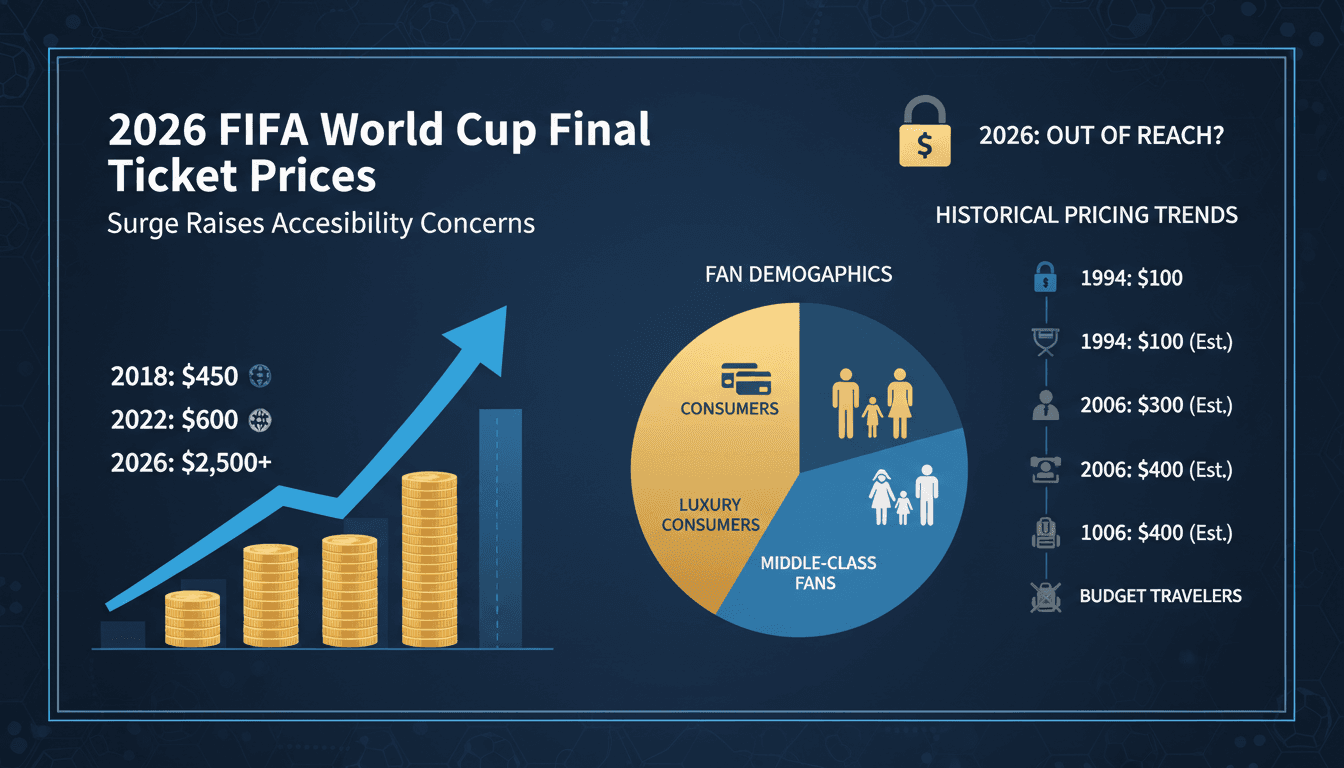
The sale of tickets for the 2026 FIFA World Cup final has revealed unexpectedly high prices, leading to widespread discussions about the commercialization of the tournament. Fans have expressed shock at the steep costs, which significantly exceed those of previous tournaments. This surge in pricing is indicative of a broader trend where the event is being marketed as a luxury product, thereby increasing demand.
Financial analyses are underway to assess the economic impact of the World Cup on various stakeholders, revealing a complex landscape of financial winners and losers. The release of ticket prices on July 17, 2026, marked a pivotal moment, igniting public discourse around the implications of such high costs for fans and the sport itself.
The Context
The 2026 FIFA World Cup is being characterized as a "celebrity-driven" event, reflecting a shift towards luxury branding in sports. This transformation raises concerns about accessibility, as the high ticket prices could deter many fans from attending. The tournament's commercialization is not just a financial issue; it also speaks to the evolving nature of fan engagement in major sporting events.
As the event approaches, stakeholders, including fans, sponsors, and organizers, are grappling with the ramifications of these pricing strategies. The ongoing discussions about the balance between profitability and fan accessibility will likely shape public sentiment and influence attendance at the tournament.
Takeaway
As the tournament date approaches, the focus will remain on ticket pricing trends and the broader implications of commercialization in football. Observers should monitor fan reactions and the financial outcomes for various stakeholders involved in the event. The discussions surrounding the 2026 World Cup will likely set precedents for future sporting events, particularly regarding how they are marketed and who gets to participate.
The ongoing debates about accessibility versus profitability will be crucial in determining the long-term impact of this World Cup on the landscape of international football tournaments.
Pan-Arab news coverage spanning politics, business, sports, and regional affairs.
"Asharq Al-Awsat reflects a broad Arab editorial perspective with strong attention to regional geopolitics."
— A47 Editor
هل يصبح نهائي كأس العالم 2026 الأغلى في تاريخ الرياضة؟
The sale of tickets for the 2026 FIFA World Cup final has shocked fans due to their high prices, raising concerns about the affordability of attending one of the most anticipated sporting events in history.
24/7 international news from a French perspective in multiple languages.
"France 24 is viewed as a globally focused outlet with balanced coverage and a European perspective."
— A47 Editor
World Cup: 2026 tournament "repackaged football as a luxury product"
The 2026 FIFA World Cup is being described as a tournament that has transformed football into a luxury product, according to David Webber. This shift has led to increased demand for tickets, driving prices higher than ever before.
Corporate news, economic trends, and markets with UK and global scope.
"BBC News is widely regarded as reputable and impartial, with a public service mandate."
— A47 Editor
The financial winners and losers from the World Cup
The 2026 FIFA World Cup is set to be a financially transformative event, with significant revenue generation expected from various sources, including ticket sales and advertising. This tournament, co-hosted by the United States, Canada, and Mexico, i...