
Pilgrims Begin Hajj Rituals on Eid al-Adha with Over 1.7 Million Participants
Here's what it means for you.
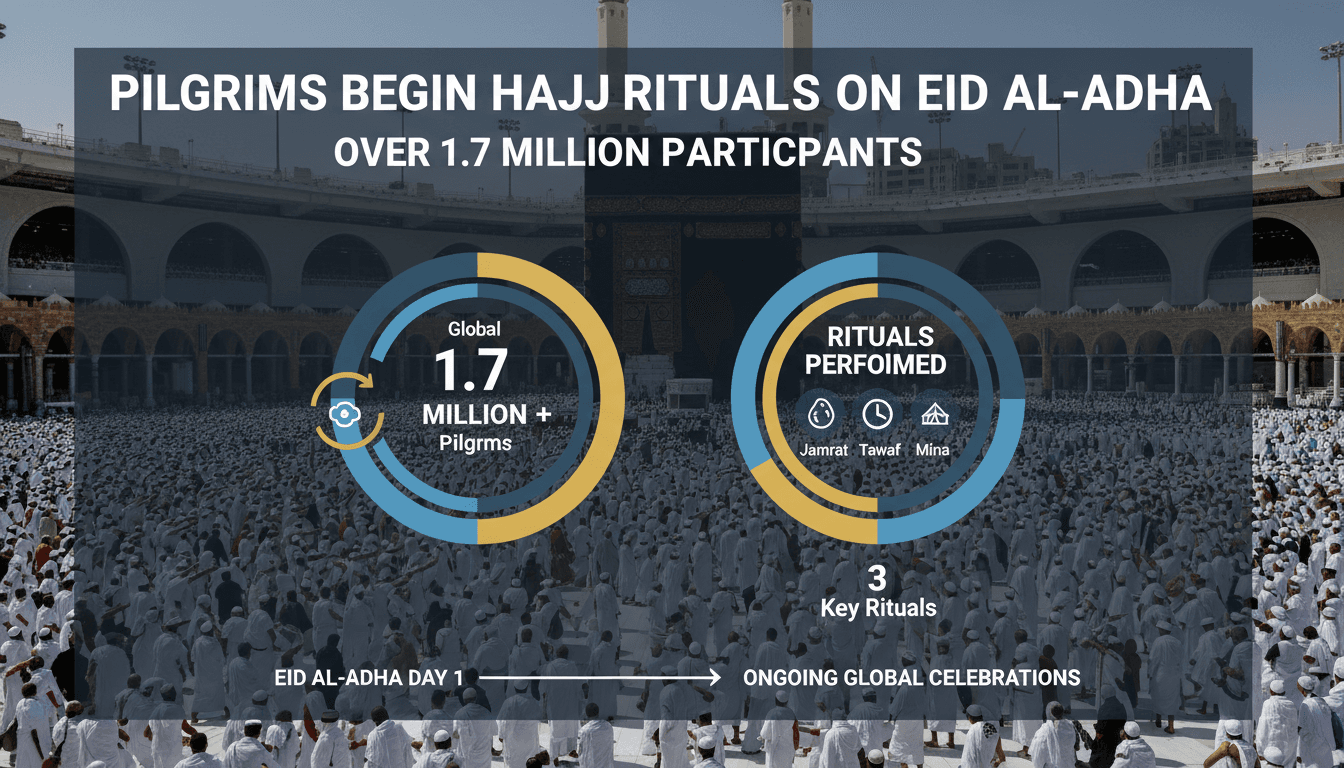
The commencement of Hajj rituals during Eid al-Adha highlights the enduring faith and resilience of the Muslim community worldwide. With over 1.7 million participants this year, the event underscores the significance of this pilgrimage as a unifying experience for Muslims. The successful execution of these rituals not only reflects religious devotion but also showcases the logistical capabilities of the authorities managing the pilgrimage. As global celebrations of Eid al-Adha unfold, the implications for community cohesion and cultural exchange are profound. This event serves as a reminder of the shared values and traditions that bind Muslims together, fostering a sense of belonging and collective identity.
What happened
On the first day of Eid al-Adha, pilgrims began the ritual of throwing stones at the Jamrat al-Aqaba in Mina, near Mecca. This act is a pivotal moment in the Hajj pilgrimage, which has attracted over 1.7 million participants this year. The ritual symbolizes the rejection of evil and temptation, embodying the spiritual essence of the pilgrimage.
The act of throwing stones is not merely a physical gesture; it carries deep religious significance for the pilgrims. It marks their commitment to faith and the principles of Islam, reinforcing the importance of this annual observance.
The Context
The Hajj pilgrimage is one of the five pillars of Islam, making it a mandatory religious duty for all Muslims who are physically and financially able to undertake it. This year's participation of over 1.7 million pilgrims highlights the scale and importance of the event within the Muslim world. The ritual of throwing stones at the Jamrat al-Aqaba serves as a symbolic representation of the devil, where pilgrims express their rejection of evil.
Eid al-Adha commemorates the willingness of Ibrahim (Abraham) to sacrifice his son in obedience to God, further enriching the spiritual context of the pilgrimage. The timing of Hajj during the Islamic month of Dhu al-Hijjah aligns with the broader themes of sacrifice and devotion celebrated during Eid al-Adha.
Takeaway
As the Hajj continues, attention will shift to the health and safety measures implemented to protect pilgrims during this significant religious event. The successful completion of the rituals reflects the resilience and faith of the Muslim community, setting the stage for ongoing global celebrations of Eid al-Adha.
Monitoring the celebrations across the Muslim world will provide insights into the cultural and social dynamics at play during this time. The event not only reinforces religious observance but also fosters a sense of unity among Muslims globally.
Pan-Arab news coverage spanning politics, business, sports, and regional affairs.
"Asharq Al-Awsat reflects a broad Arab editorial perspective with strong attention to regional geopolitics."
— A47 Editor
الحجاج يرمون جمرة «العقبة» ويتحللون... ويستقبلون أول أيام التشريق
On Thursday, the 11th of Dhul-Hijjah, pilgrims celebrated the first day of Tashreeq, marking the second day of Eid al-Adha, by performing the ritual of throwing stones at the Jamrat al-Aqaba and expressing gratitude to God for the opportunity to fulf...
Algerian news with politics, society, and sports coverage.
"Ennahar Online is a high-volume Algerian outlet."
— A47 Editor
الحجاج يرمون جمرة العقبة الكبرى بأول أيام عيد الأضحى
On the morning of Wednesday, May 27, 2026, pilgrims began throwing stones at the Jamrat al-Aqaba in Mina, near the city of Mecca, marking the first day of Eid al-Adha and concluding a significant phase of the Hajj rituals for the year 1447 AH, with o...
Arabic-language coverage of international news and geopolitics.
"RT Arabic is a Russian state-funded outlet often criticized for promoting Kremlin-aligned narratives."
— A47 Editor
في أول أيام عيد الأضحى.. الحجاج يرمون جمرة العقبة الكبرى (فيديو)
On the morning of the first day of Eid al-Adha, pilgrims began throwing stones at the Jamrat al-Aqaba in Mina, near the holy city of Mecca. This ritual marks a significant moment in the Hajj pilgrimage, symbolizing the rejection of evil.