
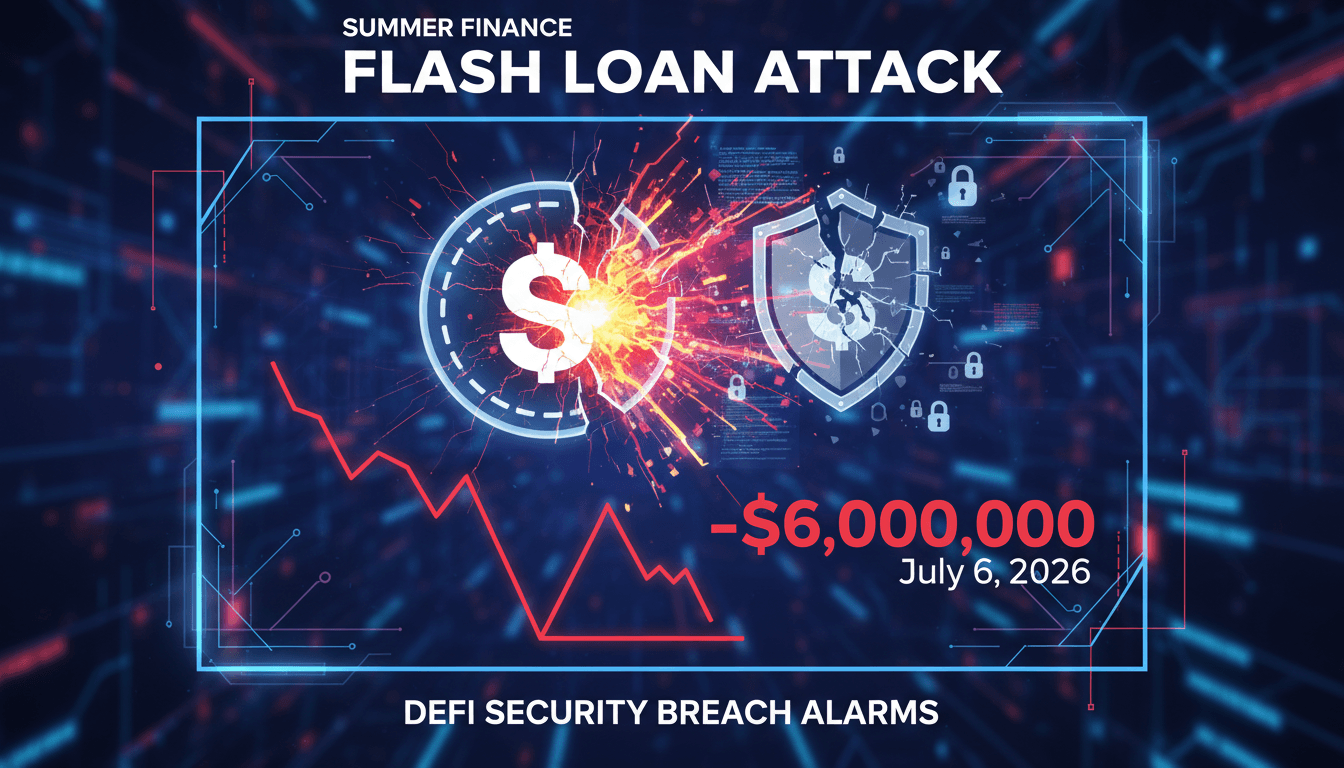
Summer Finance suffers $6 million loss from flash loan attack
Here's what it means for you.
The recent flash loan attack on Summer Finance underscores the vulnerabilities inherent in decentralized finance (DeFi) protocols. As the industry matures, stakeholders must prioritize security to maintain user trust and investment. This incident may prompt regulatory bodies to impose stricter guidelines, impacting how DeFi platforms operate. The fallout from this attack could lead to a reevaluation of risk management strategies within the DeFi sector. Investors and users alike should remain vigilant as the landscape evolves in response to these security challenges.
What happened
On July 6, 2026, Summer Finance, a decentralized finance protocol, fell victim to a flash loan attack that resulted in a staggering loss of approximately $6 million. The attack exploited vulnerabilities within the protocol, leading to the immediate halting of its Lazy Summer vaults. Following the incident, the value of Summer Finance's SUMR token plummeted by over 18%, reflecting the market's reaction to the breach.
This incident has raised significant concerns regarding the security of DeFi vaults, highlighting the need for enhanced protective measures. The attack involved sophisticated techniques, including flash loans and price manipulation, which have been flagged by security firms as critical vulnerabilities in the DeFi space.
The Context
The flash loan attack on Summer Finance is a stark reminder of the security challenges that decentralized finance protocols face. As DeFi continues to grow, incidents like this draw attention to the potential risks associated with these platforms. Stakeholders, including developers and investors, are now more aware of the need for robust security measures to protect against similar exploits.
The timing of this attack is particularly concerning, as it comes amid a broader push for innovation and adoption within the DeFi sector. The incident may catalyze discussions around regulatory frameworks aimed at enhancing security standards across the industry.
Takeaway
In the wake of the Summer Finance attack, the DeFi sector must prioritize security improvements to safeguard against future incidents. Observers should monitor the protocol's response regarding security enhancements and any potential regulatory changes that may arise from this breach.
The incident serves as a critical lesson for the entire DeFi ecosystem, emphasizing the importance of addressing vulnerabilities proactively. As the landscape evolves, stakeholders will need to adapt to ensure the integrity and trustworthiness of decentralized finance.
Covers Bitcoin plus altcoin news, market updates, and educational resources.
"Bitcoin.com provides news, market data, and guides focused on Bitcoin and the wider crypto industry."
— A47 Editor
Summer Finance Pauses Vaults After $65.4M Flash Loan Attack Triggers $6M Loss
Summer Finance has paused its vaults following a significant flash loan attack that resulted in a loss of $6 million from a total of $65.4 million. This incident highlights vulnerabilities in the decentralized finance sector, particularly concerning ...
Covers blockchain, cryptocurrency news, project analysis, and market insights.
"CoinDesk is a well-established cryptocurrency and blockchain news provider, offering comprehensive insights, market data, and industry research."
— A47 Editor
DeFi protocol Summer.fi halts Lazy Summer vaults after $6 million exploit
The DeFi protocol Summer.fi has halted its Lazy Summer vaults following a significant security breach that resulted in the loss of approximately $6 million, as reported by Blockaid. This incident has led to a sharp decline of over 18% in the value of...
Real-time updates, analysis, and reports on the blockchain and cryptocurrency sectors.
"Crypto News delivers real-time updates, analysis, and reports on the blockchain and cryptocurrency sectors."
— A47 Editor
Summer.fi under attack as Blockaid flags $6M exploit
Summer.fi is currently facing a significant security breach, with Blockaid reporting an active exploit that has drained approximately $6 million from its DeFi vaults. This incident highlights ongoing vulnerabilities within the decentralized finance s...