
Japan experiences measurable tectonic shift following 2011 Tohoku earthquake
Here's what it means for you.
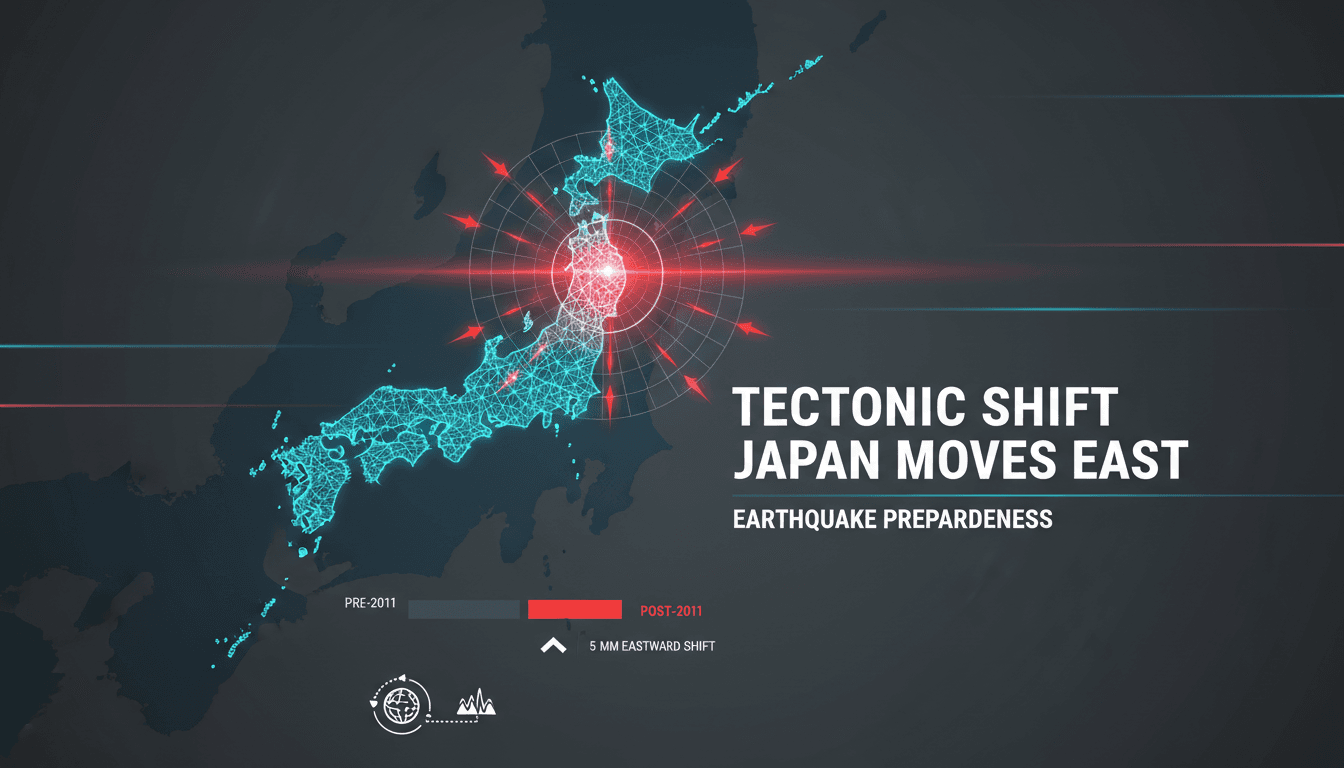
The tectonic shift experienced by Japan following the 2011 Tohoku earthquake underscores the profound impact of seismic events on geographical landscapes. This measurable movement of approximately 5 millimeters to the east highlights the necessity for enhanced earthquake preparedness and response strategies. Understanding these shifts can inform policy decisions and improve public safety measures in tectonically active regions. As researchers continue to study the implications of seismic wave behavior, the insights gained may lead to advancements in monitoring and mitigating future earthquakes. This knowledge is crucial for communities at risk, as it can ultimately save lives and reduce damage during seismic events.
What happened
Japan experienced a significant tectonic shift of approximately 5 millimeters to the east due to the 2011 Tohoku earthquake. This extraordinary movement was detected just 15 minutes after the earthquake struck on March 11, 2011. Researchers attributed this unusual phenomenon to seismic waves reflecting off the Earth's core, which led to the unexpected tectonic movements.
The Tohoku earthquake is recognized as one of the most powerful earthquakes ever recorded, and its effects were felt far beyond the immediate vicinity. The advanced geophysical measurement techniques used to detect this shift illustrate the capabilities of modern science in understanding seismic activity.
The Context
The Tohoku earthquake, which occurred on March 11, 2011, was a catastrophic event that caused widespread devastation across Japan. The tectonic shift detected shortly after the quake is considered highly unusual in the realm of seismic activity, prompting further investigation into the behavior of seismic waves. Understanding these dynamics is essential for stakeholders involved in disaster preparedness and response.
The implications of this tectonic shift extend beyond Japan, as they contribute to the global understanding of earthquake mechanics. As researchers delve deeper into the relationship between seismic waves and tectonic movements, the findings may influence policies and practices in earthquake-prone regions worldwide.
Takeaway
Looking ahead, continued research into seismic wave behavior and its implications for tectonic shifts will be critical. Studies focusing on earthquake preparedness in tectonically active regions may yield valuable insights that enhance safety measures and response strategies. As scientists work to unravel the complexities of seismic activity, the potential for improved disaster management becomes increasingly tangible.
The knowledge gained from these investigations can lead to better-informed policies that prioritize public safety and resilience in the face of future earthquakes.
Discoveries, research, environment, and health innovations.
"New Scientist is a well-respected publication offering accessible science news, commentary, and expert analysis."
— A47 Editor
Almost the whole of Japan moved eastward after 2011 earthquake
Following the 2011 Tohoku earthquake, an extraordinary tectonic movement occurred, causing almost the entire landmass of Japan to shift approximately 5 millimeters to the east within 15 minutes. This phenomenon was attributed to seismic waves reflect...
Discoveries, research, environment, and health innovations.
"New Scientist is a well-respected publication offering accessible science news, commentary, and expert analysis."
— A47 Editor
Waves reflecting off Earth's core shifted Japan after 2011 earthquake
An unusual tectonic movement occurred 15 minutes after the 2011 Tohoku earthquake, resulting in almost the entire landmass of Japan shifting approximately 5 millimeters to the east. This phenomenon was linked to waves reflecting off the Earth's core,...
Science and technology stories including AI.
"Longstanding science magazine with thoughtful AI coverage."
— A47 Editor
Japan’s 2011 earthquake was so powerful that it shifted the entire country’s location
Japan experienced a significant geological event in 2011 when a powerful earthquake shifted the entire country's location, a phenomenon attributed to seismic waves interacting with the Earth's core. This extraordinary occurrence has been studied to u...
Scientific research, technology, environment, and society.
"Scientific American is one of the oldest and most authoritative science magazines, known for deep dives into science, technology, and society."
— A47 Editor
Japan’s 2011 earthquake was so powerful that it shifted the entire country’s location
The 2011 earthquake in Japan was so powerful that it caused the entire country to shift approximately 5 millimeters to the east. This extraordinary phenomenon was linked to seismic waves reflecting off the Earth's core, as revealed by scientific rese...