
Israel escalates military operations against Hezbollah in Lebanon causing civilian casualties
Here's what it means for you.
The recent escalation of military operations by Israel against Hezbollah in Lebanon has significant implications for regional stability and humanitarian conditions. With confirmed casualties rising, the potential for a humanitarian crisis looms large, impacting both local populations and international relations. Stakeholders, including governments and humanitarian organizations, must prepare for the fallout from this intensifying conflict. As the situation develops, businesses and policymakers should closely monitor the evolving dynamics, particularly regarding international responses and potential diplomatic efforts. The conflict's escalation may also affect market conditions and security assessments in the region.
What happened
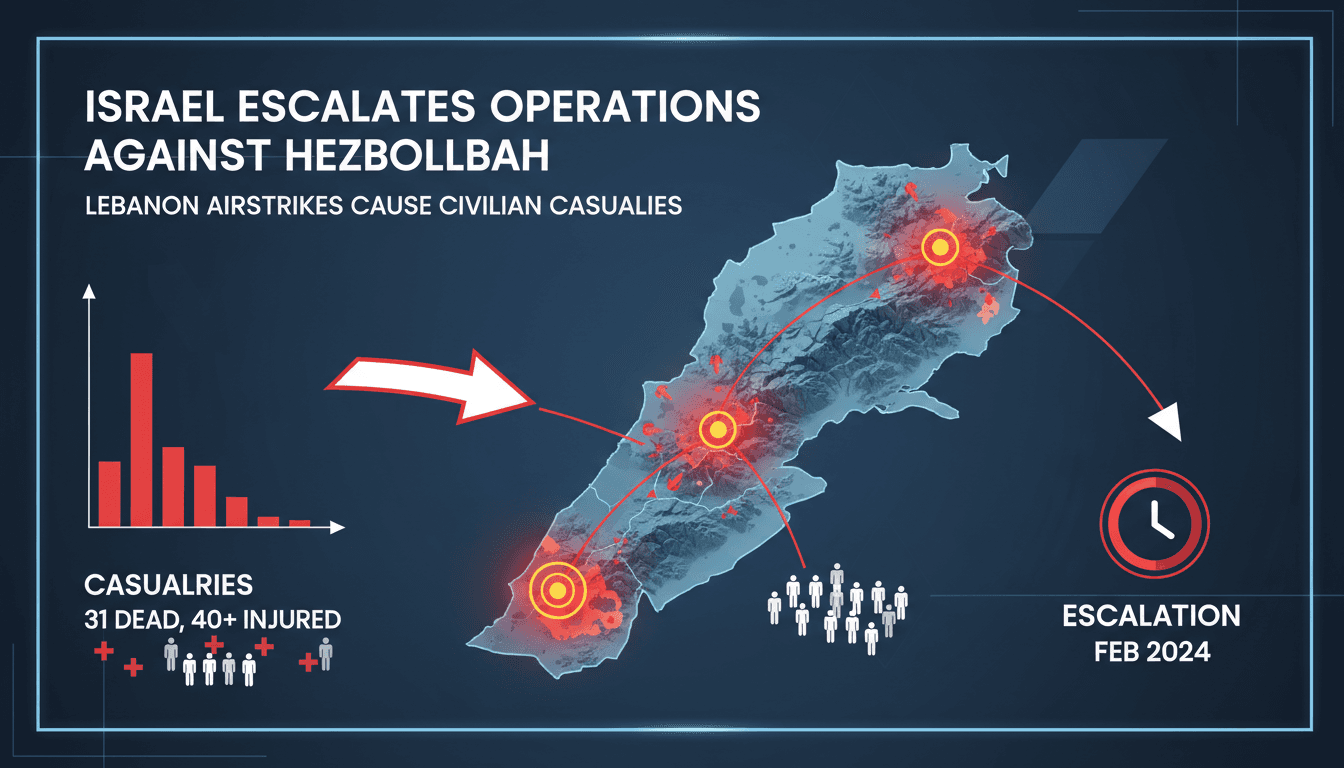
Israel has intensified its military operations against Hezbollah in Lebanon, conducting heavy airstrikes that have resulted in significant casualties. The Lebanese Ministry of Health has reported at least 31 deaths and 40 injuries due to these extensive airstrikes, which have primarily targeted southern and eastern regions of the country. This military action marks one of the most severe escalations since the ceasefire was established.
Evacuation warnings have been issued for 47 towns in the affected areas, indicating the widespread impact of the conflict on civilian populations. The ongoing military actions have raised alarms about the potential for further violence and humanitarian crises in the region.
The Context
The recent airstrikes represent a significant intensification of Israel's military actions against Hezbollah, a group that has long been a key player in the region's complex geopolitical landscape. The conflict has escalated tensions not only between Israel and Hezbollah but also among various stakeholders in the region, including Lebanon's government and international observers.
The timing of these airstrikes is critical, as they come amid ongoing concerns about stability in Lebanon and the broader Middle East. The humanitarian impact of the conflict is already being felt, with rising casualties and displacement of civilians, raising urgent questions about the international community's response.
Takeaway
As the situation unfolds, the potential for increased violence and humanitarian challenges remains high. Observers should monitor the international community's response, particularly regarding any calls for ceasefire negotiations or peace talks. The conflict's escalation could lead to further destabilization in the region, necessitating close attention to diplomatic efforts aimed at de-escalation.
In the coming days, the focus will likely shift to how regional and global powers respond to the crisis, as well as the implications for civilian safety and humanitarian aid efforts.
Arabic-language reporting on global and regional news.
"BBC Arabic is part of the BBC, generally regarded for editorial standards and broad international coverage."
— A47 Editor
غارات إسرائيلية على لبنان هي من الأعنف منذ بدء وقف إطلاق النار
Israel has intensified its military operations against Hezbollah, with reports from the Lebanese Ministry of Health indicating that dozens of casualties have occurred in the southern regions of the country. This escalation marks one of the most sever...
Arabic-language coverage of international news and geopolitics.
"RT Arabic is a Russian state-funded outlet often criticized for promoting Kremlin-aligned narratives."
— A47 Editor
لبنان..31 قتيلا وعشرات الجرحى في غارات إسرائيلية وإنذارات تهجير تطال 47 بلدة
The Lebanese Ministry of Health reported that 31 people have been killed and 40 others injured, including children and women, due to intensive Israeli airstrikes targeting extensive areas in southern and eastern Lebanon from Tuesday morning until lat...
Jordanian news and regional updates.
"Roya News is a Jordanian outlet focused on breaking news and local affairs."
— A47 Editor
الصحة اللبنانية: 31 شهيداً و40 جريحاً في غارات للاحتلال استهدفت بلدات الجنوب
The Lebanese Ministry of Health reported that airstrikes by occupying forces targeted southern towns, resulting in 31 fatalities and 40 injuries. This escalation highlights the ongoing violence in the region and its devastating impact on civilian pop...